

Skipping a proper contingency is the fastest way to blow a BRRRR deal.
Contingency is not optional padding. It’s the cash cushion that keeps rehab work moving and your refinance math intact.
In BRRRR, ARV (after-repair value) and LTV (loan-to-value) drive how much you can pull at refinance, so overruns matter.
This post walks you through a simple, repeatable way to size contingency for different risk levels, using percentage, line-item, and hybrid methods, so you protect your profit margins and avoid last-minute cash calls.
Core Principles for Setting BRRRR Renovation Contingency Budgets

A contingency budget is money you set aside to cover costs you didn’t see coming during renovation. For BRRRR projects, this isn’t optional padding. It’s a financial safeguard that protects your ability to refinance and pull your capital back out. When unexpected problems surface mid-project, your contingency keeps the deal on track instead of forcing you to scramble for more cash or abandon value-add improvements that drive ARV.
Industry guidance typically recommends a contingency of 10–20% of your total renovation estimate. That’s your baseline guardrail. Light cosmetic work on a relatively new property might justify 10%, while a full gut rehab on a 70-year-old house with questionable systems should push you closer to 20%. The right percentage depends on risk factors we’ll cover next, but starting inside this range gives you breathing room without over-allocating capital that could go toward another deal.
BRRRR projects live or die on the refinance. If overruns push your total project cost too high, you might hit your ARV target but still fail to pull out enough capital because the loan-to-value math no longer works. Proper contingency planning helps you stay within the total invested amount your refinance can cover, which typically caps at 70–75% of ARV. Here’s why contingency budgets matter for BRRRR outcomes:
They absorb unexpected structural, mechanical, or code-compliance costs without forcing you to reduce scope or cut quality. They keep renovation timelines on track by eliminating funding delays when surprises appear. They protect your target ARV by making sure you complete high-ROI improvements instead of making value-killing compromises. They preserve refinance viability by capping total invested capital within lender LTV limits. And they reduce emotional and financial stress, letting you make clear decisions instead of panic moves when problems surface.
Key Variables That Influence the Right Contingency Percentage
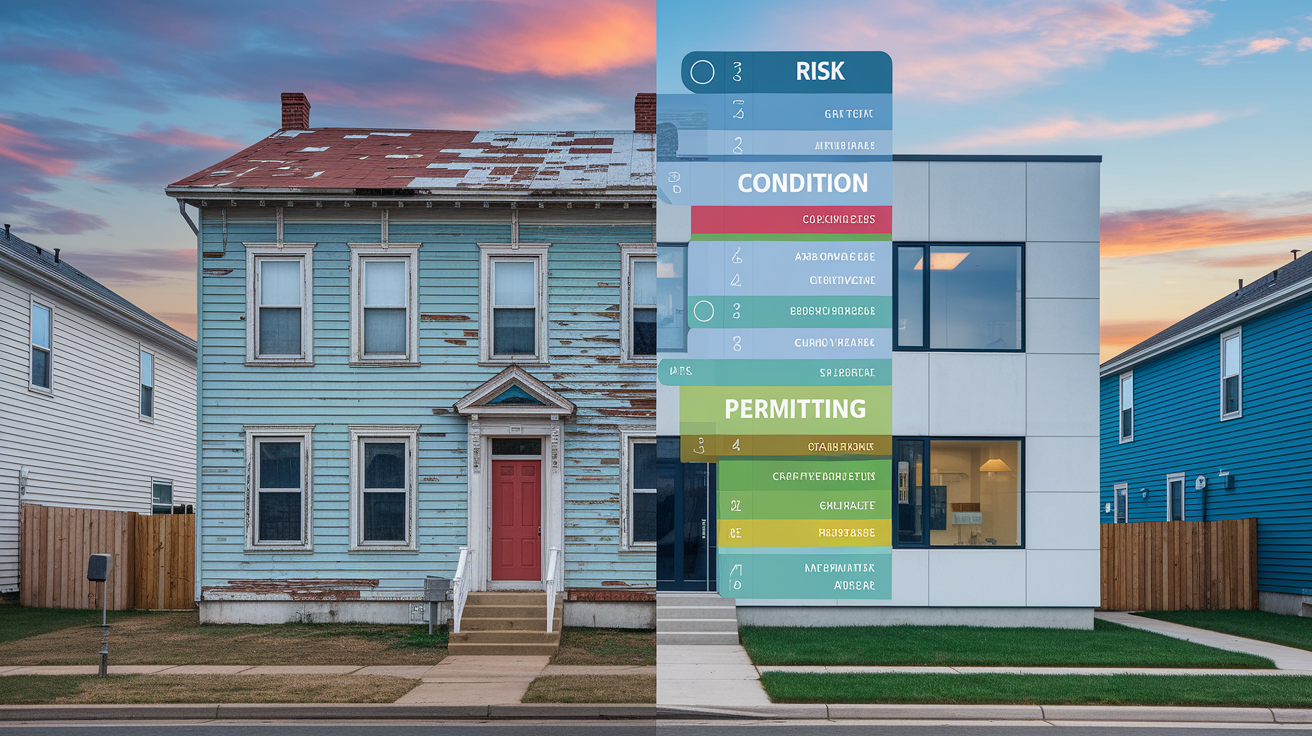
Not every BRRRR deal carries the same renovation risk. A 15-year-old townhouse needing paint and flooring is a completely different budget exercise than a 1950s single-family with original plumbing and a roof you can’t see under the tarps. Understanding which variables increase uncertainty helps you size contingency correctly instead of guessing.
Property age is the single biggest contingency driver. Homes built before 1970 often hide failing systems, outdated wiring, and materials like asbestos or lead paint that trigger expensive remediation. If you’re buying a pre-1980 property and you haven’t opened walls or crawled the attic, assume unknowns and add percentage points. Rehab scope matters just as much. Cosmetic updates like paint, fixtures, and flooring rarely produce major surprises. Full gut jobs, additions, or foundation work expose you to hidden structural damage, permit complications, and cost creep across multiple trades.
Your experience level also shapes the right contingency size. First-time BRRRR investors should lean toward the higher end of the range because they’re still learning to spot problems during walkthroughs and vet contractor estimates. Seasoned investors with strong networks can often tighten contingency because they catch issues earlier and negotiate fixed-price contracts that transfer risk. Six key factors that drive contingency adjustments:
Property age and condition, especially homes over 50 years old or with visible deferred maintenance. Renovation scope, from cosmetic-only to structural or full mechanical replacement. Quality of pre-purchase inspection. Detailed reports reduce unknowns and justify lower contingency. Local permitting complexity. Jurisdictions with strict codes or slow approval timelines increase schedule and soft-cost risk. Contractor reliability and contract type. Fixed-price bids with strong references lower contingency needs versus time-and-materials or unproven crews. Market volatility for materials and labor. Tight supply or rapid price inflation justifies adding buffer.
Methods for Calculating BRRRR Contingency Budgets

The simplest and most common approach is the percentage method. Take your estimated hard-cost rehab budget and multiply by your chosen contingency rate. If your contractor quotes $50,000 and you decide on 15% contingency, you add $7,500 to your total budget, bringing renovation spend to $57,500. This method is fast, easy to explain to lenders or partners, and scales naturally with project size.
Some investors prefer the line-item risk method, especially on complex rehabs. Instead of a blanket percentage, you assign dollar allowances to specific unknowns. For example, you might allocate $5,000 for potential foundation repairs, $3,000 for electrical panel upgrades if inspection flags old wiring, and $2,000 for plumbing surprises. You total these line items to create your contingency reserve. This method forces you to think through actual risks rather than relying on a generic percentage, and it helps you communicate specific concerns to contractors and inspectors.
A hybrid model combines both. Set a baseline percentage contingency, say 10%, then layer targeted line-item reserves on top for high-risk areas. This approach works well when you have partial information. You might know the roof is marginal but you’re not sure about the subfloor under old carpet, so you use 10% across the board plus an extra $4,000 roof allowance. The table below summarizes these three methods:
| Method | How It Works | Best Use Case |
|---|---|---|
| Percentage-Based | Multiply total estimated rehab by 10–20% contingency rate | Standard rehabs, quick underwriting, lender presentations |
| Line-Item Risk | Assign specific dollar reserves to known risk categories | Complex or gut rehabs, properties with identified but unquantified issues |
| Hybrid | Baseline percentage plus targeted allowances for major unknowns | Deals with partial information or mixed scope, balancing simplicity and precision |
Frequent Hidden Costs That Impact BRRRR Renovation Budgets

Even detailed contractor estimates miss things because no one has X-ray vision. Hidden costs surface when you open walls, pull permits, or start heavy demolition. Structural issues top the list. A sagging floor might look like a cosmetic eyesore until you discover rotted joists or a failing beam that needs sistering or full replacement, turning a $500 flooring patch into a $5,000 structural repair plus new subfloor.
Electrical and plumbing systems in older homes are notorious budget busters. You budget for a service panel upgrade, then the inspector flags knob-and-tube wiring or ungrounded circuits throughout the house, forcing a partial or full rewire. Plumbing surprises include cast-iron drain stacks that crumble when touched, galvanized supply lines ready to burst, or sewer lateral failures discovered only after camera inspection. Mold, asbestos, and lead paint also appear without warning, especially in pre-1980 homes, and remediation costs can run thousands before you’re even allowed to proceed with cosmetic work. Here are seven common hidden costs to prepare for:
Foundation or structural repairs from settling, water damage, or inadequate original construction. Full or partial electrical rewiring when code requires grounded circuits or modern load capacity. Main sewer line or drain replacement, often triggered by tree roots or collapsed clay pipes. HVAC system replacement when existing equipment fails inspection or can’t match new square footage. Mold or water-damage remediation behind walls, under flooring, or in crawl spaces. Asbestos or lead-paint abatement required before demolition or finishing work can proceed. And permit delays or additional inspection fees when scope expands or jurisdiction rules change mid-project.
How Contingency Planning Affects ARV and Refinance Success
The refinance step is where BRRRR math either works or falls apart. Lenders base your new loan on appraised ARV, typically lending 70–75% of that value. If cost overruns eat into your contingency and force you to cut scope or choose cheaper finishes, your ARV estimate drops. A property you projected at $200,000 ARV might appraise at $185,000 because you skipped the kitchen backsplash, used builder-grade fixtures, or left the exterior looking tired. That $15,000 appraisal miss costs you $10,000–$11,000 in available refinance proceeds at 75% LTV, and suddenly you can’t pull all your capital back out.
Proper contingency management keeps you from making those value-killing compromises. When an unexpected $8,000 plumbing issue appears, your contingency absorbs it without forcing you to downgrade the bathroom tile or skip the fresh exterior paint that drives curb appeal. You complete the scope as planned, hit your ARV target, and the appraiser sees a fully finished product that supports your valuation. Lenders also care about cost stability. If your final renovation invoice is wildly over budget and you’re scrambling to cover overruns with credit cards or personal loans, some lenders view that as project-management risk and may tighten terms or delay approval while they verify funds and quality.
The math is straightforward but unforgiving. Let’s say you purchase for $100,000, plan $40,000 in rehab, and target $180,000 ARV. At 75% LTV, refinance pays out $135,000. Your total project cost is $140,000 after closing and holding costs, so you’re slightly short and need to bring $5,000 to the refinance or accept it as invested equity. Now assume you set only 5% contingency, $2,000, and actual overruns hit $10,000. Your total cost climbs to $148,000, and you’re $13,000 short at refinance. If you also cut scope to stay on budget and ARV drops to $170,000, refinance proceeds fall to $127,500, and you’re $20,500 in the hole. Contingency planning isn’t just about covering costs. It’s about protecting the entire deal structure that makes BRRRR repeatable.
Strategies to Reduce Renovation Risk and Protect Contingency Funds

The best way to manage contingency is to avoid needing it in the first place. That means front-loading due diligence and tightening project controls. Start with a detailed scope of work before you ever make an offer. Walk the property with a contractor or inspector who’s done BRRRR projects and ask them to flag every system, surface, and structure that might need attention. Get line-item pricing, not top-line guesses. A contractor who gives you “$35,000 to rehab” without breaking it down is handing you a risk, not a budget.
Vet your contractors carefully. Check references on similar-sized projects, verify licensing and insurance, and ask how they handle change orders and unexpected conditions. The cheapest bid often turns into the most expensive outcome when unlicensed or inexperienced crews create problems that require rework. Use fixed-price contracts wherever possible for major trades like roofing, HVAC, and foundation work. That transfers cost-overrun risk to the contractor instead of leaving it in your lap. For time-sensitive or unpredictable scopes, negotiate not-to-exceed caps with clear allowances for owner-approved changes only. Six practical risk-management techniques to protect contingency funds:
Conduct a pre-purchase inspection with invasive access, opening panels and crawl spaces, not just a surface walk. Require detailed scopes of work with line-item material and labor pricing from at least two qualified contractors before closing. Build phased inspections into the schedule, checking framing, rough-ins, and systems before covering work with drywall or finishes. Order long-lead materials like custom cabinets, special-order windows, or HVAC equipment early to avoid price increases and schedule delays. Establish a formal change-order process that requires written approval and cost documentation before any scope adjustment. Maintain a separate reserve account for holding costs, taxes, insurance, and utilities during rehab so those expenses don’t invade your contingency fund.
Real-World Case Studies: Effective and Failed Contingency Planning
Deal one shows how contingency saves a project. An investor bought a 1960s ranch for $85,000, budgeted $35,000 for kitchen, bath, flooring, and paint, and set a 15% contingency of $5,250. During demolition, the team discovered a rotted subfloor in the bathroom from an old leak, plus outdated wiring in the kitchen that failed inspection. Repairs added $4,800 to the budget. Because contingency covered it, the project stayed on schedule, finishes remained as planned, and the property appraised at the $155,000 ARV target. Refinancing at 75% returned $116,250 against total costs of $130,000, leaving $13,750 in the deal as equity. The investor repeated the strategy on two more properties that year. Without contingency, the subfloor and wiring would have forced a choice between delayed timelines, cheaper finishes, or scrambling for personal funds. Any of which could have killed momentum or ARV.
Deal two shows the cost of under-planning. A different investor bought a 1950s bungalow for $70,000, estimated $50,000 in rehab, and set just 5% contingency, $2,500, because “it looked pretty solid.” Two weeks into demo, the contractor found a cracked foundation stem wall, knob-and-tube wiring throughout, and a main sewer line full of roots. Repairs totaled $18,000. The investor didn’t have additional cash and couldn’t secure a bridge loan fast enough. They cut the kitchen remodel to basic appliances, skipped new windows, and used cheap vinyl flooring. The property appraised at $135,000 instead of the planned $160,000 ARV. At 75% LTV, refinance returned $101,250 against $140,000 total invested. The deal left $38,750 stuck in equity, and the investor couldn’t fund the next BRRRR purchase. The project technically worked, but poor contingency planning turned a cash-out refinance into a forced hold with mediocre returns.
The difference between these outcomes wasn’t luck. The first investor treated contingency as a core line item and sized it to the property’s risk profile. The second investor treated it as optional padding and paid for that miscalculation with lower ARV, trapped capital, and a stalled investment strategy. Contingency budgets don’t guarantee perfect projects, but they give you the financial flexibility to solve problems without sacrificing the value creation that makes BRRRR sustainable.
Final Words
When you size the contingency, start with 10–20% and tweak for property age, scope, and local market swings. That’s the short takeaway: contingency keeps the BRRRR timeline and refinance realistic.
We covered calculation methods (percentage, line-item, hybrid), common hidden costs, and simple ways to lower risk like tight scopes and stronger contractor vetting.
With these steps, estimating contingency budgets for BRRRR renovations becomes part of reliable underwriting. Plan a bit conservative, watch the project, and you’ll put the refinance on firmer ground.
FAQ
Q: What is a BRRRR contingency budget and why is 10–20% recommended?
A: The BRRRR contingency budget is a reserve equal to about 10–20% of total renovation costs, sized to cover overruns, keep the refinance timeline on track, and protect projected ARV and returns.
Q: When should I use a higher contingency versus a lower one?
A: You should use a higher contingency (closer to 20%) when the property is older, the scope is invasive, permits or hazardous materials are likely, labor or materials are volatile, or you lack rehab experience.
Q: How do I calculate contingency for a BRRRR project?
A: A BRRRR contingency can be calculated three ways: percentage-based (10–20% of reno), line-item risk ratings that add buffers per task, or a hybrid mixing fixed and variable reserves.
Q: What hidden costs commonly blow BRRRR renovation budgets?
A: Common hidden costs that blow BRRRR budgets include structural repairs, electrical and plumbing upgrades, asbestos or lead remediation, unexpected rot or termite damage, code-related work, permits, and longer-than-expected delays.
Q: How does contingency planning affect ARV and refinance success?
A: Contingency planning affects ARV and refinance success because overruns reduce net return and can prevent reaching target ARV; lenders also review final scope quality and cost stability during refinance approval.
Q: What practical steps cut renovation risk and protect contingency funds?
A: To protect contingency funds: write a tight scope of work, get vetted contractors and fixed-price bids, phase inspections, plan material lead times, hold separate reserves, and track change orders tightly.
Q: What’s a quick 10-minute contingency screen I can use on a deal?
A: A quick 10‑minute contingency screen is: estimate renovation cost, apply a 10–20% buffer, adjust for property age and scope, flag known risks, and confirm your reserve covers a reasonable worst-case overrun.
Q: What’s the main takeaway from real-world contingency case studies?
A: The main takeaway is that a proper contingency saved refinance timelines and returns, while an insufficient buffer caused missed refinance, higher costs, and materially worse final returns—plan for the downside.