

Guessing ARV is the fastest way to lose money on a distressed deal.
If you buy foreclosures or estate sales, ARV (after repair value) is what the home should sell for after the work is done.
This post walks through practical calculation methods, pulling the right comps, a price per square foot check, realistic repair cost scoping, and turning ARV into a maximum allowable offer so you can make profitable bids and avoid bad surprises.
Core Methods for Calculating ARV on Distressed Properties

ARV is what a distressed property should be worth after you finish all the repairs. If you’re looking at foreclosures, estate sales, or anything that’s falling apart, ARV tells you how much to offer and whether the deal makes sense. Without it, you’re just guessing.
The formula is pretty simple: ARV = Current Market Value + Estimated Value Added by Renovations. Current market value means what the place would sell for today, right now, before you touch it. Not the asking price. Not what the seller thinks it’s worth. What the market would actually pay. Estimated value added is how much those upgrades should boost resale price, based on what similar homes with those features have sold for.
You’ll build both parts of that equation using comparable sales, or comps. Pull distressed or as-is comps to pin down current value, then look at recently renovated properties in the same area to measure what each upgrade adds. The gap between those two groups is your value-add estimate.
Here’s how the process works:
- Find current market value by reviewing recent sales of similar distressed homes nearby, or ask an agent to run a comparative market analysis on as-is condition.
- Estimate renovation costs by getting 2–3 contractor bids for your scope of work, then tack on a 10–20 percent buffer for surprises.
- Pull comps of finished homes to see what upgraded properties have actually sold for, focusing on similar square footage, bedrooms, and lot size.
- Add it all up by taking your current market value and adding the estimated value increase from the renovations.
- Quick example — if current market value is $180,000 and your kitchen, bathroom, and flooring upgrades should add $60,000 in resale value, your ARV lands at $240,000.
Comp Selection Techniques for Accurate ARV on Distressed Homes

Good comps need at least 3–6 recently sold properties within about half a mile, matching on age, style, square footage, bedrooms, baths, and lot size. Sold comps show what buyers actually paid. Active listings just show asking prices that might never close at those numbers. Agent-run comparative market analyses or MLS data give you real sold records, including original list price, final sale price, days on market, and specific features. Don’t use automated valuations like Zestimates. They smooth over the neighborhood details that matter most when you’re buying distressed.
Once you’ve got your comps, adjust each one for differences in condition and features. If a comp sold with a remodeled kitchen and your property has original 1980s cabinets, you subtract the approximate value of that kitchen from the comp’s sale price. That tells you what it would’ve sold for without the upgrade. Start with price per square foot, then layer in adjustments for extra bedrooms or baths, lot size, garage, and overall condition. Say a comp sold for $250,000 at 1,500 square feet. That’s roughly $167 per square foot. If your subject is 1,400 square feet but lacks the comp’s finished basement, you’d multiply $167 by 1,400 to get $233,800, then subtract an estimate for the missing basement. This turns raw comp data into a realistic current market value.
Watch out for these issues when picking comps:
- Sales older than five years. Only use them if you’ve got nothing else, and remember the market has probably shifted.
- Properties on busy streets, next to commercial zones, or backing distressed neighbors. Location quirks throw off value.
- Outlier sales that are 20 percent or more above or below the median. Remove them so they don’t distort your average.
- Comps pulled from too far away just to fill gaps. Expand your search radius only when necessary, and always note the distance adjustment.
| Comp Address | Key Match Factor | Adjustment Needed |
|---|---|---|
| 123 Maple St | Same age, 3 bed / 2 bath, remodeled kitchen | Subtract $15,000 for kitchen upgrade not in subject |
| 456 Oak Ave | Similar square footage, original condition | No adjustment, closest match to subject’s distressed state |
| 789 Pine Rd | Same lot size, updated baths, newer roof | Subtract $8,000 for bathroom upgrades, $6,000 for roof |
Repair Scope and Cost Estimation Required for ARV Calculations
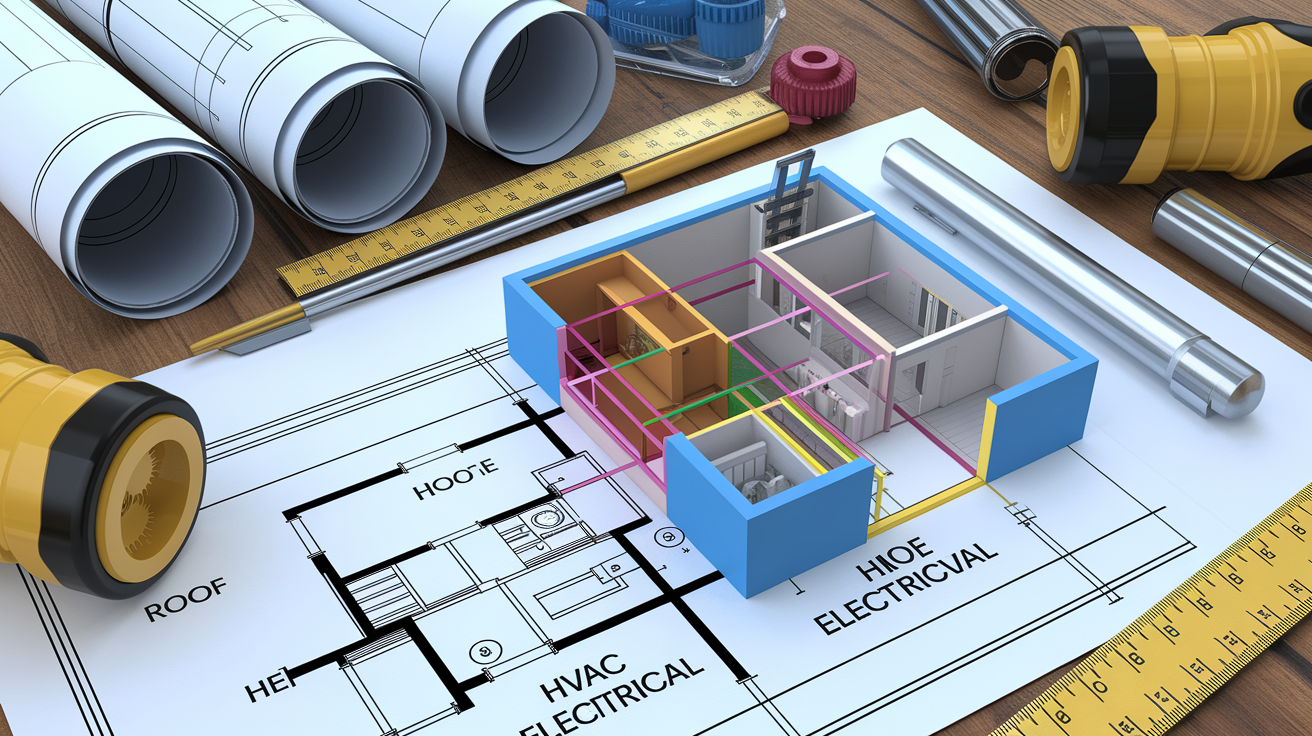
Accurate repair cost estimates separate profitable deals from money pits. Start by walking the property with a licensed contractor who can spot structural problems, code violations, and hidden damage that online calculators won’t catch. Get at least 2–3 itemized bids for every major line item: kitchen, bathrooms, roof, HVAC, electrical, plumbing, flooring, and permits. Line-item proposals let you compare labor, materials, and timelines across contractors so you know if one bid is padded or way off.
Add 10–20 percent contingency to your total renovation budget. Distressed properties always hide surprises. Galvanized pipes that need replacement, knob-and-tube wiring that fails inspection, termite damage behind drywall, foundation cracks you discover when you pull up old flooring. The contingency cushion keeps your ARV calculation realistic and protects your profit when those issues pop up. Don’t forget soft costs either: permits, architectural or engineering plans, inspections, dumpster rental, utilities during rehab, and property taxes while you hold. If your renovation takes six months instead of three, those carrying costs double.
Structural issues can kill ARV feasibility overnight. A roof replacement might cost $12,000, but a sagging ridgeline that needs new trusses can push that to $30,000. Foundation repairs, mold remediation, outdated electrical panels. These routinely add thousands of dollars and weeks of delay. Get a thorough pre-purchase inspection and budget conservatively for any system that gets flagged.
Here are six high-impact repair categories to always include:
- Roof and gutters — leaks, missing shingles, or aged materials affect insurability and resale value.
- HVAC system — buyers expect working heating and cooling. Replacement runs $5,000–$15,000 depending on size.
- Electrical and plumbing — code violations, outdated wiring, or cast-iron drains can trigger mandatory upgrades and hold up inspections.
- Kitchen and bathrooms — these rooms deliver the highest perceived value. Budget for cabinets, countertops, fixtures, tile, and appliances.
- Flooring — laminate, hardwood, or luxury vinyl plank throughout common areas. Damaged subfloors add cost.
- Foundation and structural framing — cracks, settling, water intrusion, or pest damage can derail financing and resale.
Price-Per-Square-Foot Methods to Strengthen ARV Calculations
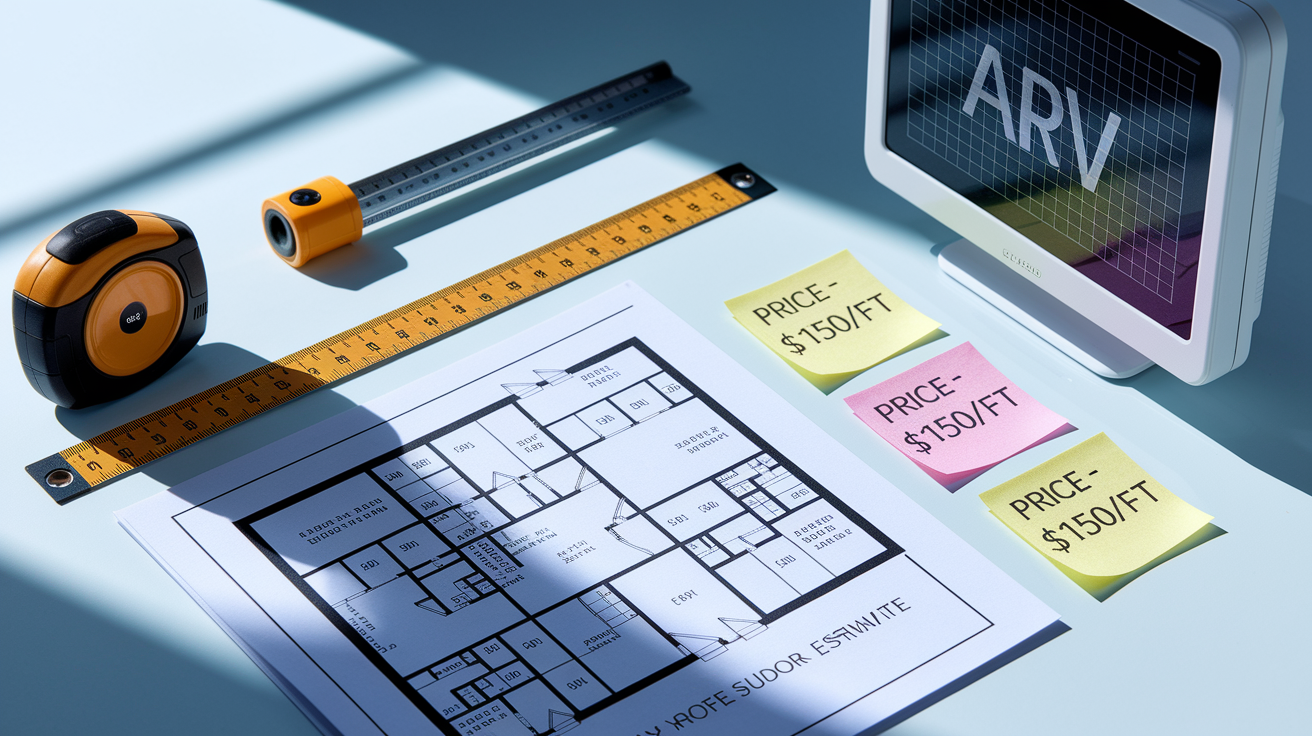
Price per square foot gives you a secondary valuation check when comps vary in size or feature mix. The formula is simple: Price Per Square Foot = Sale Price ÷ Square Footage. Pull 3–5 similar comps, calculate the price per square foot for each, average those numbers, then multiply by your distressed property’s square footage to estimate ARV. If three renovated comps averaged $150 per square foot and your subject is 1,600 square feet, your estimated ARV is $240,000 before any condition adjustments.
This works best when your comps are tightly matched on bedrooms, baths, lot size, and finish quality. If one comp includes a garage and your subject doesn’t, or if a comp has an extra half-bath, the raw price per square foot average will overstate your ARV. Use the condition-adjustment tactics from the comp-selection section to fine-tune the number. Price per square foot is especially helpful in subdivisions with similar floor plans where most variables are controlled and you’re mainly adjusting for condition and minor feature differences.
| Comp | Sq Ft | Sale Price | $/Sq Ft |
|---|---|---|---|
| 123 Maple St | 1,520 | $228,000 | $150 |
| 456 Oak Ave | 1,580 | $237,000 | $150 |
| 789 Pine Rd | 1,610 | $241,500 | $150 |
Using ARV to Determine Maximum Allowable Offer (MAO)

Once you’ve got a solid ARV, turn it into a purchase limit using the 70 percent rule: Maximum Allowable Offer = ARV × 0.70 − Total Repair Costs. This formula leaves roughly 30 percent margin to cover your profit, holding costs, closing costs, financing costs, and a buffer for unexpected expenses. If your ARV is $300,000 and repairs are $50,000, your MAO is $160,000 because $300,000 × 0.70 = $210,000, then $210,000 − $50,000 = $160,000.
The 70 percent multiplier is a benchmark. In hot markets with fast sales and low carrying costs, some investors stretch to 75 percent. In slower markets, or when renovations are complex and timeline risk is high, dial it back to 65 percent to preserve profit margin. Adjust the multiplier based on your financing terms too. Hard money loans with high interest and points eat into that 30 percent cushion, so you may need a lower purchase price to hit your profit target.
If you’re wholesaling the property, subtract your assignment fee from the investor’s MAO to find your own maximum contract price. The formula becomes: Investor Price = (ARV × 0.70 − Repair Costs) − Wholesaler Fee. For example, if the investor’s MAO is $160,000 and you need a $10,000 assignment fee, your maximum contract price with the seller is $150,000.
Here’s how to apply the formulas step by step:
- Calculate ARV — current market value $220,000 + estimated renovation value increase $80,000 = ARV $300,000.
- Multiply ARV by 0.70 — $300,000 × 0.70 = $210,000.
- Subtract total repair costs — $210,000 − $50,000 = $160,000 maximum allowable offer.
- Adjust for wholesaler fee if applicable — $160,000 − $10,000 = $150,000 contract price.
- Compare to seller’s asking price — if the seller wants $180,000, the deal doesn’t work at 70 percent. Renegotiate or walk.
Adjusting ARV for Severe Distress and Hidden Issues
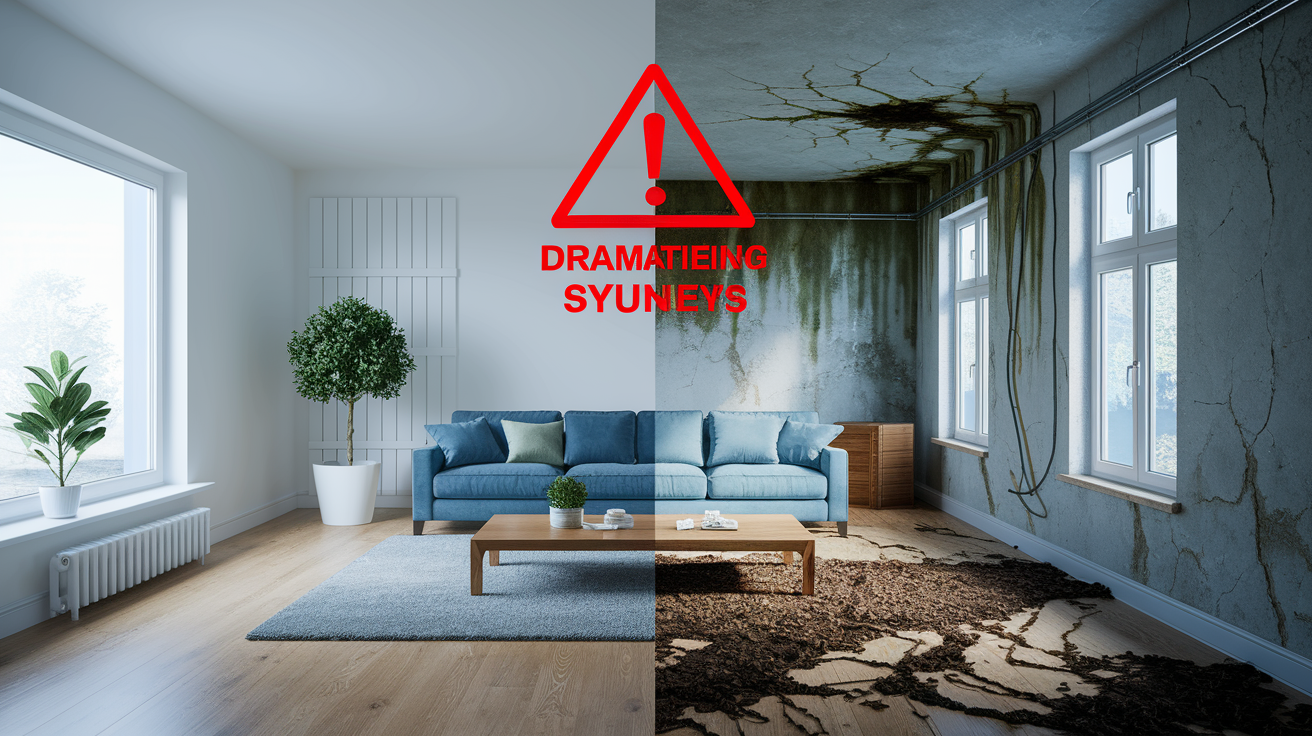
Severely distressed properties require deeper value adjustments than typical cosmetic fixers. Foundation cracks, active water intrusion, termite or pest damage, mold, lead paint, asbestos insulation, outdated knob-and-tube wiring or galvanized plumbing. All of these can trigger mandatory remediation, permitting delays, and costs that blow past normal renovation budgets. These issues don’t just add repair dollars. They can limit your buyer pool if financing falls through due to appraisal conditions or lender requirements.
When you run into major structural or environmental problems, subtract an additional safety margin from your ARV or bump up your repair estimate significantly. For example, if comps suggest an ARV of $280,000 but your property has foundation settlement and active mold, a conservative approach might reduce your working ARV to $260,000 to account for buyer hesitation and the risk that an appraiser flags the same issues. Or you can add the full remediation cost plus contingency to your repair budget, which lowers your MAO through the 70 percent formula. Either way, severe distress demands a larger cushion than cosmetic updates.
| Issue | Typical Impact on ARV | Notes |
|---|---|---|
| Foundation cracks or settlement | $10,000–$40,000 repair; may reduce ARV 5–10% if severe | Structural engineer report required; lenders may not finance until fixed |
| Active water intrusion or mold | $5,000–$25,000 remediation; perception discount | Disclosure requirements; buyers often request concessions |
| Termite or pest damage | $3,000–$15,000 repair; structural damage varies | Treatment plus repair of damaged framing or sills |
| Outdated electrical (knob-and-tube) | $8,000–$20,000 rewire | Many insurers refuse coverage; mandatory upgrade for sale |
| Lead paint or asbestos | $5,000–$30,000 abatement depending on scope | EPA and state regulations; disclosure required; limits DIY work |
Neighborhood and Market Factors That Influence ARV Accuracy

ARV is a short-term snapshot of value based on current market conditions, and local trends can shift faster than your renovation timeline. Neighborhood absorption rate, days on market, and recent sales activity all signal how quickly you’ll be able to resell and whether your ARV estimate will hold. If homes in the area are sitting 90+ days and sellers are cutting prices, your ARV might be overstated even if comps from three months ago look strong.
Check the ratio of active listings to recent sales. A neighborhood flooded with inventory suggests weaker demand and potential price softening. Seasonal effects matter too. Spring and early summer typically see faster sales and stronger prices, while late fall and winter can add weeks to your holding period and pressure you to discount. If you’re buying in October and planning a six-month renovation, you’ll be listing in April, which is usually favorable. But if you’re buying in May and renovations stretch into November, you might face a slower market when you’re ready to sell.
Key neighborhood indicators to review before finalizing your ARV:
- Days on market for recent sales — 30 days or less signals strong demand. 60+ days suggests softer pricing pressure.
- List-to-sale price ratio — if homes are selling at 95–100 percent of list, the market supports your ARV. Consistent discounts of 5–10 percent mean you should reduce your ARV estimate.
- Number of active competing listings — high inventory in your price range increases time to sale and may force price cuts.
- Recent new construction or major employer changes — new builds can saturate the market. Job losses or relocations reduce buyer pool and demand.
Case Study: Full ARV Calculation for a Distressed Property

You’re evaluating a 1,400-square-foot, three-bedroom, two-bath ranch in a stable neighborhood. The property is an estate sale with original 1970s finishes, a roof near the end of its life, outdated electrical, and cosmetic damage throughout. The seller is asking $160,000, and you want to know if the deal works at a 70 percent rule.
Start by estimating current market value. You pull four recent sales of similar distressed or original-condition homes in the neighborhood: $210,000, $215,000, $205,000, and $225,000. The $225,000 sale is an outlier. It had a large corner lot and a finished basement, so you exclude it. Averaging the remaining three gives you $210,000 as the current as-is market value, adjusted slightly downward to $205,000 because your subject has the worst condition and needs a roof.
Next, define your renovation scope and get contractor bids. You plan to install a new roof ($12,000), update the kitchen with cabinets, countertops, and appliances ($18,000), renovate both bathrooms ($10,000), replace all flooring ($8,000), update electrical to code ($6,000), and repaint interior and exterior ($5,000). Total hard costs are $59,000. Add permits and inspections ($2,000) and a 15 percent contingency ($9,150) for a total repair budget of $70,150, rounded to $70,000.
Now estimate the value added by those renovations. You pull three comps of recently renovated homes in the same neighborhood with similar square footage and lot size: $295,000, $310,000, and $300,000. Average those to get $301,667, round to $300,000. Subtract your current market value of $205,000 to estimate that your planned renovations should add roughly $95,000 in market value. Your ARV is $205,000 + $95,000 = $300,000.
Apply the 70 percent rule to determine your maximum allowable offer:
- ARV = $300,000.
- Multiply by 0.70 = $210,000.
- Subtract repair costs = $210,000 − $70,000 = $140,000 MAO.
- Compare to asking price — seller wants $160,000, which is $20,000 over your MAO.
- Decision — negotiate down to $140,000 or lower, or walk if the seller won’t budge. Paying $160,000 leaves only $10,000 profit margin after repairs, well below the 30 percent cushion you need.
Risk Management and Common ARV Calculation Mistakes

The most common ARV mistake is using outdated comps. Sales from 18 months ago don’t reflect today’s interest rates, buyer demand, or inventory levels. Always prioritize comps from the last six months, and if your market is moving fast, narrow that to 90 days. If you can’t find enough recent sales, expand your radius carefully and adjust for location differences, but don’t rely on stale data to justify a high ARV.
Underestimating repair costs is the second-biggest trap. Distressed properties hide problems. Corroded pipes behind walls, subfloor rot under old carpet, electrical panels that fail inspection. Always get multiple contractor bids, walk the property thoroughly, and add 10–20 percent contingency. If you skip the contingency to make the numbers work, you’re setting yourself up for a cash crunch mid-project when the unexpected issues surface.
Here are six mistakes to watch for and how to fix them:
- Assuming full value recovery for upgrades — not every dollar you spend adds a dollar to ARV. Specialty features or over-improvements can return 50–70 cents on the dollar, so compare renovated comps carefully.
- Relying on automated valuations — Zestimates and algorithm-based tools smooth over neighborhood quirks and condition differences. Always verify with actual sold comps.
- Ignoring carrying costs — property taxes, insurance, utilities, and loan interest during the renovation period eat into profit. Include those in your MAO calculation or budget them separately.
- Buying sight unseen without inspection — photos and virtual tours miss foundation issues, mold, pest damage, and code violations. Always inspect or hire a professional before you commit.
- Cherry-picking comps to justify a high ARV — confirmation bias leads you to select the highest sales and ignore lower ones. Use objective filters and include all valid comps in your average.
- Forgetting to adjust for market speed — if days on market are climbing and inventory is rising, reduce your ARV by 5–10 percent to account for softer demand and longer hold times.
Professional Tools and Resources to Improve ARV Accuracy

MLS access through a licensed agent is the gold standard for comp data. MLS records include original list price, price changes, final sale price, days on market, and detailed property features that public portals don’t always show. If you don’t have an agent relationship yet, build one. Many agents will run comps for free if you’re a serious buyer or investor in their market.
For repair cost estimates, contractor bidding tools and cost-estimating apps give you ballpark numbers fast. RSMeans and other national cost databases provide unit-cost data for labor and materials, adjusted by region. Use those as a starting point, then layer in local contractor bids to refine the estimate. Online calculators like HomeAdvisor or Angi can help you scope individual line items, but they often understate complexity and permitting requirements, so treat them as rough guides, not final budgets.
Appraisers deliver the most accurate pre-repair market value. If you’re new to ARV calculations or dealing with a complex property, pay for a professional appraisal before you make an offer. The cost is a few hundred dollars, and it eliminates the guesswork on current market value. Appraisers also spot structural defects, code violations, and market factors you might miss.
Four key resources to use:
- MLS data — agent-run comp reports with sold prices, days on market, and detailed features. Most reliable source for current market value.
- Contractor bidding tools — online platforms that connect you with licensed contractors for itemized estimates. Compare at least three bids per major trade.
- Cost-estimating apps and RSMeans — regional cost databases for labor and materials. Useful for rough scoping and budget checks.
- County assessor and public records — verify square footage, lot size, sale history, and tax assessments. Cross-check against MLS data for accuracy.
Final Words
You can now use the core ARV formula, ARV = Current Market Value + Estimated Value Added by Renovations, to set realistic purchase limits.
Follow the workflow: use comps to estimate finished value, scope repairs with 2–3 contractor bids and a 10–20% contingency, use price-per-square-foot when comps disagree, and apply the 70% MAO rule.
Keep validating comps and tightening rehab numbers. Practicing estimating after repair value ARV for distressed properties makes your offers safer and less stressful. You’ve got this.
FAQ
Q: What is ARV and why is it essential for distressed-property investing?
A: ARV (after repair value) is the estimated market value after renovations. It’s essential because it sets realistic purchase limits, helps calculate profit, and guides financing and rehab budgets.
Q: What is the core ARV formula and what do its parts mean?
A: The ARV formula is ARV = Current Market Value + Estimated Value Added by Renovations. Current market value is today’s as‑is price; value added is the projected increase from planned repairs and upgrades.
Q: How do comparable sales (comps) fit into estimating ARV?
A: Comparable sales (comps) are used to estimate the finished value by showing what similar renovated homes sold for. They form the backbone of ARV estimates without replacing detailed repair costing.
Q: How many comps should I use and where should I source them?
A: Use 3–6 recently sold comps within about 0.5–1 mile, matching age, style, and lot. Pull data from MLS or an agent CMA and avoid automated valuations and obvious outliers.
Q: How should I estimate rehab costs and contingency for ARV?
A: Estimate rehab costs using 2–3 licensed contractor bids with line‑item scopes, include permits and soft costs, and add a 10–20% contingency. Structural problems can dramatically change feasibility.
Q: How does the price‑per‑square‑foot method help estimate ARV?
A: The price‑per‑square‑foot method uses Price Per Sq Ft = Sale Price ÷ Square Footage. Average $/sq ft from 3–5 similar comps, then multiply by the subject property’s square footage for an ARV check.
Q: How do I convert ARV into a Maximum Allowable Offer (MAO)?
A: Use the 70% Rule: MAO = ARV × 0.70 − Repairs. For example, ARV $300,000 with $50,000 repairs → MAO $160,000. Wholesaler price = investor price minus wholesaler fee.
Q: How should ARV be adjusted for severe distress or hidden structural issues?
A: Adjust ARV downward when severe issues exist—foundation cracks, water intrusion, termite, mold, or outdated systems—since these require larger value reductions than typical cosmetic fixes.
Q: What neighborhood and market factors change ARV reliability?
A: Local market speed, absorption rate, and recent sales activity affect ARV accuracy. ARV is short‑term and vulnerable to market shifts, so check how fast similar homes are selling locally.
Q: What are common ARV mistakes and how do I avoid them?
A: Common mistakes are using outdated comps, underestimating repairs, assuming full value recovery, ignoring carrying costs, and trusting automated estimates. Fix this with fresh comps, contractor bids, and a 10–20% contingency.
Q: What tools and resources improve ARV accuracy?
A: MLS access, agent CMAs, contractor bidding tools, cost‑estimating apps, RSMeans, and assessor records improve accuracy. Appraisers give the most reliable pre‑repair valuations for lending or validation.