

Think a cheap distressed house is a sure win? Think again.
Distressed properties can carry unpaid taxes, contractor claims, and old judgments that wipe out expected profit.
One missed lien can add thousands or lock you out of clear title.
This post walks you through practical steps to spot and measure title and lien risk before you sign.
You’ll learn which searches to order, the red flags that should make you pause, how to size cure costs roughly, and a simple decision rule for moving forward.
Core Factors That Determine Title and Lien Risk on Distressed Homes

Distressed homes come with title and lien headaches because they’re changing hands under pressure. The seller’s drowning in foreclosure, stuck in a divorce, waiting on probate, or filing bankruptcy. Documents go missing. The chain of title has gaps. Nobody’s been paying the bills.
Meanwhile, the property sits empty. Tax bills stack up. Contractors file mechanic’s liens. Judgment creditors record claims. All of that creates clouds on title that stop you from getting a clean transfer and balloon your cost to close.
The big risks break down like this: unresolved debts (property taxes, mortgage arrears, unpaid contractor invoices), recording gaps (deeds never filed, probate still open, missing heirship paperwork), and claims that never made it into the public record (code violations, utility liens, handshake agreements). Two years of unpaid property taxes at $3,000 a year turns into $6,000 plus penalties and interest before you even start fixing title problems. Judgment liens can last 7 to 20 years depending on your state. Tax liens sit at the top of the priority ladder and can survive foreclosure, so you inherit the bill unless it gets paid before closing.
Your first step is ordering a preliminary title search the moment you’ve got a signed contract or letter of intent. A prelim costs $75 to $300 and shows up in 1 to 7 business days. Use it to review the chain of title going back at least 30 years or to the last clean transfer. Check for tax delinquencies. Look at the recording dates on mortgages and liens so you know which creditors get paid first and what payoff numbers you’re looking at.
Understanding the Types of Liens That Typically Burden Distressed Homes
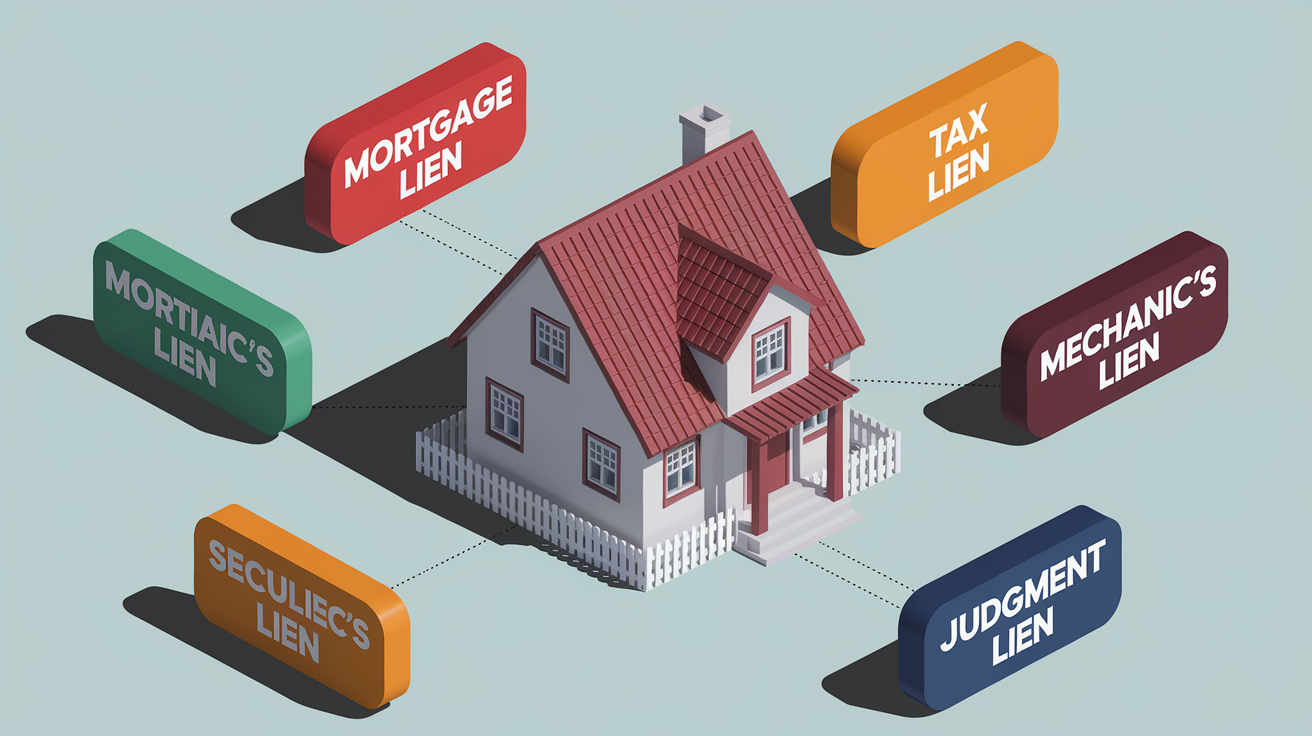
Liens are legal claims backed by the property. Each type gets created differently and has different consequences when you try to resell, refinance, or foreclose.
A mortgage lien happens when a borrower puts the home up as collateral for a loan. The lender records the mortgage to lock in priority and can foreclose if the borrower stops paying. Federal and state tax liens show up when someone doesn’t pay income or business taxes within the IRS demand window (usually 10 days after the demand letter). The tax authority files a notice of lien at the county recorder. Tax liens jump ahead of almost everything else and get paid first at closing, which can wipe out equity for anyone lower on the totem pole.
Mechanic’s liens get filed by contractors, subs, or material suppliers who didn’t get paid for work or materials they provided. These liens usually run $1,000 to $50,000 depending on project size, and priority often ties back to when work started, not when the lien got recorded. Judgment liens attach to real property after a creditor wins a money judgment in court and records it in the county where the debtor owns land. Judgment amounts in public records range from $1,000 to over $100,000, and the lien stays enforceable for 7 to 20 years depending on state law. HOA and condo assessment liens come from unpaid monthly dues or special assessments. They frequently total $500 to $10,000, and in some states they carry “superpriority” for a chunk of the unpaid amount (often 3 to 12 months of assessments), letting them leapfrog a first mortgage in the payment order.
| Lien Type | Typical Amount | Priority Impact |
|---|---|---|
| Federal/State Tax Lien | Varies widely; can exceed $50,000 | Top priority; paid before mortgages and other liens |
| Mortgage Lien | Varies; often $50,000–$500,000+ | First or second position based on recording date |
| Mechanic’s Lien | $1,000–$50,000 | Priority may relate to project start date or recording date |
| HOA/Condo Assessment Lien | $500–$10,000 | Superpriority portion (3–12 months) may outrank first mortgage |
| Judgment Lien | $1,000–$100,000+ | Junior to mortgages recorded earlier; enforceable 7–20 years |
Step-by-Step Framework for Title Evaluation on Distressed Homes

Start by ordering a full title commitment from a licensed title company. The commitment itemizes every recorded document that affects the property: mortgages, liens, easements, covenants, tax assessments. You’ll usually get it in 7 to 14 business days after you place the order. This is your roadmap of what needs to be cleared before you can take clean title. Check the effective date to make sure it reflects recent recordings. Confirm the seller’s name matches the vesting deed exactly.
Chain of title review means tracing ownership backward through successive deeds to verify each transfer was properly executed and recorded. Most title examiners go back 30 to 60 years or to the last probate or warranty deed that gave a clear starting point. You’re hunting for gaps: missing deeds, quitclaim deeds that suggest no warranties were given, unreleased mortgages from prior owners, or deeds signed by someone other than the record owner. If the chain includes a deceased owner and there’s no probate estate in the public records, you’ve got a title defect that needs curing through heirship affidavits, probate administration, or a quiet title action.
Lots of title risks don’t show up in county recorder indexes. Municipal code violations, unpaid utility bills, and special improvement district assessments live in separate databases maintained by city or county departments. You need to specifically request searches for these items. Title companies can run them for an extra fee. Judgment searches need to cover the full statutory period (usually 10 to 20 years) and should include state and federal tax lien databases, not just local court records. If the property’s owned by a business entity, run a UCC search at the state registry to find security interests in the entity’s assets.
Here’s how to complete your title evaluation in seven steps:
- Order a title search and title commitment the moment you execute the contract. Expect delivery in 7 to 14 days.
- Run a judgment search for the seller and any prior owners within the lookback period (10 to 20 years). Search county clerk records and state/federal tax lien databases.
- Verify current property tax status and request payoff figures for the last 3 to 5 years. Check for tax certificates or pending tax sale notices.
- Request municipal lien searches from local building, code enforcement, and public works departments. You’re looking for unpaid utility bills or code violation fines.
- Review the recorded chain of title back at least 30 years. Confirm each deed is properly executed, notarized, and delivered, and that all prior mortgages show satisfaction or release.
- Validate that the current deed vests title in the seller named in your purchase contract. If the seller is a trust, estate, or LLC, get certified copies of the trust agreement, probate letters, or operating agreement to confirm signing authority.
- Obtain payoff statements for all mortgages and liens listed in the title commitment within 7 to 14 days before closing. Confirm funds will be available at closing to satisfy each lien in full.
Evaluating Lien Priority and Financial Exposure Before Making an Offer

Lien priority tells you the order creditors get paid from sale proceeds or foreclosure recoveries. Understanding priority is how you calculate your financial exposure.
Tax liens (federal, state, and local property taxes) sit at the top. They get paid before everything else. If a property’s carrying $8,000 in unpaid property taxes and $12,000 in unpaid CDD assessments, those amounts come off the top of sale proceeds or foreclosure recovery, ahead of the first mortgage. Mortgage priority is generally set by recording date. The mortgage recorded first gets paid first after tax liens, the second mortgage gets paid second, and so on. Mechanic’s liens complicate this order because in many states the lien relates back to the date work started, not the date the lien was recorded. That can push a mechanic’s lien ahead of a mortgage that was recorded after construction began.
When you evaluate a distressed property, calculate total exposure by adding up all known liens and comparing that sum to the property’s after-repair value or current market value. If the property’s worth $100,000 and you find $21,000 in encumbrances (unpaid property taxes $4,500, junior mortgage $12,000, mechanic’s lien $3,200, HOA dues $1,300), your immediate burden is $21,000. Add estimated title cure costs, typically $500 to $1,500 for routine releases or $3,000 to $15,000 for litigation and complex curative work, and your effective cost to clear title becomes $25,000. That cuts your net equity from $100,000 to $75,000 before you account for rehab, holding costs, or financing.
Calculate these four financial metrics before you finalize your offer:
- Total recorded liens and encumbrances as a percentage of after-repair value. Walk away if liens exceed 90 percent of ARV.
- Estimated cure costs for title defects, including attorney fees, court costs, and recording fees.
- Priority-adjusted payoff amounts: what you must pay to satisfy senior liens and preserve your equity position.
- Net equity after all liens and cure costs are deducted, compared to your minimum acceptable profit margin.
Identifying Red Flags in Title Searches for Distressed Home Transactions

Red flags are early warnings that a property might have unresolvable title problems or financial burdens that exceed its value. When you review the title commitment and public records, you’re looking for patterns and weirdness that signal elevated risk.
A gap in the recorded chain of title (missing or inconsistent deeds covering a 10 to 30 year period) means ownership was never properly transferred, probate was never completed, or documents were lost or destroyed. If a prior owner died and no probate estate appears in court records, you can’t take clean title until an estate is opened, heirs are identified, and a personal representative executes a new deed.
Tax sale notices and pending foreclosure filings are high urgency red flags. If property taxes have been delinquent long enough for the county to issue a tax certificate or schedule a tax deed sale, the property is typically 1 to 2 years past the original delinquency date and the redemption window may be closing fast, sometimes within 30 to 90 days. A foreclosure filing with a sale date scheduled within the next 30 to 90 days means you’ve got limited time to negotiate a short sale, reinstate the loan, or buy the property subject to the foreclosure timeline and redemption rights. Multiple recent transfers or quitclaim deeds in a short period (flip chains) can point to title washing, fraud, or rushed transactions where proper due diligence got skipped.
Watch for these 11 red flags in title searches for distressed properties:
- Probate gaps: a deceased owner with no recorded probate estate or heirship documentation.
- Unrecorded liens: oral agreements, unpaid contractor bills, or municipal code violations not yet filed in public records.
- Multiple quitclaims: successive quitclaim deeds within 6 to 12 months, often with no consideration stated.
- Pending litigation: lis pendens notices, partition actions, or quiet title suits filed by third parties.
- Mechanic’s lien risks from visible improvements: recent construction, renovations, or additions suggesting $2,000 to $25,000 in potential unpaid contractor claims.
- Tax delinquency: property taxes unpaid for more than one year, with penalties and interest piling up.
- Tax sale notices: tax certificates issued or tax deed sales scheduled within the next 90 to 180 days.
- Inconsistent deeds: vesting names that don’t match across successive deeds, or deeds executed by parties with no apparent authority.
- Multiple recent transfers: three or more ownership changes within 24 months.
- Visible unpermitted improvements: additions, garages, or conversions completed without building permits.
- Foreclosure filings: active foreclosure lawsuits with sale dates approaching or recently completed foreclosure sales with unclear title transfer.
Clearing or Curing Title Problems on Distressed Homes

Clearing title problems takes negotiation, documentation, and sometimes litigation. The simplest fix is paying off a lien and getting a signed release or satisfaction from the creditor, then recording the release with the county recorder. Recording fees for lien releases typically run $10 to $150 per document.
If the creditor’s willing to deal, you might settle a lien for less than the recorded amount. A contractor owed $8,000 might accept $5,000 in cash to release the mechanic’s lien and avoid the cost and delay of enforcing it through foreclosure. Document the settlement in a written agreement signed by the creditor. Make sure the release gets recorded before closing.
When you can’t resolve a lien or title defect by payoff or negotiation, you may need to file a quiet title action. That’s a lawsuit asking the court to declare that certain claims against the property are invalid or that you hold clear title free of those claims. Quiet title litigation costs $3,000 to $15,000 or more depending on complexity and the number of defendants. The process usually takes 3 to 12 months from filing to final judgment. If the title problem involves a deceased owner, you may need to open a probate estate, obtain letters of administration, and have the personal representative execute a personal representative’s deed to convey title to you. Heirship affidavits (sworn statements identifying all heirs of a deceased owner) can sometimes substitute for full probate in states that allow affidavit procedures for small estates.
Follow these five curative steps to clear title defects:
- Identify the specific defect or cloud (unreleased mortgage, forged deed, probate gap, unrecorded easement).
- Figure out whether the defect can be cured by getting a release, corrective deed, affidavit, or payoff receipt from the affected party.
- Negotiate a settlement or payoff amount if the claim is disputed or the creditor’s unresponsive. Document the agreement in writing.
- Engage a real estate attorney to draft curative documents (corrective deed, heirship affidavit, lien release) or file a quiet title action if negotiation fails. Budget $1,000 to $5,000 for attorney retainers and $3,000 to $15,000 for litigation.
- Record all curative documents with the county recorder and get updated title search results to confirm the defect’s been removed before closing.
Using Title Insurance Effectively When Buying Distressed Homes

Title insurance protects buyers from financial loss caused by title defects that weren’t discovered during the title search or that came from fraud, forgery, or undisclosed heirs. An owner’s title policy is issued at closing and stays in effect as long as you or your heirs own the property. The premium for owner’s title insurance typically costs 0.5 to 1.5 percent of the purchase price. On a $200,000 home, expect to pay $1,000 to $3,000 for coverage. That one time premium buys protection against a wide range of risks that standard due diligence can miss.
Title insurance doesn’t cover every possible risk. The policy will list exceptions: specific liens, easements, restrictions, or defects that are known and disclosed in the title commitment and excluded from coverage. You can often negotiate with the seller or the title company to remove or cure exceptions before closing, or you can buy endorsements to extend coverage over specific risks. Common endorsements for distressed properties include zoning endorsements (coverage if the property violates zoning), encroachment endorsements (coverage if improvements cross boundary lines), and access endorsements (coverage if the property lacks legal access to a public road). Endorsement costs vary by state and risk but typically add $100 to $500 per endorsement to your total title insurance premium.
Title insurance provides coverage for these four key risks on distressed properties:
- Fraud and forgery: protection if a prior deed was signed by an imposter or forged, and a third party later claims superior title.
- Hidden liens: coverage for liens that weren’t disclosed in public records at the time of the title search, with limits and exceptions stated in the policy.
- Encroachment and survey issues: coverage if improvements encroach onto neighboring land or if the legal description is incorrect.
- Unpaid assessments and special district charges: coverage for certain unpaid HOA or municipal assessments that weren’t disclosed in the title commitment, subject to policy terms and endorsements.
Working With Title Companies and Attorneys to Reduce Distressed-Home Risks

Title companies do the detailed title examination, issue the title commitment, coordinate lien payoffs, and underwrite the title insurance policy. A qualified title examiner will review 30 to 60 years of chain of title records, search for judgments and tax liens, and identify exceptions that must be cleared before closing. The title company can also update payoff amounts from lenders and lien holders in 24 to 72 hours, which matters when you’re working against a tight closing deadline. If the title commitment reveals issues you didn’t expect, the title company can tell you which items are fixable and which are deal breakers, and can coordinate with the seller’s attorney or closing agent to arrange payoffs from the seller’s proceeds.
Real estate attorneys come in when the title problem involves litigation, probate administration, or complex curative work that goes beyond the title company’s scope. If the chain of title includes a deceased owner with no probate estate, an attorney will open the estate, identify heirs, and get court authority to transfer the property. If a prior lien holder refuses to release a satisfied lien, the attorney will file a quiet title action or a motion to compel release. Attorney retainers for title work typically range from $1,000 to $5,000. Total legal fees for a quiet title suit or probate administration can reach $3,000 to $15,000 or more depending on complexity and whether the case is contested.
Escrow holdbacks are a transactional tool that lets the deal close even when a minor title issue remains unresolved. The buyer, seller, and title company agree to hold back a portion of the seller’s proceeds in escrow (typically $5,000 to $30,000 depending on the estimated cure cost) and release the funds once the seller delivers the required lien release, corrective deed, or other curative document. The escrow holdback protects you by making sure funds are available to cure the defect, and it lets the seller close and receive most of the proceeds without delay. The escrow agreement should spell out the exact conditions for release, the deadline for curing the defect, and what happens to the funds if the defect can’t be cured within the agreed timeframe.
Decision Framework: Whether to Buy, Cure, or Walk Away From a Distressed Property

Not every distressed property is worth the effort to cure title defects and clear liens. The decision to move forward, negotiate a remedy, or walk away depends on the size and complexity of the problems relative to the property’s value and your investment timeline.
If total liens and estimated cure costs exceed 90 percent of the property’s after-repair value, you’ve got little to no equity cushion and a high risk of loss if rehab costs run over or the market declines. Unresolvable probate gaps (a deceased owner with unknown heirs or a contested estate) can delay closing for 6 to 18 months and add $10,000 to $30,000 in legal fees. An imminent foreclosure sale date with less than 30 days to closing leaves you almost no time to negotiate a payoff or short sale and increases the risk that a third party bidder will snag the property at the foreclosure auction.
When the numbers still work but title issues add cost and delay, negotiate a solution that shifts risk or reduces your purchase price. Common strategies include asking the seller to accept a purchase price reduction equal to the estimated cure costs (demand a $10,000 reduction if clearing title will cost $10,000), requiring the seller to deliver lien releases and curative documents before closing, or structuring the deal with an escrow holdback to cover unresolved items. If the seller’s motivated and has enough equity to cover lien payoffs, these strategies can save the deal and protect your downside.
| Scenario | Risk Level | Recommended Action |
|---|---|---|
| Total liens and cure costs exceed 90% of ARV; probate gap with contested heirs | High | Walk away or renegotiate purchase price to account for worst-case cure costs and timeline delays |
| Moderate liens (50–70% of ARV); seller has equity to cover payoffs; clear title achievable in 30–60 days | Medium | Proceed with escrow holdback or seller-paid lien releases; purchase title insurance with necessary endorsements |
| Minor liens (under 30% of ARV); routine releases and recording; no litigation required | Low | Buy with standard owner’s title insurance; budget $500–$3,000 for routine cure and recording costs |
Comprehensive Title and Lien Due Diligence Checklist for Distressed Homes

A complete due diligence checklist makes sure you identify and evaluate every material title and lien risk before you commit to the purchase. Start by ordering a full title search and title commitment as soon as you have a ratified contract. Expect results in 7 to 14 business days. Review the chain of title for the past 30 years or to the last probate or warranty deed. Confirm each transfer is properly executed, recorded, and consistent with prior vesting. Run a judgment search covering the past 10 to 20 years in the county where the property sits, and extend the search to state and federal databases to capture tax liens and out of county judgments.
Check property tax and utility payment status for the last 3 to 5 years and request payoff figures from the county tax collector and municipal utility departments. Lots of distressed properties carry unpaid water, sewer, or trash collection bills that don’t show up in standard title searches but can become your responsibility at closing. Verify that no tax certificates have been issued or tax sale proceedings initiated. If a tax certificate exists, nail down the redemption deadline and the total amount required to redeem the property. If the property’s part of a homeowners association or condominium, request an estoppel certificate and HOA ledger showing current dues, special assessments, and any pending violations. Expect to pay a $100 to $500 fee and allow 7 to 14 days for delivery.
Use this 10 item checklist to complete your title and lien due diligence:
- Order a title search and title commitment within 1 to 3 days of contract execution. Review results in 7 to 14 days and identify all exceptions, liens, and encumbrances.
- Request municipal tax and utility lien checks from the city or county. Search for unpaid water, sewer, trash, and code enforcement fines for the past 3 to 5 years.
- Run a bankruptcy search on the seller and prior owners to identify automatic stays or trustee claims that could delay or void the sale.
- Obtain a UCC search at the state registry if the property’s owned by a business entity. Identify security interests in the entity’s assets or pledged collateral.
- Request an HOA estoppel certificate and association ledger. Confirm total unpaid dues and special assessments and verify whether the association has right of first refusal or approval rights over the sale.
- Conduct a municipal code and building permit search with local building and code enforcement departments to uncover unpaid fines, open permits, or stop work orders.
- Review the last recorded deed in the chain and confirm that the vesting matches the seller’s name and signing authority. If the seller is a trust, estate, or LLC, request certified copies of governing documents.
- Obtain mortgage payoff statements and lien payoff quotes within 7 to 14 days before closing. Confirm the seller has sufficient proceeds or will bring cash to cover all payoffs.
- Order an ALTA survey or update an existing survey to identify encroachments, easements, boundary disputes, and access issues. Budget $500 to $2,000 for a new survey.
- Perform a final pre-close title update 24 to 48 hours before closing to capture any last minute recordings, judgments, or liens filed after the original title commitment was issued.
Final Words
You ran the quick checks: a preliminary title search, a look at the chain of title, and a tax delinquency check. That’s the start of real risk control.
This post covered the common clouds, like missing deeds, unrecorded claims, and stacked liens. It showed how to spot red flags, basic curative moves, and when to call a title attorney or use escrow and insurance.
If you keep this checklist and stay methodical when evaluating title and lien risks on distressed homes, you’ll lower surprises and make clearer offers. That’s progress.
FAQ
Q: What is the 3 3 3 rule in real estate?
A: The 3 3 3 rule in real estate is a quick due-diligence shortcut: check three items (title chain, tax delinquencies, recorded liens), estimate three cost buckets (payoffs, cure, rehab), and set three deadlines.
Q: What type of evaluation is most often provided to lenders for distressed properties?
A: The type of evaluation most often provided to lenders for distressed properties is a broker price opinion (BPO) or drive-by appraisal, with a full interior appraisal used when the lender needs formal, lender-grade valuation.
Q: What are the risks of buying distressed property?
A: The risks of buying distressed property are unresolved liens and back taxes, title gaps, hidden repair costs, longer cure timelines or legal fights, and the chance that liens erase expected equity.
Q: What are the five most common title issues?
A: The five most common title issues are missing or inconsistent deeds, forged signatures, probate gaps, unpaid property taxes, and unresolved mortgages or unrecorded liens.