

Think you can’t buy a house the bank won’t touch? Think again.
Traditional mortgages collapse when a property has structural damage, code violations, or a maintenance backlog, so many distressed deals sit waiting.
This post shows practical financing paths that actually work for those properties, including cash, hard money, private lenders, FHA 203(k), HomeStyle, seller financing, and bridge loans.
You’ll get simple rules for when each option fits, the main tradeoffs, and a quick screen to decide fast so you can close the right deal without guessing.
Core Financing Options That Enable Distressed Property Purchases
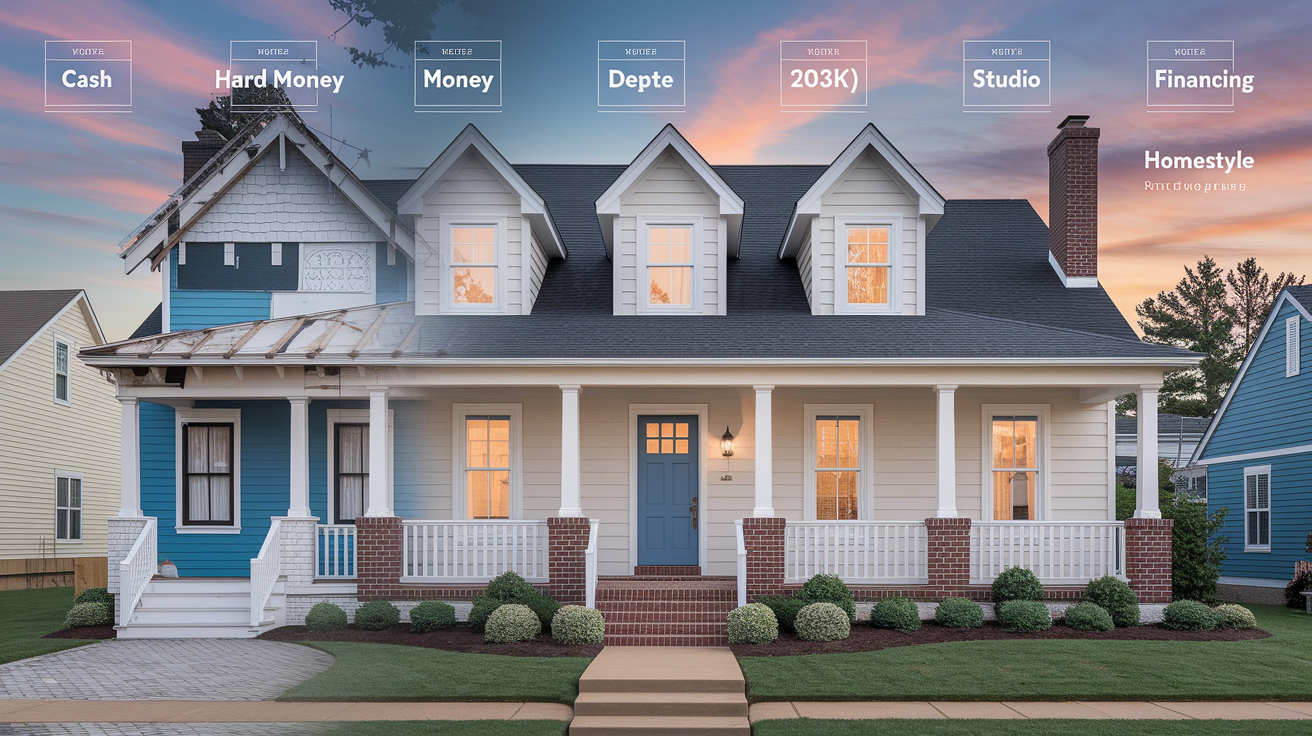
Traditional mortgages fall apart when a property shows up with structural damage, code violations, or a maintenance backlog that looks like a decade of neglect. Most conventional lenders won’t close on a house that can’t pass appraisal or inspection. That leaves thousands of distressed deals sitting on the market, waiting for someone who knows how to fund them differently.
You’re not stuck with traditional financing. Investors who understand alternative pathways can still buy, renovate, and profit from properties others won’t touch.
Several financing types work for distressed purchases. Cash removes lender requirements completely. Hard money loans focus on the property’s future value, not your credit score. Private lenders operate on relationships and flexibility. FHA 203(k) and HomeStyle renovation loans bundle purchase and rehab costs into one mortgage. Seller financing lets the current owner act as your lender. Bridge loans cover the gap when you need to close fast and refinance later.
The right financing depends on your timeline and what you’re planning to do. Flip quickly, hold long term, live in the property while you fix it. Different loan types carry different costs, speeds, and eligibility hurdles. You match the tool to the deal.
Main financing options for distressed property purchases:
- Cash
- Hard Money
- Private Money
- FHA 203(k)
- HomeStyle
- Seller Financing
Hard Money Loan Structures for Distressed Property Financing

Hard money lenders underwrite the asset, not your tax returns. They look at the property’s after repair value (ARV) and lend a percentage of that number, often 65 to 75 percent of ARV. If you’re buying a distressed house for $120,000 that’ll be worth $200,000 after renovation, the lender evaluates the $200,000 figure, not your W-2. That’s why hard money works when banks say no. The lender’s betting on the property’s post rehab marketability, and the loan is secured by the asset itself.
Cost Factors and Loan Terms
Hard money is expensive. But speed and flexibility justify the price when the deal timeline is tight. Interest rates typically run 10 to 15 percent, and you’ll pay origination points (usually 2 to 4 percent of the loan amount) at closing. Loan terms range from 6 to 12 months, sometimes shorter. Some lenders charge extension fees if you need more time, and those can add another 1 to 2 percent. Funding often happens in as little as two weeks, which beats a 30 or 45 day conventional mortgage by a wide margin.
Best Scenarios for Hard Money in Distressed Deals
Hard money fits when you have a clear, short exit. Flips. Heavy rehabs. Competitive distressed purchases where sellers demand quick closings. The Chicago investor who renovated in four months and netted 25 percent profit after repaying the loan wasn’t sitting on the property for a year. Hard money works when you can get in, execute, and get out before the high interest accumulates. It doesn’t work as well for long term holds, because the cost will erode your cash flow and eat your equity.
| Cost Component | Typical Range | Notes |
|---|---|---|
| Interest Rate | 10–15% | Varies by lender, borrower experience, and deal quality |
| Origination Points | 2–4% of loan amount | Paid at closing; sometimes deferred and rolled into the loan |
| Loan Term | 6–12 months | Short term; exit via sale or refinance |
| Extension Fee | 1–2% of loan amount | If you need more time beyond the original term |
| Funding Speed | Days to 2 weeks | Much faster than conventional bank approval |
Private Money Lending Options for Distressed Purchases

Private money is capital lent by individuals, not institutions. These lenders usually know you or have worked with you before. They base decisions on your track record and the deal’s fundamentals, not a standardized underwriting checklist. Terms get negotiated case by case, and that flexibility means you can structure repayment schedules, interest rates, and collateral arrangements to fit the project. The downside? Private lenders expect higher returns or more security than a bank would, because they’re taking on risk that regulated lenders won’t touch.
Private capital shines when you need quick access to funds and the property doesn’t meet conventional criteria. The New York investor who used private lenders repeatedly did so because the speed and relationship trust let him close deals faster than competitors. Risk for the borrower includes possible personal guarantees, collateral pledges on other property you own, and less legal protection than you’d get with a regulated lender. Always put the terms in writing. Even if the lender is a friend or family member.
When Private Capital Outperforms Institutional Options
Private lenders make sense when you’re competing for a distressed deal and need to close in days, not weeks. They also work if your credit score or income documentation won’t pass bank underwriting but you have experience and a solid renovation plan. Competitive foreclosure purchases. Properties with structural issues that scare off conventional appraisers. Scenarios where you need flexible draw schedules. The personalized repayment structure (interest only for six months, then refinance, for example) can align better with your actual cash flow than a bank’s rigid P&I schedule.
Cash Purchase Approaches for Distressed Property Acquisition

Cash is the fastest way to close and the strongest negotiating lever you have. When you tell a seller or auctioneer you can close in a week with no financing contingency, you often win the deal even if your offer isn’t the highest. Lenders can’t delay you. Appraisals can’t kill the contract. And the property’s condition doesn’t matter to your ability to perform. That’s why cash dominates foreclosure auctions, bank owned sales, and situations where the seller is desperate to exit quickly.
The downside is capital intensity. If you use $150,000 cash on one property, that’s $150,000 you can’t deploy elsewhere. You’re trading liquidity for speed and certainty, and that limits how fast you can scale your portfolio. The opportunity cost is real. If you’re sitting on cash that could earn 8 percent annually in another investment, tying it up in a single property better deliver returns that justify the tradeoff.
Five scenarios where cash purchase approaches work best:
- Foreclosure auctions where financing isn’t available and properties sell as is.
- Bank owned or REO deals where the lender wants a fast, clean closing.
- Properties with severe structural issues that no lender will touch until repairs are complete.
- Sellers under financial or personal pressure who need to close in days.
- High competition markets where all cash offers move to the front of the line.
Renovation Loan Products Supporting Distressed Property Financing

Renovation loans bundle the purchase price and rehab costs into a single mortgage, so you’re not scrambling for two separate funding sources. That’s useful when you want to live in the property while you fix it, or when you prefer one lender relationship instead of juggling a purchase mortgage plus a separate construction loan. The tradeoff is longer timelines and more documentation than hard money or cash. These programs are structured. Lenders want detailed scopes, contractor bids, and inspections before they release funds.
FHA 203(k) Program Requirements
The FHA 203(k) is designed for owner occupants buying fixer uppers. You must live in the property as your primary residence, and the loan covers both the purchase and renovation costs in one package. Eligible repairs include structural work, new roofs, HVAC replacement, and foundation fixes. Pretty much anything that makes the house livable and up to code. The process requires a HUD consultant to approve your renovation plan, and draws are released in stages as work is completed. It’s not fast. But it’s accessible if you’re a first time buyer or don’t have a big cash reserve. The Florida investor who used a 203(k) to buy and live in a fixer benefited from low down payment requirements and long term, fixed rate financing that cash or hard money can’t match.
HomeStyle Renovation Loan Overview
Fannie Mae’s HomeStyle loan is more flexible than the 203(k). You don’t have to occupy the property, so investors can use it for rentals or flips. It covers a wider range of projects, including luxury upgrades and energy improvements, not just structural repairs. Borrower qualification is more stringent. You’ll need solid credit and income documentation. But the terms are conventional, and the interest rate is lower than hard money or private loans. HomeStyle works when the property needs moderate to heavy rehab but you plan to hold it long enough that a conventional rate makes sense.
| Loan Type | Speed | Documentation Required | Best Use Case |
|---|---|---|---|
| FHA 203(k) | Slow (30–60 days) | High: HUD consultant, detailed scope, contractor bids | Owner occupant buying fixer upper with low down payment |
| HomeStyle | Moderate (30–45 days) | High: conventional underwriting, appraisal, scope approval | Investor or owner with good credit, moderate to heavy rehab |
| Hard Money | Fast (days to 2 weeks) | Low: property ARV, basic borrower info, renovation plan | Flip or heavy rehab with short exit timeline |
| Private Money | Very Fast (days) | Minimal: negotiated case by case | Relationship based deals, competitive closings, flexible terms |
Seller Financing Structures for Distressed Assets

Seller financing means the property owner acts as your lender. Instead of getting a mortgage from a bank, you make monthly payments directly to the seller under terms you both negotiate. This option opens doors when your credit, income, or the property’s condition blocks traditional financing. It’s common in distressed deals because motivated sellers often care more about moving the property quickly than squeezing out top dollar. Offering flexible terms can attract buyers who otherwise can’t close.
Interest rates in seller financing are usually higher than bank rates, because the seller is taking on the credit and default risk a bank would normally carry. You’ll also negotiate the down payment (which can be lower than the 20 percent a conventional lender might require) and the repayment term, which might include a balloon payment after a few years. The Arizona buyer who negotiated a low down payment and favorable terms on a distressed commercial building used seller financing to acquire an asset he couldn’t have financed conventionally, then renovated and either refinanced or sold before the balloon came due.
Negotiating Terms Safely
Nail down every detail in writing. Specify the down payment, interest rate, monthly payment amount, term length, and whether there’s a balloon payment. Make sure the title stays clean. Use an attorney or title company to record the lien properly so you’re protected if the seller has other debts. Watch out for wraparound mortgages, where the seller still owes a bank and you’re paying the seller, who then pays the bank. If the seller defaults on the underlying mortgage, the bank can foreclose and you lose the property even if you’ve been making your payments on time. Wraparounds can work, but they’re risky and require careful legal structuring and title insurance.
Bridge Loan Financing for Time Sensitive Distressed Purchases

Bridge loans are short term loans designed to close fast and give you breathing room until you can refinance or sell. They’re called “bridge” loans because they bridge the gap between buying a property and securing permanent financing or exiting via sale. Lenders can approve and fund bridge loans in days to a week, which is critical when you’re competing for a distressed property and the seller wants to close immediately. The catch is cost. Interest rates can hit 20 percent or more, origination fees run 2 to 4 percent of the loan amount, and terms are usually 6 to 12 months, sometimes shorter.
Banks rarely offer bridge loans on distressed properties because they’re risk averse to poor condition and short timelines. Private lenders dominate this space. They’ll require collateral (often the property you’re buying, plus possibly another property you already own) and they’ll want to see a clear exit strategy. If you plan to flip in six months, show them the ARV and your renovation timeline. If you plan to refinance into a conventional mortgage once repairs are done, explain how you’ll meet the new lender’s requirements. Extension fees are another cost to budget for. If your project runs long and you need an extra three or six months, expect to pay another 1 to 2 percent of the total loan amount to extend the term.
Avoiding Common Bridge Loan Pitfalls
Collateral risk is real. If your renovation takes longer than expected or the market softens and you can’t sell or refinance, the lender can seize the collateral. Rigid terms mean you’re locked into a written agreement with limited flexibility once the loan closes. If your contractor disappears or permits take twice as long as planned, the clock is still ticking and interest is still accruing. Align your renovation timeline carefully with the loan term. Budget for delays, and have a backup exit plan. If you’re planning to sell, what happens if it takes 90 days instead of 30 to find a buyer? If you’re planning to refinance, are you sure you’ll meet the new lender’s requirements once the work is done?
Crowdfunding and Partnership Financing for Distressed Deals

Real estate crowdfunding pools capital from multiple investors through an online platform, letting you participate in larger distressed deals without putting up all the money yourself. The California investor who crowdfunded a multifamily rehab spread the capital requirement across dozens of backers, which reduced individual risk and let the project scale beyond what any single investor could have afforded. The downside is less control. You’re trusting the platform sponsor or operator to manage renovations, leasing, and eventual sale or refinance. And you’ll pay platform fees that cut into returns. Crowdfunding works when you want exposure to bigger rehab projects but don’t have the time, expertise, or capital to execute solo.
Partnerships and joint ventures split the work. One partner brings capital, the other brings renovation skills or property management experience, and both share profits according to a written agreement. The Denver JV that achieved a 40 percent return on investment worked because roles were clear. One partner funded the purchase and rehab, the other managed contractors and leased units. Profits and decision authority were spelled out in the operating agreement, so there was no confusion when it came time to distribute cash or decide whether to sell or hold.
How to Structure a JV Agreement
Start with contributions. Who’s putting in cash, who’s putting in labor, and how do you value sweat equity versus dollars? Define decision authority. Who approves contractors, budgets, and the final exit? Spell out profit splits. Is it 50-50, or does the capital partner take a preferred return before profits are split? Document exit terms. What happens if one partner wants out early, or if the property doesn’t sell as planned? Put all of this in writing and have an attorney review it. Handshake deals with friends or family members are the fastest way to destroy relationships and lose money.
Four common JV mistakes to avoid:
- Failing to document contributions and responsibilities in writing.
- Assuming equal effort means equal profit without specifying a formula.
- Ignoring what happens if one partner wants to exit or the project runs over budget.
- Mixing personal relationships with business decisions without clear legal boundaries.
Final Words
When a property needs work and banks say no, you still have options. Main funding paths include cash, hard money, private lenders, renovation loans, seller carry and bridge loans, plus crowdfunding and JVs. These get you to closing when a traditional mortgage won’t.
They trade speed for cost or control. Hard money and bridge close fast but cost more; renovation loans need more paperwork; private capital and seller finance add flexibility.
Match funding to your timeline, keep reserves, vet lenders, and pressure-test exits. The right financing strategies for distressed property purchases can make tough deals practical.
FAQ
Q: What financing options are available for distressed property purchases?
A: The financing options available for distressed property purchases are cash, hard money, private money, FHA 203(k), HomeStyle, and seller financing — each suits different speed, cost, and borrower needs.
Q: Why do distressed properties often fail traditional mortgage approval?
A: Distressed properties often fail traditional mortgage approval because lenders require habitable condition, clear title, and standard repairs; severe damage, code violations, or missing utilities usually stop conventional underwriting.
Q: How fast can hard money fund a distressed purchase?
A: Hard money can fund a distressed purchase in as little as two weeks, making it a go-to when closings must be fast and conventional financing would be too slow.
Q: What are typical hard money costs and terms?
A: Typical hard money costs and terms are 10–15% interest, points and closing fees, and 6–12 month terms; lenders often consider ARV (after-repair value) and may fund rehab draws.
Q: How do private money lenders differ from hard money lenders?
A: Private money lenders differ by offering relationship-based, negotiable terms, flexible repayment, and custom collateral requirements, while hard money follows more standardized asset-based underwriting and published rates.
Q: Who is FHA 203(k) best suited for and what does it require?
A: FHA 203(k) is best suited for owner-occupant buyers who need combined purchase-and-rehab financing; it requires detailed scopes, contractor bids, and adheres to owner-occupancy and documentation rules.
Q: When is paying cash the best choice for distressed deals?
A: Paying cash is the best choice for auctions, bank-owned sales, or severe structural issues where speed and negotiating power matter; it eliminates lender delays but ties up capital.
Q: What is seller financing and what are the main risks?
A: Seller financing means the seller carries the mortgage; it offers flexible terms and lower qualification barriers but carries higher interest, title risks, and needs carefully negotiated protections like escrow and clear payment terms.
Q: When should I use a bridge loan for a distressed purchase?
A: You should use a bridge loan when you need immediate, short-term funding and have a clear exit plan (refinance or sale); expect higher interest, origination fees, and tight timelines.
Q: How do crowdfunding and partnerships work for distressed rehab projects?
A: Crowdfunding pools many investors for capital with less control and platform fees; partnerships/JVs split capital and skills, requiring legal agreements, clear profit splits, and defined decision authority.
Q: What’s a quick screening checklist to choose the right financing path?
A: A quick screening checklist: timeline, available cash, rehab scope, occupancy plans, credit, and acceptable cost. Match cash for speed, hard/private for quick rehabs, 203(k)/HomeStyle for owner-occupants.
Q: What are the main risks across distressed property financing options?
A: The main risks across financing options are higher costs, short terms, rehab overruns, misestimated ARV, title or lien surprises, and a misaligned exit strategy — always include reserves and stress tests.