
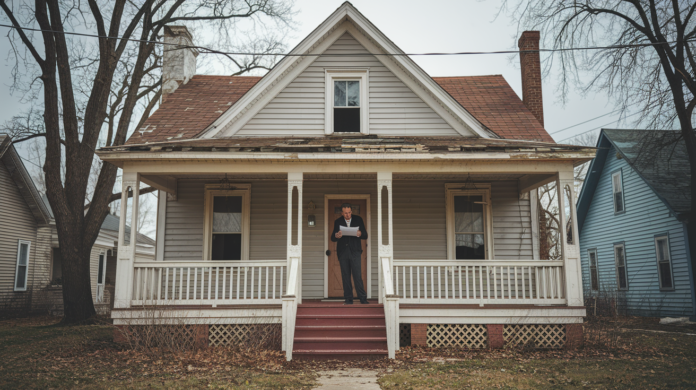
Think a cheap distressed house is a sure win?
Many buyers only see the price and miss the legal time bombs attached to the deed.
Tax liens, unclear title, tenant rights, code fines, and environmental orders can land on you the minute you record the deed.
This post names the biggest legal traps, shows how to spot them fast, and gives practical steps to protect your investment before closing.
Do the checks early and you keep the upside.
Skip them and the deal can cost far more than you paid.
Core Legal Risks in Distressed Property Purchases
Distressed properties come with legal risks most buyers don’t spot until it’s too late. Foreclosures, short sales, REO listings, tax sales… they all got forced out of normal market conditions because something broke down. Could be the seller’s finances, a legal mess, or years of ignoring repairs. What matters is that these transactions move fast, strip away seller obligations, and dump nearly everything onto you. If you’re looking at a distressed home, you’re inheriting someone else’s problems unless you find them first and fix them before closing.
Ownership uncertainty pops up constantly. Distressed sellers often can’t produce clean documentation. A bank might list a home it grabbed through foreclosure, but maybe that foreclosure wasn’t legally finished. Or an heir shows up later with a claim. Financial obligations stick to the property in ways buyers don’t expect either. Unpaid taxes, contractor bills, HOA dues, municipal fines… they attach to the title and become your debt the second you record the deed. Legal encumbrances like mechanic’s liens or judgment liens stay active until someone pays them off, and most distressed sellers don’t have the money or motivation to clear them before you close.
Beyond title and debt problems, distressed homes often carry active legal obligations you won’t discover until your name’s on the deed. Unresolved code violations, eviction proceedings that never finished, environmental cleanup orders. Many distressed deals use “as-is” language that limits what the seller has to tell you, so you won’t get a nice list of defects or legal exposure. You’ll need to dig it up yourself.
The five biggest and most expensive legal traps in distressed purchases are:
- Unclear or defective title from missing signatures, unrecorded deeds, or competing ownership claims
- Outstanding liens that survive the sale (tax liens, mechanic’s liens, judgment liens)
- Tenant or occupant rights that delay possession and force you into formal eviction
- Municipal code violations with unpaid fines and mandatory repair orders
- Environmental hazards that trigger strict compliance requirements and remediation costs
Title Defects and Ownership Disputes
Title defects happen when the legal ownership record has gaps, errors, or conflicts. Distressed properties get hit hard here because they pass through multiple hands under pressure. A foreclosure might’ve been filed by the wrong lender. A prior transfer could have a forged signature. An estate settlement might’ve missed a rightful heir who now wants a piece of the property. Any of this can invalidate your purchase or drag you into quiet-title litigation just to prove you actually own the place.
Distressed sales shrink your due diligence window and kill the seller’s incentive to fix title issues beforehand. Banks selling REO properties usually won’t cure minor title problems. They’ll just discount the price and let you deal with it. If you’re buying at auction, there’s often no time to order a title report before you’re required to pay in full. That’s how people end up owning homes they can’t legally occupy or resell.
Common sources of title conflicts:
- Estate disputes where heirs weren’t notified or didn’t consent
- Unrecorded deeds or transfers that leave a gap in the ownership chain
- Prior liens or easements that were never formally released and still encumber the property
Liens, Judgments, and Financial Encumbrances
A lien is a legal claim against the property for unpaid debt. When you buy distressed real estate, you’re buying the home and everything stuck to it. That includes active liens unless they’re paid off or released before closing. Tax liens are the most dangerous because they often jump ahead of your mortgage and can force a sale if left unpaid. Contractor liens (mechanic’s liens) show up when a prior owner stiffed someone who worked on the property. Judgment liens come from court-ordered debts. All of these can transfer to you.
Finding liens requires a title search and a municipal records review. Lots of buyers skip the municipal check and miss code-enforcement liens or unpaid utility bills that got converted into property liens. Even if a lien shows up in the title report, you still need to negotiate who pays it. In short sales, the bank might agree to release some liens but not others. In foreclosure sales, junior liens often get wiped out. But not always. Tax liens, IRS liens, certain municipal liens… those frequently survive foreclosure and land on you.
Payoff complications happen all the time. A contractor who filed a lien might be out of business or gone, making it nearly impossible to get a formal lien release. Paying off a tax lien could mean dealing with a backlogged state revenue department. If you close without clearing these, you’ll own a home you can’t refinance, sell, or sometimes even insure until the liens are gone. Title insurance can help, but only for liens that were missed during the title search and actually covered under your policy.
Structural Deficiencies With Legal Consequences
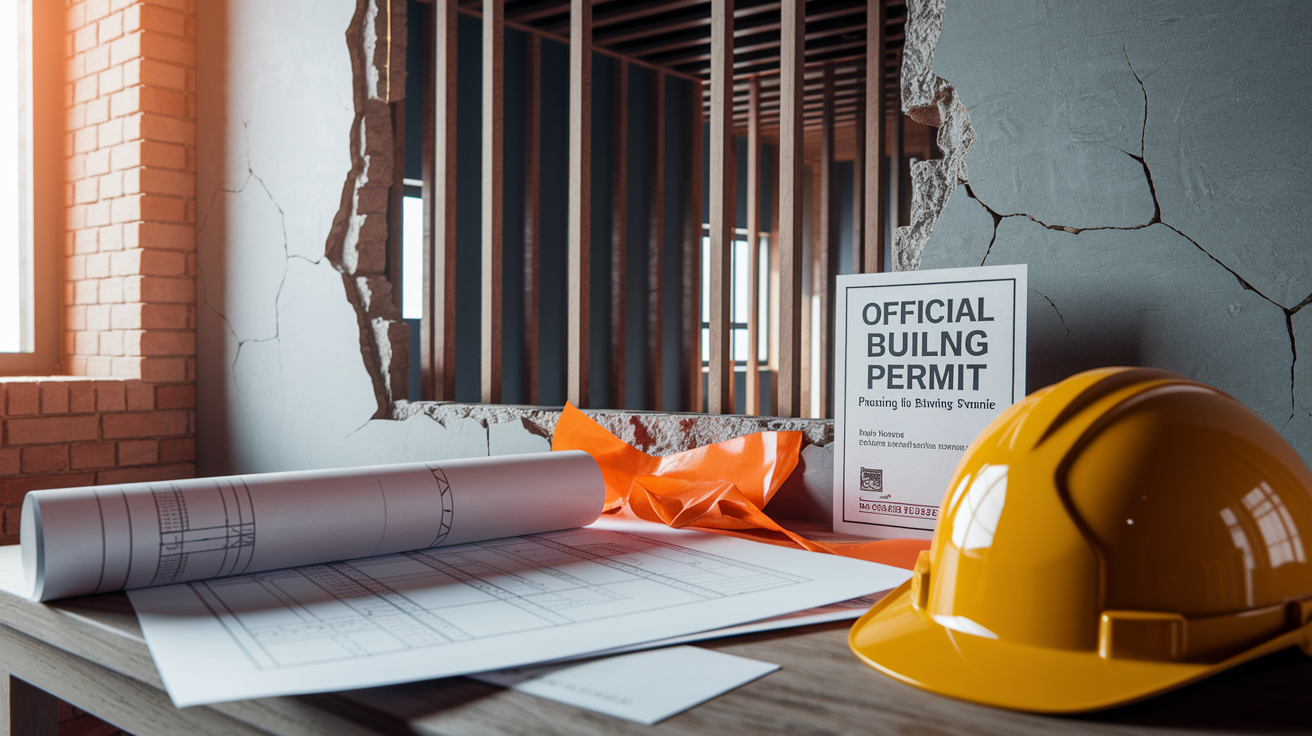
Serious structural damage doesn’t just cost money. It can trigger legal obligations you never agreed to. Municipal building departments issue code violations and repair orders for unsafe conditions like failing foundations, deteriorating roofs, exposed wiring, compromised load-bearing walls. If a distressed property has an open code case, that case transfers to you. You inherit the repair deadline, the fines, and the legal requirement to bring the property into compliance before you can legally occupy or rent it.
Distressed homes often get sold without permits for prior work. An unpermitted addition, garage conversion, or plumbing modification can mean mandatory removal or expensive retroactive permitting. If the prior owner ignored a municipal stop-work order, you might face escalating fines that started piling up before you ever saw the property. In some places, unpaid code-violation fines convert into liens and can eventually trigger foreclosure.
Four structural issues that create serious legal exposure:
- Foundation cracks or instability that violate local safety codes and require engineer-certified repairs
- Unpermitted additions or renovations that must be removed or brought into compliance
- Roof damage severe enough to trigger habitability violations and mandatory repair timelines
- Electrical or plumbing systems that fail inspection and block certificate-of-occupancy issuance
Unpaid Property Taxes and Tax Sale Complications
Property taxes are a priority claim. If the prior owner didn’t pay them, the taxing authority can place a lien on the property and, in many states, eventually foreclose. When you’re buying a distressed home, you need to verify the tax status before closing. Unpaid taxes don’t just add to your purchase cost. They can threaten your ownership if the tax authority’s claim was never properly resolved during the sale.
Tax sale properties carry extra risk. Many states allow a redemption period where the original owner can reclaim the property by paying off the tax debt plus interest. If you buy at a tax sale, you might not get clear title for months or even years. During that time, the prior owner keeps certain rights, and you might be unable to sell, finance, or occupy the home. Delinquent taxes also rack up interest and penalties at rates that can quickly blow past the original debt. A $5,000 back-tax bill can turn into a $15,000 liability fast.
Tenant and Occupancy Rights

Distressed properties are often occupied. Could be tenants with leases, former owners who haven’t moved out, or squatters. Federal, state, and local laws provide strong protections to occupants, even in distressed sales. If a property gets sold subject to an existing lease, that lease typically survives the sale and you have to honor it until it expires. If the occupant is a tenant without a lease or a prior owner, you’ll need to follow formal eviction procedures. That can take 30 to 120 days depending on where you are.
Eviction isn’t automatic. You have to provide proper notice, file a court action if the occupant doesn’t leave voluntarily, and wait for a court hearing and judgment. Some places require relocation assistance or additional notice periods for tenants displaced by foreclosure. If you try a self-help eviction (changing locks, shutting off utilities, removing belongings), you expose yourself to civil and sometimes criminal liability.
Occupied distressed purchases also carry financial risks. The prior owner might’ve collected security deposits you’re now obligated to return or credit against rent. Tenants might’ve stopped paying rent months ago, and you’ll inherit the cost of eviction and lost rental income. Former owners sometimes stay in the home under informal arrangements with the lender, and those arrangements rarely transfer cleanly to the new buyer.
Foreclosure Sale Complications

Foreclosure sales operate under different rules than standard real estate transactions. Most foreclosure auctions require full payment within 24 to 48 hours and offer little or no inspection access before the sale. You’re bidding on properties you can’t enter, with title information you might not have fully reviewed, and with no financing contingency. Once your bid gets accepted, you own the legal problems along with the property.
Foreclosure sales also come with limited or no warranties. The foreclosing lender typically sells the property “as-is” and provides minimal disclosures. You won’t get the standard seller disclosures required in conventional sales, and you won’t have the right to request repairs or renegotiate based on inspection findings. If the home has $40,000 in hidden foundation damage, that’s your cost to absorb.
The three most critical foreclosure-specific risks:
- Redemption periods that allow the prior owner to reclaim the property for months after the sale, delaying clear title and occupancy
- Junior liens that weren’t extinguished by the foreclosure and remain attached to the property
- Immediate payment and no-contingency bidding rules that prevent you from securing financing or completing due diligence before purchase
Environmental Hazards and Compliance Risk

Older distressed homes frequently contain materials that are now regulated or banned. Lead paint was used in residential construction until 1978, and any home built before that carries potential lead-paint liability. Federal law requires sellers to disclose known lead hazards and provide buyers with a lead-paint pamphlet, but distressed sellers (especially banks and foreclosure trustees) often have no knowledge of the property’s condition and provide minimal disclosures. If you buy a pre-1978 home and later discover lead paint, you’re responsible for remediation if you rent the property or if a child gets exposed.
Asbestos, mold, and underground storage tanks show up frequently in distressed properties. Asbestos was widely used in insulation, floor tiles, and siding until the 1980s. Mold grows fast in homes with water damage or poor ventilation, and toxic mold exposure can create liability if you rent without remediation. Underground storage tanks (often used for heating oil) can leak and contaminate soil, triggering mandatory cleanup under state environmental laws. Remediation costs for soil contamination, asbestos abatement, or mold removal can run from $10,000 to well over $100,000. Environmental agencies can place liens on the property to recover cleanup costs if you don’t act.
HOA and Community Restrictions

Properties governed by homeowners associations or condo boards come with an extra layer of legal obligations. Distressed homes in HOA communities often have unpaid dues, special assessments, or unresolved rule violations. HOA liens can attach to the property and, in many states, an HOA has the legal right to foreclose for unpaid assessments. If the prior owner ignored architectural restrictions, parking rules, or landscaping requirements, the HOA might’ve already filed a lawsuit or imposed fines that transfer to you.
Unpaid HOA dues and special assessments can be substantial. A prior owner who stopped paying dues two years ago might’ve racked up $10,000 or more in back fees, late charges, and legal costs. Special assessments for building repairs, infrastructure upgrades, or reserve funding can add another $5,000 to $50,000 depending on the community. You’ll need an estoppel letter from the HOA before closing to identify all outstanding amounts, but many distressed transactions close without one. If you skip the estoppel, you’re buying blind.
Disclosure Law Limitations in Distressed Sales

Standard residential sales require sellers to disclose known defects and provide a property disclosure statement. Distressed sales work differently. Many states exempt bank-owned REO properties, foreclosure trustees, and estate executors from full disclosure requirements because these sellers never occupied the home and have no personal knowledge of its condition. The “as-is” language commonly used in distressed contracts reinforces this limited disclosure framework.
“As-is” doesn’t mean the seller can actively hide defects or commit fraud. If the seller actually knows about a serious issue, like foundation failure or an ongoing lawsuit affecting the property, most states still require disclosure. But if the seller is a bank that repossessed the home and never inspected it, the bank has no knowledge to disclose and no legal duty to investigate on your behalf.
This creates a big information gap. You’re buying a property with unknown and possibly severe defects, and you have no legal right to treat the seller’s silence as proof that the home is sound. The burden is entirely on you to inspect, test, research public records, and uncover problems before you close. If you waive inspection contingencies to make your offer more competitive, you eliminate your only contractual escape route.
Insurance Barriers and Legal Implications
Homeowners insurance is effectively mandatory if you’re financing the purchase. Lenders require proof of insurance before they’ll fund the loan. Distressed properties, especially those with structural damage, code violations, or vacancy history, are tough to insure. Insurers might refuse coverage outright, offer limited policies that exclude major perils, or require costly repairs before issuing a policy. If you can’t get insurance, you can’t close on a financed purchase.
Vacant homes carry higher premiums and stricter underwriting. Insurers view vacancy as a major risk factor because vacant properties are targets for vandalism, theft, and weather damage. If the distressed home you’re buying has been empty for months, expect standard carriers to decline coverage. You’ll need a specialized vacant-property policy or a builder’s-risk policy if you’re planning immediate renovation. Both are more expensive and offer narrower coverage than standard homeowner policies. Some lenders won’t accept these policies, which can kill your financing and force you into a cash purchase or a higher-cost hard-money loan.
Preventative Legal Strategies for Buyers
The best way to cut legal risk is to treat due diligence as a non-negotiable investment, not an optional cost. Distressed deals move fast, but rushing through research is how buyers end up with $50,000 in surprise liabilities.
Six essential preventative steps every distressed-property buyer should take:
- Order a full title search and title commitment right after going under contract, and purchase an owner’s title insurance policy at closing
- Get a municipal lien search and code-violation report from the local building department to identify unpaid fines, open permits, and repair orders
- Commission a comprehensive property inspection covering structure, roof, foundation, plumbing, electrical, HVAC, and pest issues. Add a sewer scope and environmental testing if the property age or condition warrants it
- Request an estoppel letter from the HOA or condo association detailing all unpaid dues, special assessments, pending violations, and upcoming fee increases
- Verify property tax status, check for delinquent taxes or active tax-certificate holders, and confirm that all taxes will be current at closing
- Confirm occupancy status and review any tenant leases, security deposits, or notice requirements. If the property is occupied by non-tenants, budget for formal eviction costs and timelines
After gathering this information, have a real estate attorney review your purchase contract, title report, inspection findings, and disclosure documents. An attorney can spot deal-killing issues before you’re locked in, negotiate protective contract language, and advise on lien resolution strategies. If the property has significant title defects, unresolved code cases, or occupant disputes, your attorney can tell you whether those problems are fixable and what it’ll cost. On high-risk deals, legal fees of $1,500 to $5,000 are cheap compared to the $20,000 to $100,000 in post-closing liabilities you might avoid.
Final Words
When you’re in the action, legal risks show up fast — unclear title, unpaid liens, tenant rights, tax trouble, and hidden defects. Each one can sink a deal if you don’t spot it early.
This post walked through the main trouble spots and gave practical steps: title checks, lien searches, inspections, insurance checks, and when to call a lawyer.
Understanding legal pitfalls when buying distressed residential property helps you avoid surprises and move with confidence. With the right checks, these deals can still pay off.
FAQ
Q: What are the risks of buying distressed property?
A: The risks of buying distressed property include unclear title, unpaid liens or taxes, undisclosed structural or environmental defects, tenant or occupancy disputes, costly repairs, insurance refusal, and limited seller disclosures.
Q: What is the 3 3 3 rule in real estate?
A: The 3 3 3 rule in real estate is a flexible rule of thumb; investors often use it as a quick screen—three months reserves, three comparable rent or price checks, and three independent repair estimates.
Q: Why should you not buy a foreclosed home?
A: You should not buy a foreclosed home without caution because foreclosures often sell as-is, limit inspections, can carry hidden liens or unpaid taxes, may have tenant or redemption rights, and lack seller disclosures.
Q: Can you get a mortgage on a distressed property?
A: You can get a mortgage on a distressed property, but approval depends on lender rules, clear title and insurance, and property condition; consider renovation loans, extra reserves, or lenders who accept as-is purchases.