

Think an insurance policy will save you the moment rent stops?
Not always.
Rental income loss insurance pays for lost rent after covered physical damage, but it has waiting periods, lots of paperwork, and exclusions.
An emergency fund is your own cash, with instant access for vacancies, small repairs, or deductibles.
Which protects landlords better?
It depends, but most long-term owners benefit from both.
Use cash for everyday gaps and insurance for rare, costly disasters.
Key Differences Between Rental Income Loss Insurance and an Emergency Fund for Landlords

Rental income loss insurance and emergency funds both protect landlords when rent stops coming in, but they work in completely different ways. Insurance kicks in after a covered disaster, like a fire, hurricane, or severe storm, makes your property unlivable. You’ll get reimbursed for lost rent, usually capped at 12 months, but only after you’ve jumped through hoops: submitting leases, bank statements, damage photos, and waiting for an adjuster to approve everything. An emergency fund is just your own cash sitting in a savings account or money market, ready to cover vacancies, repairs, deductibles, or any gap in income, no questions asked.
Speed and access separate these tools more than anything else. Insurance has a waiting period, often 48 to 72 hours, plus however long the adjuster takes. Your emergency fund? Instant. Transfer money, problem solved. Premiums come due every year and can climb after you file a claim. Your savings account doesn’t charge you a dime, though you do miss out on higher returns you might get investing that cash elsewhere. Insurance handles catastrophic property damage. Your fund handles the everyday chaos: furnace breaks, tenant bails, unit sits empty longer than expected.
Most landlords do better with both. Insurance guards against disasters you can’t afford to self-fund. Cash reserves cover the smaller, frequent surprises that pop up constantly. Single-property owners with reliable tenants might lean harder on savings. Multifamily operators in hurricane or earthquake zones? They’re usually carrying both a solid emergency fund and extended rental income coverage, sometimes 12 to 18 months, because repairs and re-leasing take forever after a major event.
| Option | What It Covers | Access Speed | Cost Type | Best For |
|---|---|---|---|---|
| Rental Income Loss Insurance | Lost rent from fire, storm, severe damage, long repairs, extended outages, mandated closures | 48–72 hour wait + adjuster review + documentation | Annual premium (varies by property risk, location, coverage limits) | High-value properties, disaster-prone areas, multifamily portfolios with extended repair exposure |
| Emergency Fund | Vacancies, non-payment, small repairs, insurance deductibles, operational surprises | Instant (same-day transfer from savings or money market) | Opportunity cost (cash earns 2–2.5% vs higher investment returns) | All landlords, especially single-property owners, new landlords, anyone with variable income or frequent turnover |
| Claim Trigger | Covered physical event documented with proof of damage and income loss | You decide when to withdraw; no approval needed | Premiums recur; may increase after claim | N/A |
| Exclusions | Tenant non-payment, normal vacancy, floods/earthquakes (unless separately insured), utility failures without property damage | No exclusions; covers any income or expense gap | No recurring fee; one-time savings effort | N/A |
| Documentation Burden | High (leases, rent receipts, photos, repair invoices, adjuster cooperation) | None (withdraw cash as needed) | N/A | N/A |
How Rental Income Loss Insurance Works for Covering Lost Rent

Rental income loss insurance replaces the rent you can’t collect when a covered event makes your units uninhabitable. Policies usually cap payouts at 12 months or a stated dollar limit, whichever hits first, and start paying after a short waiting period of 48 to 72 hours. Insurers figure out what they owe based on your rental history, occupancy rates, and local market conditions, then subtract expenses you’re not paying while the place sits empty (utilities, maintenance, maybe property management). You’ll get checks monthly to match your old rent schedule, or sometimes a lump sum, depending on what the policy says.
Coverage gets triggered by natural disasters (hurricanes, earthquakes, severe storms), fires, structural damage needing weeks or months of work, extended utility outages, and the occasional government-mandated closure. But policies won’t cover tenant non-payment, normal vacancy when someone moves out, floods and earthquakes (you need separate policies for those), or neighborhood utility failures that don’t actually damage your building. Storm knocks out power for three days but your property is fine? You’re not collecting anything. Coverage needs direct physical damage to the insured property.
What rental income loss policies usually include:
- Covered triggers: Fire, hurricane, windstorm, hailstorm, riot, civil commotion, volcanic explosion. Policy type matters here. DP1 named-peril policies list specific events.
- Exclusions: Tenant non-payment, routine vacancy, flood and earthquake (separate policies required), utility failure without property damage.
- Waiting period (elimination period): Typically 48–72 hours before benefits start. Think of it like a deductible measured in time instead of dollars.
- Claim documentation: Signed lease agreements, recent bank statements or rent receipts, property damage photos and videos, repair invoices, mitigation receipts.
- Payout timing: Monthly installments that match your rent schedule, or a single lump sum. Check with your carrier.
- Fair rental value calculation: Insurers look at lease terms, recent rent deposits, market comparables, and occupancy history. They might apply a coinsurance clause if you underinsured, which cuts the payout proportionally.
Building an Effective Landlord Emergency Fund for Rental Income Protection

An emergency fund is liquid, risk-free cash that you control. It sits separate from your operating accounts and gets used only for unexpected costs: vacancies, urgent repairs, insurance deductibles, property management shortfalls, sudden income loss. You can access it without selling stocks at a loss or triggering tax penalties, as long as you keep it in something appropriate like an FDIC-insured savings account, money market, or short-term Treasury fund. Survey data from 2021 showed that about 61 percent of Americans couldn’t cover a $1,000 emergency. Cash flow is fragile, especially when rental income stops.
Landlords deal with more volatility than people pulling a salary because rental income can vanish overnight. Tenant skips. Unit goes vacant. Furnace dies in January. And you still owe the mortgage, property taxes, and insurance. That’s why standard guidance for rental property owners is to hold 3 to 6 months’ worth of total expenses in reserves, sometimes more if you depend on rental income full-time or manage multiple properties with staggered lease-end dates. Each property should also carry its own per-unit reserve to cover maintenance, repairs, vacancy, accounting fees, and big replacements like a roof or HVAC system.
The best spot for your emergency fund is an FDIC-insured high-yield savings account or money-market account with quick access, no early-withdrawal penalties, and no annoying minimum-balance requirements. Look for accounts returning around 2 to 2.5 percent (check current rates and fine print). Some landlords layer their reserves: two months’ expenses in instant-access savings, another two months in slightly higher-yielding stuff like crowdfunding debt notes or government bond funds, which still settle within days.
Steps to calculate your landlord emergency fund size:
- List all monthly fixed expenses: Mortgage payment, property taxes, insurance premiums, property management fees, HOA or condo dues, utilities you pay.
- Add variable operating costs: Average monthly maintenance, seasonal repairs, accounting fees, pest control, landscaping.
- Multiply total monthly cost by coverage months: Use 3 months for stable properties with long-term tenants. Use 6 or more if you’re a full-time landlord or manage higher-turnover units.
- Example calculation: $2,000 mortgage + $300 taxes + $150 insurance + $200 property management + $350 utilities and maintenance = $3,000 per month. $3,000 × 6 months = $18,000 recommended emergency fund.
- Review and adjust annually: As rents rise and property values increase, recalculate your reserve target and top up the account to match new risk exposure.
Cost Comparison: Insurance Premiums vs. Saving Cash Reserves

Insurance premiums recur every year. They swing wildly based on property location, age, construction type, on-site amenities, coverage limits, and deductible. High-risk zones (hurricane coasts, earthquake regions, areas with frequent severe storms) pay more. Older buildings or ones with outdated electrical and plumbing get hit with higher rates. You can shave your premium by accepting a higher deductible, but that just shifts more out-of-pocket cost onto you when you file. Premiums are predictable at renewal, but they can jump after you file a claim or if your insurer reassesses regional risk.
Emergency funds don’t have a direct cost. You’re saving your own money. But they do carry opportunity cost. Cash sitting in a 2.5 percent savings account isn’t earning the 8 to 10 percent you might get from stock index funds or the cash-on-cash return of another rental property. That spread is the hidden cost of keeping money liquid. But emergency savings never increase, never require renewal negotiations, and stay under your control with zero bureaucracy. If you need $5,000 to replace a water heater today, you transfer the money and the job gets done. No waiting period, no adjuster, no documentation package.
| Cost Type | Annual Cost Range | Predictability | Risk of Increase | Flexibility |
|---|---|---|---|---|
| Rental Income Loss Insurance Premium | $300–$1,500+ per year (varies by property risk, location, coverage limits) | Fixed at policy term; known in advance | Can rise after claim or regional disaster reassessment | Coverage is locked to policy terms; can’t adjust mid-term without endorsement |
| Emergency Fund (Opportunity Cost) | 2–7% annual return forgone (difference between savings rate and investment returns) | Return varies with market rates; controllable by account choice | Interest rates fluctuate; no “increase” but return can drop | Instant access; use for any purpose; no restrictions or waiting periods |
| Deductible or Waiting Period | Insurance: 48–72 hour wait + potential dollar deductible; Emergency fund: $0 wait, use immediately | Insurance deductible is fixed; fund withdrawal has no deductible | Insurance deductible may increase at renewal; fund has no such change | Fund offers zero friction; insurance requires documentation and approval |
| Tax Treatment | Insurance premiums deductible as business expense (Schedule E); fund deposits are after-tax but withdrawals not taxed | Premiums are predictable expense; fund has no recurring tax event | Premium deduction stable unless policy changes; fund generates taxable interest income | Both offer tax efficiency; insurance deducts cost; fund avoids taxable event on withdrawal |
| Coverage Scope | Insurance: only covered perils; Fund: any expense or income gap | Insurance scope defined by policy; fund scope is unlimited | Insurance scope can narrow if carrier changes terms; fund always flexible | Fund handles non-covered events; insurance won’t pay for excluded losses |
Claim Process, Documentation, and Limitations of Rental Income Loss Insurance

Filing a rental income loss claim is way more involved than pulling cash from your savings account. Insurers want proof that a covered event happened, that it directly caused the income loss, and that the amount you’re claiming matches your documented rental history. You’ll submit signed lease agreements, recent bank statements showing rent deposits, rent receipts or payment logs, property damage photos and videos, repair invoices, and receipts for any mitigation work you did to stop further damage. The insurer assigns an adjuster who reviews your documentation, inspects the property, verifies the scope of damage, and calculates fair rental value based on your lease terms and local market comparables.
Steps Required to File a Lost Rent Claim
- Contact your insurer immediately: Call your carrier’s claims line with your policy number, property address, and a brief description of what happened. Do this within 24 hours to start the clock and meet policy notification deadlines.
- Document all damage thoroughly: Take time-stamped photos and videos of every affected room, structural element, and damaged system (roof, electrical, plumbing). Capture wide shots and close-ups. Insurers need visual proof of both scope and severity.
- Take reasonable steps to prevent further damage: Board broken windows, tarp damaged roofs, shut off water if pipes burst, and keep all receipts for emergency mitigation work. Insurers reimburse reasonable mitigation costs and may deny claims if you let damage get worse.
- Gather proof of rental income: Collect signed leases, the last three to six months of bank statements showing rent deposits, copies of rent checks or electronic payment confirmations, and tenant contact information. If a unit was vacant when the loss happened, provide market rent comps to establish fair rental value.
- Cooperate with the adjuster: Schedule the property inspection promptly, provide all requested documents, answer questions accurately, and keep communication records. Delays or incomplete documentation can stall your claim for weeks.
- Wait for payout approval: After the waiting period (typically 48–72 hours) and adjuster review, the insurer will issue payment on your normal rent schedule or as a lump sum, depending on policy terms. Most policies cap benefits at 12 months or the dollar limit stated in your declarations page, whichever comes first.
Insurers deny rental income loss claims for a few common reasons: failure to prove a covered peril caused the damage, inadequate documentation of rental history or occupancy, letting damage get worse without mitigation, missing notification deadlines, or claiming loss during a policy exclusion (like normal vacancy or tenant non-payment). If your claim gets denied, you can file a written appeal with additional evidence, request a second adjuster review, or escalate to your state’s insurance department for mediation. Keep copies of all correspondence and document every phone call. Appeals hinge on proving the insurer misapplied policy terms or overlooked valid evidence.
Liquidity, Speed, and Flexibility: Accessing an Emergency Fund During Income Loss

The big advantage of an emergency fund is instant access. Tenant breaks a lease mid-month and you need to cover the mortgage payment in three days? Log into your savings account, transfer the money to checking, and the obligation is met. No waiting period, no adjuster, no documentation package. Insurance claims make you prove a covered event happened, wait through a 48- to 72-hour elimination period, submit leases and rent receipts, cooperate with an adjuster’s inspection, and then wait for approval and payout. That process can stretch two to four weeks. If the claim gets denied or disputed, it can drag on for months.
Emergency funds also handle every type of income or expense gap, not just covered perils. Tenant skips without paying last month’s rent? Emergency fund. Water heater dies and you need $1,200 today? Emergency fund. Property sits vacant for 60 days between leases? Emergency fund. Insurance won’t reimburse any of those scenarios because they’re excluded from rental income loss policies. The fund is your all-purpose financial backstop, designed to keep your property obligations current and your stress level down while you solve the underlying problem.
Four liquidity tools landlords can layer for maximum flexibility:
- High-yield savings account: FDIC-insured, instant access, earning around 2–2.5 percent. Ideal for the first two to three months of reserves.
- Money market account: Similar liquidity and insurance, sometimes slightly higher yield. Good for the next one to two months of reserves.
- Short-term bond funds or Treasury money-market funds: Settle within one to three business days. Slightly higher yield than savings. Suitable for reserves beyond the first three months if you can tolerate minimal settlement delay.
- Home equity line of credit (HELOC) or business line of credit: Acts as a backup liquidity source if your cash reserves are temporarily depleted. Interest only accrues on the amount you draw, and repayment is flexible, but relying on debt as your primary reserve is riskier than holding cash.
Ideal Use Cases: When Landlords Should Choose Insurance, Savings, or Both
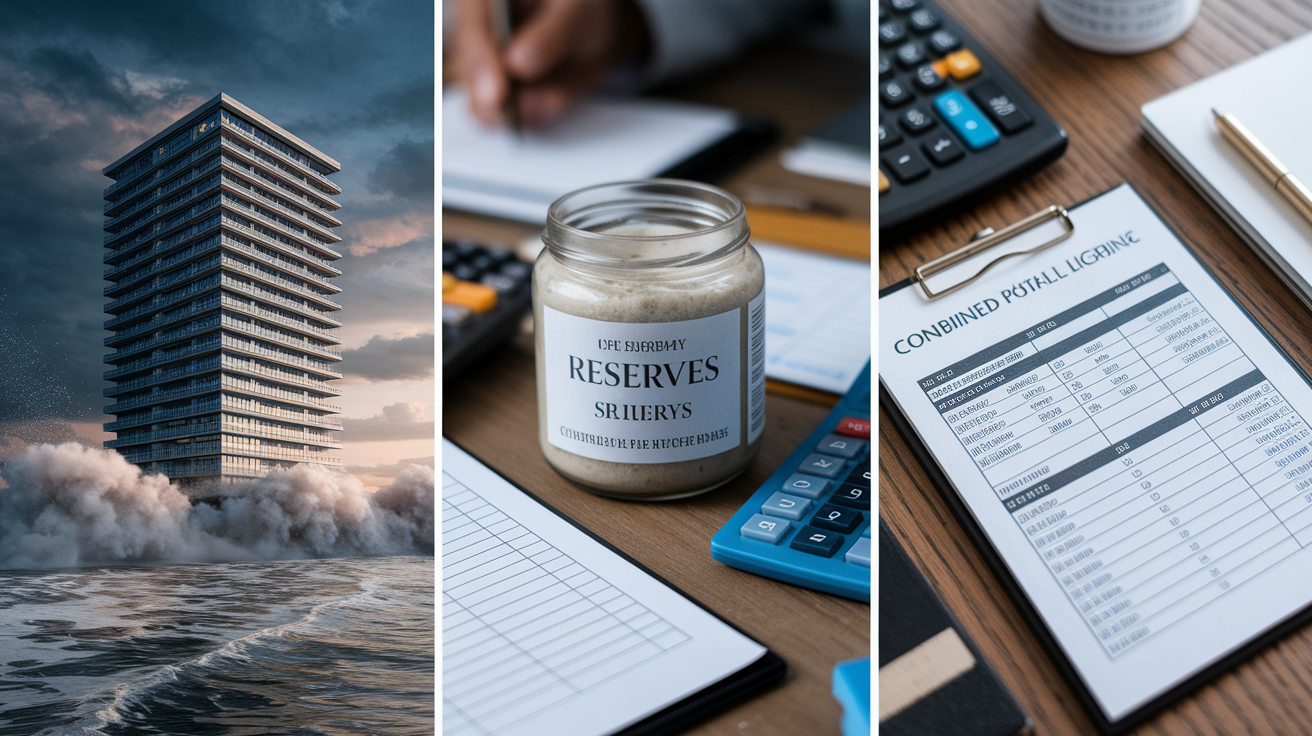
Rental income loss insurance makes the most sense when the cost of a major covered event (fire, hurricane, severe storm, prolonged structural repair) would blow past your available cash reserves and mess up mortgage payments or investor obligations for months. Multifamily properties, older buildings, and units in disaster-prone regions benefit most because repair timelines can stretch 12 to 18 months, way beyond what most landlords can self-fund. Insurance shifts catastrophic risk to the carrier, letting you sleep at night knowing a wildfire or tornado won’t sink your operation.
Emergency funds shine in everyday scenarios: furnace dies in December, tenant moves out unexpectedly, you need to pay a contractor deposit before insurance reimburses repair costs, or rent dips for a quarter because of local market softness. Funds also cover insurance deductibles and the waiting period before a claim pays out, which means even landlords who carry strong coverage still need cash reserves. The fund is your first line of defense. Insurance is the safety net behind it.
Most landlords should plan for both, sizing each tool to match property-specific risk. A single-family rental in a low-risk suburb might carry 12 months of rental income insurance and a 3-month emergency fund. A coastal multifamily building in a hurricane zone might carry 18 months of coverage and a 6-month reserve per property. The hybrid approach lets you handle small disruptions out of pocket (preserving your claims history and keeping premiums stable) while protecting against disasters that would otherwise wipe out your equity.
Scenario-Based Recommendations for Different Landlord Types
- Single-property owner with stable, long-term tenant: Build a 3- to 6-month emergency fund first. Add 12 months of rental income insurance if the property is in a moderate-risk zone or if losing rent would threaten your ability to make mortgage payments.
- Accidental landlord (inherited property or relocated for work): Build a 6-month emergency fund first because you’re less experienced and may face unexpected repair costs. Add insurance once the fund is in place and you understand the property’s risk profile.
- Small portfolio owner (two to four properties): Maintain a per-property reserve of 3 months’ expenses plus a portfolio-level cushion of another 3 to 6 months. Carry 12-month rental income insurance on each unit, especially if properties are geographically concentrated in a disaster-prone area.
- Multifamily operator (five or more units in one building): Hold 6 months of reserves for the entire building and 12- to 18-month rental income insurance. Longer coverage matches the time required to repair major structural damage and re-lease multiple units at once.
- Short-term rental host: Emergency funds are critical because income is highly variable and platform policy changes can cut revenue overnight. Rental income insurance may not cover short-term occupancy, so verify policy terms and consider business interruption coverage designed for hospitality instead.
Real-World Risk Scenarios: How Income Loss Events Impact Cash Flow

A three-month vacancy on a single-family rental can drain reserves fast and force tough decisions. Your unit rents for $1,800 per month and sits empty from April through June? You lose $5,400 in gross income while still owing the $1,200 mortgage, $250 in property taxes and insurance, and $150 in utilities and maintenance. That’s $1,600 per month in fixed costs, or $4,800 over three months. Total cash outflow: $10,200. If your emergency fund holds only $6,000, you’re $4,200 short and facing a choice between dipping into personal savings, using a credit card, or missing a mortgage payment.
Fire or major storm damage triggers even steeper losses because repair timelines stretch for months and contractor availability tightens after regional disasters. A kitchen fire that forces a four-month repair might cost $25,000 to fix, with insurance covering the physical damage but rent loss piling up at $1,800 per month. Over four months you lose $7,200 in rent and still owe $6,400 in fixed costs. That’s $13,600 in total cash-flow impact. If your rental income insurance caps at 12 months and pays $1,800 monthly after a 72-hour wait, you’ll recover most of the lost rent, but you still need cash on hand to cover the deductible, the first week’s costs, and any non-covered expenses like temporary tenant relocation assistance.
| Scenario | Expected Duration | Income Lost | Costs Still Owed |
|---|---|---|---|
| Three-month vacancy (single-family rental, $1,800/month) | 90 days | $5,400 (3 × $1,800) | $4,800 (mortgage, taxes, insurance, utilities: $1,600/month × 3) |
| Kitchen fire requiring four-month repair ($1,800/month rent) | 120 days | $7,200 (4 × $1,800) | $6,400 (fixed costs: $1,600/month × 4); insurance may reimburse most lost rent after 72-hour wait and adjuster approval |
Decision Matrix: Choosing Rental Income Loss Insurance, an Emergency Fund, or Both

Deciding between insurance, savings, or a combination depends on your property’s risk profile, your personal financial capacity, and how much downside you can afford to self-fund. Insurance is most cost-effective when the premium is a small fraction of the potential loss and the covered events (fire, hurricane, severe structural damage) would blow past your cash reserves. Emergency funds make sense for every landlord because they cover the gaps insurance won’t: tenant non-payment, normal vacancy, small repairs, deductibles, and the waiting period before a claim pays. Most investors find that a hybrid approach (insurance for catastrophic risk and savings for operational disruptions) offers the best balance of cost, flexibility, and peace of mind.
Start by calculating your worst-case cash-flow scenario: how many months could you cover mortgage, taxes, insurance, and fixed costs if rent stopped tomorrow? If the answer is less than three months and your property sits in a high-risk zone, build a 3-month emergency fund and buy 12-month rental income insurance. If you already hold six months of reserves and your property is in a low-risk area with stable tenants, you might choose to self-insure and skip or minimize coverage. Match your tools to the specific risks you face, not someone else’s playbook.
Five decision questions to determine your optimal mix:
- How many months of fixed costs (mortgage, taxes, insurance, utilities) can you cover from personal savings or emergency reserves without touching other investments? If the answer is fewer than three months, build cash reserves first. If six or more months, you have flexibility to self-insure smaller gaps and focus insurance dollars on catastrophic coverage.
- What is the likelihood and historical frequency of covered events in your property’s location? Check FEMA flood maps, wildfire risk zones, hurricane history, and earthquake probability. High-frequency or high-severity risk justifies higher insurance limits (12–18 months) and a strong emergency fund.
- What is your monthly rent-to-mortgage ratio, and how sensitive is your cash flow to a single month of lost income? If rent barely covers the mortgage and you have minimal margin, even a 30-day vacancy is a crisis. Build emergency savings first and consider insurance with a lower deductible and shorter waiting period.
- Do you have other liquid assets or credit lines you can tap in an emergency, and what is the cost and risk of using them? A HELOC or business line of credit can act as a backup, but relying on debt instead of savings shifts risk onto your balance sheet and adds interest costs. Use credit as a last resort, not a primary reserve.
- How many properties do you own, and are they geographically concentrated or diversified? A single property in one city concentrates risk. A portfolio spread across regions reduces the chance that one event wipes out all income. Diversification lets you carry slightly lower per-property reserves and insurance limits, while concentration demands higher coverage and deeper cash cushions.
Final Words
In the action, we compared rent-loss insurance mechanics, how to build a landlord emergency fund, costs, claims, liquidity, and real scenarios. You got quick screens, tables, and a decision matrix to match tool to profile.
The main tradeoff is speed versus coverage: cash is instant; insurance replaces rent after covered damage but has limits and claims steps.
If you’re unsure, lean hybrid: keep liquid reserves for short gaps and use rental income loss insurance vs emergency fund as a backstop for big perils. You’ll sleep better.
FAQ
Q: What is the 50% rule in rental property?
A: The 50% rule in rental property means you budget roughly half the gross rent for operating expenses (repairs, taxes, insurance, management), excluding mortgage payments and capital expenditures.
Q: How much rental loss can you write off?
A: The amount of rental loss you can write off depends on tax rules: you can deduct losses against rental income, but passive activity limits and AGI phaseouts may cap deductions — consult a tax pro for specifics.
Q: How much emergency fund for rental property?
A: An emergency fund for a rental property should be about 3–6 months of operating expenses; consider 6–12 months for single high-risk properties or portfolios with long vacancy or repair timelines.
Q: What is loss of rental income insurance?
A: Loss of rental income insurance replaces rent when a covered event makes a unit uninhabitable, typically limits payouts (often up to 12 months) and requires documentation such as leases, receipts, and damage evidence.