

Thinking an emergency fund is optional for rental owners?
That’s how a single HVAC failure or a long vacancy turns a good deal into a cash crisis.
Most landlords aim for 3–6 months of operating expenses, with add-ons like 1% of value or 5–10% of rent.
This post breaks those formulas down, explains when you should size up, and gives a simple plan to build reserves without wrecking cash flow.
Read on to pick a reserve target that actually protects you.
Core Rental Emergency Reserve Amounts and How to Set Your Target

Most landlords shoot for 3–6 months of property operating expenses sitting in a dedicated emergency fund. That baseline keeps you covered when vacancy hits, a major repair pops up, or tenant turnover drains your budget without forcing a panic sale or maxing out credit cards. If your property runs $800 a month in expenses, you’re looking at $2,400–$4,800 in reserves. Sounds low for your market or an older building? Go high end. Or try one of the other formulas.
Two other sizing methods give you a reality check. First is the percentage-of-value approach, where you set aside 1% of the property’s value each year for capital reserves. A $200,000 property needs $2,000 annually, about $167 per month. Second is the rent-percentage method. Save 5–10% of gross monthly rent. If rent is $1,800 and you pick 7%, that’s $126 per month, or $1,512 per year. Both help you split routine maintenance from true emergency coverage.
When you run all three approaches, you can cross-check whether your target makes sense. A newer property in a stable neighborhood might sit comfortably at 3 months plus a modest rent-percentage contribution. An older duplex with original systems and tenant turnover every year? Closer to 6 months of expenses plus the full 1% capital reserve. The goal is sizing the fund so no single event forces a cash crisis.
Quick reserve-sizing formulas:
- Months-of-expenses method – monthly property expense × desired months of runway (typically 3–6).
- Percentage-of-value method – 1% of property value annually, adjusted for age and condition (range 0.5–3%).
- Rent-percentage method – 5–10% of gross monthly rent set aside each month for repairs and capital expenditure.
Factors That Change Rental Reserve Requirements
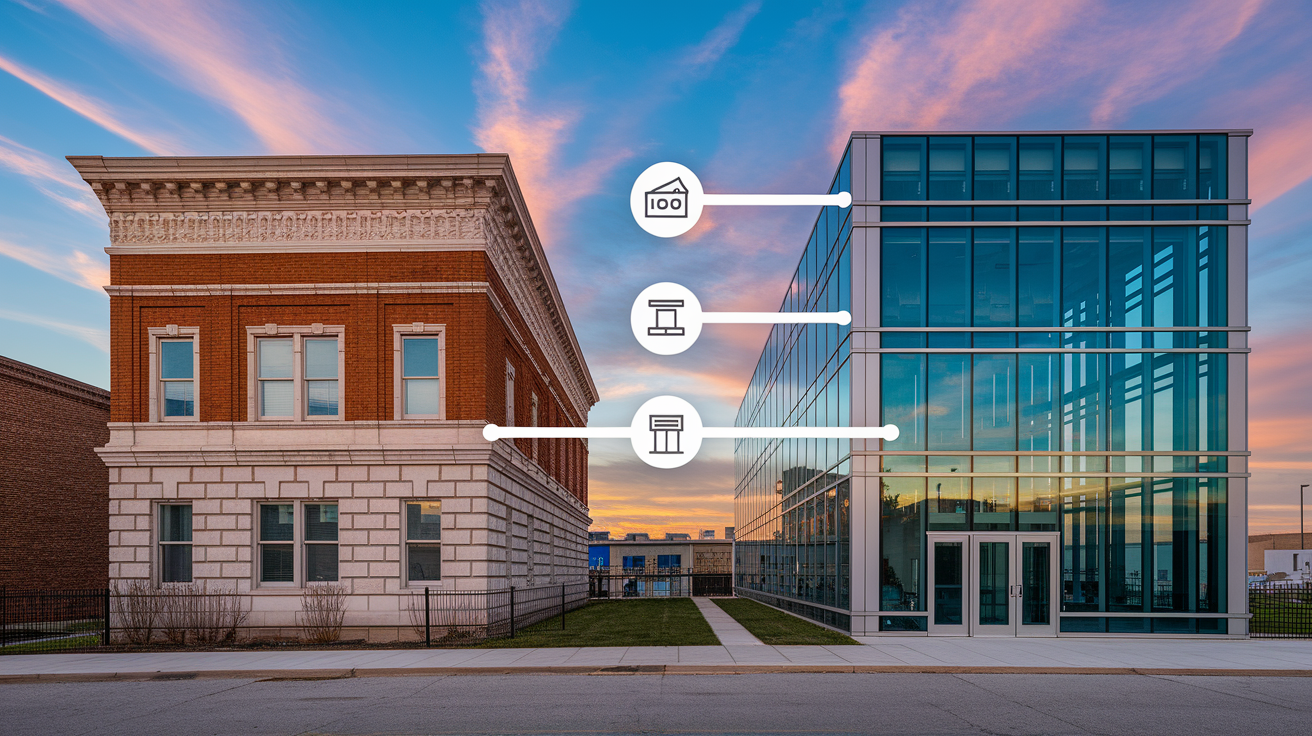
Older properties need bigger reserves because systems approach end-of-life together. If the roof, HVAC, and water heater all date from the same era, you might face a $20,000 replacement year with zero warning. Investors in these properties often add 25–100% to baseline reserve targets to handle clustered failures. Condition matters more than age alone. If you bought a turnkey rehab, your risk is lower even if the building is eighty years old.
Tenant quality, local vacancy rates, and regional climate also shift reserve needs. High-turnover neighborhoods force you to budget an extra 1–2 months of rent for repeated make-ready costs and lost income. Markets with slow contractor availability can inflate repair timelines by weeks, so investors in rural or disaster-prone zones commonly add a 10–30% contingency buffer. Short-term rentals wear faster than long-term leases. STR operators typically earmark 10–20% of gross rent monthly to handle furniture replacement, deep cleaning, and seasonal vacancy.
High-impact factors that adjust reserve size:
- Property age and system condition – add 25–100% for properties with original systems nearing end-of-life.
- Number of units – multifamily reserves scale per unit at $500–$2,500 per door, depending on age and tenant mix.
- Tenant turnover risk – budget 1–2 extra months of rent in high-turnover or Section 8 markets.
- Remote location or slow contractor markets – add 10–30% contingency for delayed repairs and higher travel costs.
- Property type and use intensity – short-term rentals require 10–20% of gross rent due to accelerated wear and seasonal vacancies.
Methods to Calculate Your Rental Property Emergency Fund
Using a structured formula removes guesswork and helps you defend your reserve policy if a partner or lender questions it. Each method highlights a different risk dimension. Operating-expense volatility, capital-replacement timing, or rent-to-maintenance ratios. Running all three gives you a triangulated target. If all three land in the same ballpark, you’ve got confidence. If one method produces a much higher number, investigate why before ignoring it.
Expense-Months Method
Multiply your total monthly property expense by the number of months of coverage you want. Include mortgage principal and interest, property tax, insurance, and any regular costs that continue during vacancy. Utilities, lawn care, pest control. If monthly expenses total $800 and you want 4 months of runway, your reserve target is $3,200. This method protects cash flow but doesn’t account for large one-time capital items. Pair it with a second formula.
Percentage-of-Value Method
Set aside 1% of the property’s market value each year for capital reserves and long-term replacements. A $300,000 home needs $3,000 annually, or $250 per month. Older properties or those in harsh climates may warrant 1.5–3%, while newer construction or recently rehabbed properties can use 0.5–1%. This rule captures roof, HVAC, and structural replacement cycles that the expense-months method misses.
Rent-Percent Method
Save 5–10% of gross monthly rent into reserves every month. If rent is $1,800 and you choose 7%, you contribute $126 per month, or $1,512 per year. Lower-maintenance properties and stable tenants justify the 5% end. Higher turnover, older systems, or hands-off management push you toward 10%. This method scales naturally with rental income and keeps reserves proportional to the property’s earning power.
| Method | Formula | Example Amount |
|---|---|---|
| Expense-Months | Monthly expense × desired months | $800 × 4 = $3,200 |
| Percentage-of-Value | Property value × 1% annually (0.5–3% range) | $300,000 × 1% = $3,000/year |
| Rent-Percent | Gross monthly rent × 5–10% | $1,800 × 7% = $126/month ($1,512/year) |
What Your Rental Emergency Fund Must Cover
Unexpected system failures are the most common drain on reserves. HVAC units die in July, water heaters flood at midnight, and electrical panels fail without warning. Roof leaks can force a $10,000 repair or a $25,000 replacement depending on age and material. Plumbing emergencies range from a $200 clog-and-camera job to a $5,000 sewer lateral replacement. Even minor appliance failures add up when they happen during turnover. Dishwasher, range, garbage disposal.
Vacancy and tenant turnover create both lost rent and make-ready costs. A typical turnover runs $500–$4,000 depending on condition, carpet replacement, paint, and minor repairs. If a tenant leaves mid-lease or you evict for nonpayment, you lose 1–3 months of rent while marketing and repairing the unit. In slower markets or during off-season, vacancy can stretch longer, compounding the income loss. Your reserve must absorb both the repair bill and the rent gap.
Legal costs, environmental surprises, and disaster-related expenses round out the coverage. Evictions cost $500–$3,000 in legal fees, court costs, and sheriff enforcement, not counting lost rent during the process. Foundation issues, mold remediation, or major structural repairs can run $5,000–$50,000 or more. Even with insurance, you might face a large deductible or uncovered damage. Your emergency fund is the buffer that keeps these events from becoming financial disasters.
| Emergency Type | Typical Cost Range |
|---|---|
| Tenant turnover and make-ready | $500–$4,000 |
| HVAC replacement | $3,000–$12,000 |
| Roof replacement | $5,000–$25,000 |
| Water heater replacement | $500–$2,000 |
| Plumbing or electrical emergency | $200–$5,000+ |
| Foundation or structural repair | $5,000–$50,000+ |
How to Build Your Rental Property Reserve Over Time

Set up an automatic monthly transfer of 5–10% of gross rent into a separate reserve account as soon as the tenant pays. This removes the temptation to spend the money and keeps accumulation steady without manual intervention. If rent is $1,500 and you transfer 7%, that’s $105 per month, or $1,260 per year. Automation turns reserve-building into a background process you rarely think about.
Start with a seed amount if possible. $1,000 is a reasonable initial target for a single-family rental. Add windfalls like tax refunds, cash-out refinance proceeds, or sale profits from another property to accelerate the timeline. If you’re buying a property that needs immediate work, prioritize a phased repair plan and finance only critical safety items upfront, then rebuild reserves from cash flow before tackling cosmetic upgrades. A savings plan of $100 per month will take four years to reach $4,800 without windfalls. Any lump-sum contribution cuts that timeline significantly.
Step-by-step reserve-building plan:
- Set automatic transfers at 5–10% of gross rent from your operating account to a dedicated reserve account on the same day rent is due.
- Start with seed capital of $1,000–$2,000 if you can afford it, even if it means delaying non-essential property upgrades.
- Add windfalls immediately. Tax refunds, bonuses, profits from flips, or refinance cash-outs go directly into reserves until you reach your target.
- Reassess contribution monthly or annually and increase the percentage as rents rise or when you add properties to the portfolio.
Where to Store Your Rental Property Emergency Fund

Keep reserves in a high-yield savings account or money market account that offers daily liquidity and FDIC insurance. Online banks often pay higher rates than traditional branches, and you can link them to your property operating account for instant transfers when an emergency hits. Avoid tying up the entire reserve in certificates of deposit unless you ladder short-term maturities. A six-month CD is acceptable for half the fund if you keep the other half fully liquid.
Never commingle rental reserves with personal savings or operating cash. Open a separate account for each property if you own multiple rentals, or maintain one pooled reserve account with clear per-property bookkeeping. Commingling increases the risk that you’ll dip into reserves for personal expenses during a personal emergency, leaving the rental exposed. Separation also simplifies tax reporting and makes it easier to track reserve adequacy and replenishment.
Recommended account types and liquidity considerations:
- High-yield savings accounts – best balance of liquidity and yield; most pay 4–5% APY as of recent years.
- Money market accounts – similar to savings but may offer check-writing for large repairs; FDIC-insured and fully liquid.
- Short-term CDs – acceptable for a portion of reserves if laddered in 3–6 month increments; slightly higher yield but less accessible.
- Separate business checking – useful for property-specific reserves and monthly expense tracking; typically lower yield but maximum liquidity and convenience.
Using and Replenishing Your Rental Reserve Responsibly
Draw from reserves only for true emergencies or major capital replacements that exceed your monthly maintenance budget. Minor repairs under $500 should come from operating cash flow or a small monthly maintenance line item. A leaky faucet, broken doorknob, minor appliance fix. Reserves are for the water heater that floods the garage, the HVAC compressor that dies in August, or the roof that starts leaking after a storm. Document every reserve withdrawal with date, cost, category (repair vs. capital expenditure), and tenant impact for tax and cash-flow tracking.
Replenish the fund within 1–6 months after any drawdown. If you spend $3,000 replacing an air conditioner, prioritize restoring that $3,000 from rental profits before funding discretionary upgrades or distributions. Immediate replenishment keeps the fund ready for the next emergency and prevents a cascade of underfunding across multiple properties. If a single event drains the reserve completely, consider pausing distributions or temporarily increasing the monthly contribution percentage until the target is restored.
Maintain a simple reserve policy document that defines draw thresholds, approval requirements, and replenishment timelines. For solo investors, this can be a one-page checklist. For partnerships or LLC structures, formalize it in the operating agreement. Review the policy and fund balance at least annually, adjusting targets as properties age or when you acquire new units. Keep all receipts and invoices in a dedicated folder (digital or physical) for tax categorization and future reference.
Reserve replenishment and governance rules:
- Replenish within 1–6 months of any major draw to restore full coverage before the next risk event.
- Set a draw threshold (e.g., repairs under $500 use the maintenance budget; $500+ draws from reserves) to avoid nickel-and-diming the fund.
- Document every major repair with date, vendor invoice, category, and property address for tax and bookkeeping clarity.
- Review and adjust annually based on property age, rent increases, and actual maintenance history.
- Keep receipts and categorize costs as repair (deductible) or capital expenditure (depreciable) for accurate tax treatment.
Reserve Strategy Differences by Property Type

Different property types carry different risk profiles, and your reserve strategy should reflect those differences. Single-family rentals concentrate risk in one tenant and one set of systems, so a vacancy or major failure hits harder. Small multifamily buildings spread tenant risk but often share expensive systems. One boiler, one roof, one sewer lateral. That creates concentrated capital exposure. Short-term rentals wear faster, turn more frequently, and face seasonal vacancy, all of which demand higher reserve percentages.
Single-Family Rentals
A typical single-family rental should hold $1,000–$5,000 in reserves depending on age, condition, and local repair costs. Turnover expenses run $1,000–$4,000 per vacancy when you include carpet, paint, minor repairs, and cleaning. The main risks are extended vacancy (1–3 months of lost rent) and major system replacement. Roof, HVAC, water heater. That can cost $5,000–$15,000. New investors often underestimate turnover frequency. Plan for at least one turnover every 2–4 years unless you’ve got long-term tenants locked in.
Small Multifamily
Multifamily reserves scale per unit, typically $500–$2,500 per door depending on age and tenant quality. A four-unit building might need $2,000–$10,000 in reserves at any given time. Because systems are shared, a single roof or boiler replacement affects all units simultaneously. Many investors prefer a building-level reserve equal to 1–3% of the property’s value annually rather than strict per-unit budgets. One occupied unit can carry expenses for a vacant unit, reducing immediate cash-flow pressure. But multiple simultaneous vacancies or a large system failure can still drain reserves quickly.
Short-Term Rentals
Short-term rentals face higher wear-and-tear from frequent guest turnover, plus seasonal vacancy that can last months in off-peak markets. Set aside 10–20% of gross rent monthly to cover furniture replacement, deep cleaning after problem guests, and accelerated appliance cycles. Maintain at least 3–6 months of operating expenses in reserves because booking volatility can swing cash flow unpredictably. STR operators also need contingency funds for platform suspensions, negative reviews that kill bookings, or local regulation changes that force sudden pivots.
| Property Type | Typical Reserve Range | Notes |
|---|---|---|
| Single-Family Rental | $1,000–$5,000 | Turnover $1,000–$4,000; plan for 1 vacancy per 2–4 years |
| Small Multifamily (2–20 units) | $500–$2,500 per unit or 1–3% of building value/year | Shared systems create concentrated risk; scale reserve by unit count and age |
| Short-Term Rental | 10–20% of gross rent monthly | Higher wear, seasonal vacancy, furnishing/cleaning costs; maintain 3–6 months expenses |
Real-World Examples of Rental Property Reserve Calculations
Walking through actual numbers makes abstract formulas concrete. A $200,000 single-family rental with $600 in monthly expenses (mortgage, tax, insurance, utilities during vacancy) should hold $1,800–$3,600 using the 3–6 months rule. If you apply the 1% of value method, that same property needs $2,000 per year, roughly $167 per month. If rent is $1,400 and you set aside 7%, that’s $98 per month, or $1,176 annually. All three methods land in a similar range ($1,800–$3,600 baseline), so a conservative target of $3,000–$4,000 covers both operating shocks and gradual capital needs.
A four-unit building valued at $400,000 shows how reserves scale with complexity. The 1% rule suggests $4,000 annually for capital reserves. Per-unit targets of $1,000–$3,000 give a building-level range of $4,000–$12,000. If each unit rents for $900 (total $3,600 monthly), setting aside 7% yields $252 per month, or $3,024 annually. The wide range reflects age and condition. A recently renovated building with new systems sits at the low end. An older property with original HVAC and roof pushes toward the high end. Investors often start at the midpoint and adjust based on actual repair history after the first year.
| Example | Property Stats | Methods Used | Reserve Target |
|---|---|---|---|
| Single-Family Rental | $200,000 value; $600/month expenses; $1,400 rent | 3–6 months ($1,800–$3,600); 1% value ($2,000/year); 7% rent ($1,176/year) | $3,000–$4,000 |
| 4-Unit Multifamily | $400,000 value; $900/unit rent ($3,600 total) | 1% value ($4,000/year); per-unit $1,000–$3,000; 7% rent ($3,024/year) | $4,000–$12,000 |
You now have exact reserve ranges (3–6 months), three rule-of-thumb formulas, and clear steps for building and storing the cash. Those tools protect you from big, unexpected bills.
Match the number to the property: age, turnover, and type change the target. Use the examples and quick calculations to pick a starting number and a monthly contribution plan.
Treat these rental property emergency fund guidelines as working rules. Start small, automate contributions, and adjust after a repair. You’ll sleep better and keep the income flowing.
FAQ
Q: How much emergency fund for rental property?
A: The emergency fund for rental property should generally be 3–6 months of property operating expenses; alternatives include 1% of property value per year or setting aside 5–10% of gross monthly rent.
Q: What is the 3 6 9 rule for emergency funds and the 3-3-3 rule in real estate?
A: The 3‑6‑9 rule for emergency funds means holding 3, 6, or 9 months of expenses based on risk. The 3‑3‑3 variant is a simple split: three months operating, three months mortgage cushion, three months vacancy or capex.
Q: What is the 2% rule in rental property?
A: The 2% rule in rental property means monthly rent should be at least 2% of the purchase price; it’s a quick cash‑flow screen, useful for comparing deals but often unrealistic in higher‑priced markets.