

Cold-call lists and direct mail flop when owners vanish, but skip tracing changes that.
Skip tracing finds current phones, emails, and new addresses for owners who moved, inherited, or stopped updating records.
It turns dead leads into real conversations, saves wasted mail, and often reaches the most motivated sellers.
This post shows practical methods, tools, and legal guardrails so you can locate hard-to-find sellers and start outreach that actually connects.
What Is Skip Tracing in Real Estate (And How It Helps You Find Motivated Sellers Fast)

Skip tracing is how you find current contact info for property owners who don’t show up through normal channels. Phone numbers, emails, mailing addresses. The term comes from bail bonds and debt collection, where investigators tracked people who “skipped” on obligations. In real estate, you’re not chasing anyone who owes you money. You’re finding owners who inherited a home they never wanted, stopped paying taxes, moved out of state, or just never updated their contact details after life got messy.
This matters because the hardest owners to find are usually the most motivated to sell. If someone ignored your letter, never answers their old phone, and hasn’t lived at the property in years, there’s a decent chance they want the problem solved but don’t know where to start. Skip tracing closes that gap. Instead of waiting for a seller to call you back, you track down a current cell number, send a text, and start a conversation that wouldn’t have happened otherwise.
Skip tracing isn’t the same as a simple phone append. Basic appends pull contact data from shallow databases and work fine for owners with stable addresses and active phones. Real skip tracing digs deeper. Cross-referencing public records, utility transfers, forwarding addresses, social media profiles, relative contacts, third-party investigator databases to piece together where someone actually is right now. When a property sits vacant, mail comes back undeliverable, and the county shows an outdated mailing address, that’s when skip tracing earns its cost.
Skip tracing gives you a few key advantages. It turns cold, unresponsive leads into active conversations by finding working contact details. Reaches absentee owners, heirs, distressed sellers who ignore traditional marketing. Reduces wasted marketing spend on bad addresses and disconnected numbers. Uncovers multiple contact points (alternate phones, emails, relatives) to increase your chances of connection. And it shortens deal timelines by cutting out the wait for returned mail or unanswered calls.
Core Skip Tracing Methods Used by Real Estate Professionals

Real estate investors use a mix of automated tools and manual research to track down contact information. Each method has different speed, cost, and accuracy tradeoffs. Most professionals layer several approaches for hard-to-find owners.
Database searches and batch processing
Upload a list of addresses to a skip tracing service. The platform queries millions of records (phone carriers, postal forwarding files, property tax rolls, voter registrations) and returns appended phone numbers, emails, alternate addresses. This is the fastest method for large lists and typically costs $0.10 to $0.25 per record. Match rates run 60 to 85 percent depending on list age and data freshness.
Manual public record research
Search county assessor websites, court filings, probate records, deed transfers to find updated owner names, mailing addresses, related parties like co-owners or estate administrators. This takes more time but uncovers details automated services miss. Like a recent quitclaim deed that changed ownership or a probate case listing the executor’s contact information.
Social media and online profile investigation
Search Facebook, LinkedIn, Instagram, Twitter using the owner’s name and city. Look for check-ins, tagged locations, employer information, mutual connections. People often list current cities, phone numbers in bio links, or business pages that lead to contact details. Genealogy sites and people search directories (Whitepages, Spokeo) can surface relatives and associates who know how to reach the owner.
Reverse phone lookups and email validation
If you have an old phone number or email, run it through reverse lookup tools to see if it’s still active or tied to a new address. Carrier lookups tell you whether a number is a landline, mobile, or disconnected. Email validation services flag addresses that bounce or haven’t been used in months, so you don’t waste outreach on dead inboxes.
Utility and postal forwarding checks
Contact utility companies (when legally allowed) or check USPS forwarding records to see if the owner filed a change of address. If standard mail bounces, send a FedEx or UPS letter. Courier services often prompt a response when regular mail doesn’t because the tracking and signature required delivery feel more urgent.
Best Skip Tracing Tools and Software for Real Estate Leads

Choosing the right skip tracing platform depends on your volume, budget, and whether you need standalone data or an integrated CRM. The best tools combine multiple data sources, return results quickly, and let you export contacts into your outreach system without manual re-entry.
Most real estate investors prioritize three things: accuracy (how often the phone number actually reaches the owner), data breadth (phone, email, relatives, alternate addresses), and cost predictability (flat monthly fee vs. per lookup charges). Platforms that integrate directly with your CRM or dialer save hours of importing and reduce duplicate entry errors. If you’re running high volume (tracing thousands of leads per month) look for unlimited plans or tiered pricing that drops the per record cost as you scale.
When evaluating a service, test it on a small pilot list first. Run 500 traces, call the results, track your right-party contact rate (the percentage of calls that reach the actual owner). A provider that delivers 75 percent valid phone numbers at $0.15 per record beats a provider with 50 percent accuracy at $0.10. Quality trumps price when your time is on the line.
| Tool | Key Features | Approx. Cost |
|---|---|---|
| PropStream | 153M+ properties, $0.12/trace, MLS and county data, ownership history, comps, map search | $99–$199/month + trace fees |
| REsimpli | Built-in CRM, 10,000 credits on basic plan, mobile Driving for Dollars, list stacking, direct mail | $99–$749/month (includes credits) |
| BatchSkipTracing | 10.5B+ data points, instant online results, no subscription, pay-per-result model | $0.20 per successful result |
| DealMachine | Data quality focus, Do Not Call flags, Driving for Dollars, caller-ID protection, team plans | $59–$299/month (includes traces) |
Legal and Ethical Considerations When Skip Tracing Real Estate Leads

Skip tracing is legal when you use publicly available data and respect privacy laws. It becomes illegal when you access protected information without authorization, misrepresent your purpose, or violate communication rules designed to prevent harassment.
The Fair Credit Reporting Act (FCRA) governs how you can use consumer credit data. If you’re pulling credit reports or using a service that accesses credit header information, you need a permissible purpose (like verifying identity for a legitimate business transaction). Using that data to cold call homeowners without their consent can expose you to fines.
The Telephone Consumer Protection Act (TCPA) restricts robocalls, autodialed calls, and text messages sent without prior express written consent. If you’re dialing from a power dialer or sending bulk SMS, make sure your list is scrubbed against the National Do Not Call Registry and that you honor state level DNC rules. Some states have stricter telemarketing laws than federal rules, so check local requirements before calling.
Always document your data sources and keep records of opt outs. If someone asks to be removed from your list, honor it immediately and log the request. Ignoring opt outs or continuing to call after someone says stop is the fastest path to a TCPA lawsuit.
Here’s what you need to follow. Do not access credit reports or financial records without a lawful, authorized purpose under FCRA. Scrub your call lists against the National Do Not Call Registry and honor state DNC rules. Obtain express written consent before sending automated calls or text messages under TCPA. Provide clear opt out instructions in every communication and honor requests immediately.
Where Skip Tracing Data Comes From (Most Reliable Sources)
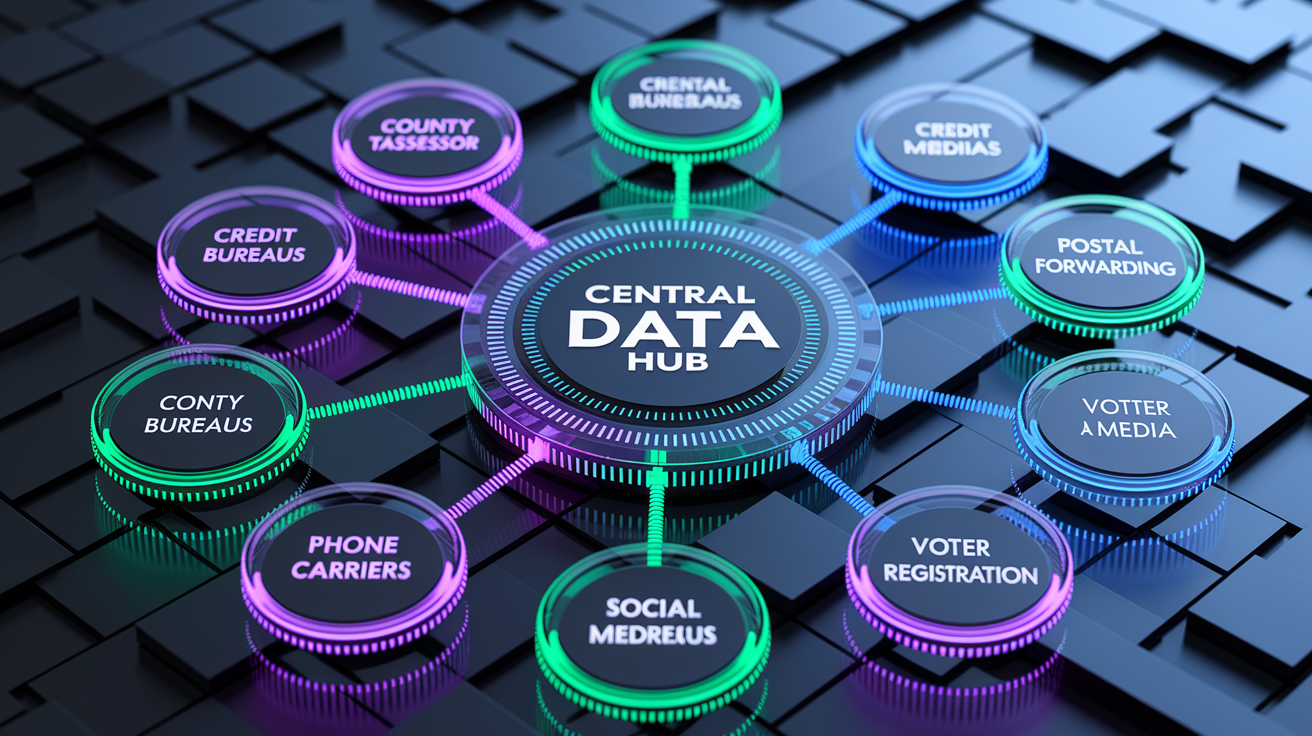
Skip tracing platforms aggregate data from dozens of sources. The quality of your results depends on which databases the provider taps. Public records are the foundation. County assessors, tax collectors, recorders publish ownership transfers, mailing addresses, lien filings. These records are accurate but often outdated if the owner moved after the last deed was recorded.
Credit bureaus and data aggregators add depth. Credit header data includes names, addresses, phone numbers, dates of birth pulled from consumer credit files. Unlike full credit reports, headers don’t show credit scores or account details, but they’re still regulated under FCRA. Services with credit bureau access return fresher contact details because credit files update frequently when people open accounts, change addresses, or update their information with lenders.
Utility transfers and change of address records help confirm moves. When someone disconnects electric service or files a USPS forwarding request, that information flows into commercial databases. Phone carrier databases track number assignments and porting events, so providers can tell you whether a number is active, disconnected, or reassigned to someone else. Social media and online directories (LinkedIn, Facebook, property websites) add context, like current employers, family members, recent activity that suggests where someone lives now.
Common data sources include county tax assessor and recorder offices (ownership, deeds, mailing addresses), voter registration databases (current address, sometimes phone), credit bureau header data (name, address, phone, date of birth), postal service forwarding files (change of address records), phone carrier databases (landline and mobile assignment, disconnection status), public social media profiles and online directories (LinkedIn, Facebook, Whitepages, Spokeo).
Skip Tracing Costs and What Investors Should Expect to Pay

Skip tracing costs depend on whether you’re running high volume batch uploads or premium single searches. Batch services charge per record and are designed for investors tracing hundreds or thousands of leads at once. Prices typically range from $0.10 to $0.25 per successful match, with volume discounts kicking in at higher tiers. If the service returns no phone number or email, some providers refund the credit or charge a reduced fee.
Premium single searches cost more ($5 to $20 per lookup) because they pull from deeper databases, including investigator-only sources like TLOxp and Accurint, and often involve manual research. These searches are worth the cost when you’re chasing a high value property or an owner who didn’t show up in batch results.
Unlimited monthly plans appeal to high volume operations. Pay a flat fee ($99 to $749 per month) and trace as many records as you want. If you’re refreshing 5,000+ contacts monthly, unlimited pricing beats per lookup costs fast, often paying for itself in the first week.
| Service Type | Typical Cost |
|---|---|
| Batch skip tracing (basic append) | $0.10–$0.25 per successful match |
| Premium single search | $5–$20 per lookup |
| Unlimited monthly plan | $99–$749/month (includes tracing credits or unlimited use) |
| Private investigator deep search | $50–$200+ per person (custom research) |
How to Apply Skip Tracing to Your Real Estate Lead Generation Strategy

Skip tracing fits into your workflow whenever traditional outreach fails. Use it to recover leads with returned mail, follow up on pre-foreclosure lists where owners stopped answering, target absentee landlords who moved out of state, reconnect with old prospects whose phone numbers changed. The goal is to turn dead leads into live conversations without spending weeks on manual detective work.
Step 1: Build and clean your target list
Start with a property list. Tax delinquents, absentee owners, vacant homes, inherited properties, pre-foreclosures. Remove duplicates, confirm addresses are valid, filter by criteria that matter (equity, days on market, ownership length). Clean input data improves skip tracing accuracy.
Step 2: Run a batch skip trace
Upload your list to your chosen platform. Most tools require an address and return phone, email, alternate addresses within minutes. Flag high priority leads (high equity, distressed indicators) for premium searches if batch results come back incomplete.
Step 3: Verify and prioritize results
Not every returned phone number reaches the owner. Spot check a sample by calling or texting to confirm right-party contact rates. Prioritize leads with multiple contact points (phone, email, a current mailing address) because multi-channel outreach increases response rates.
Step 4: Import into your CRM and tag appropriately
Load traced contacts into your CRM with tags for source, trace date, confidence level, property type. This keeps your pipeline organized and lets you segment follow up sequences by lead quality.
Step 5: Launch immediate outreach (speed-to-lead)
Contact within hours of a successful trace. Call first, send a follow up text, then email. If the call goes to voicemail, leave a short message referencing the property address and your offer to help. Speed matters. Owners who just updated their contact info or recently moved are more responsive than leads who’ve been sitting cold for months.
Step 6: Use multi-channel follow up and track conversion
Layer calls, texts, emails, direct mail over 30 to 60 days. Track right-party contact rate, contact to appointment conversion, cost per deal. If a lead doesn’t respond after several attempts, retrace after six months. Contact details change, and a fresh skip trace often uncovers new numbers or emails.
Optimize by testing different providers on small samples, tracking which data sources deliver the highest right-party contact rates, focusing your budget on the segments that convert best. Hard to find owners often represent higher value opportunities, so even if tracing costs more per lead, the payoff can be worth five times the effort compared to easy-to-reach sellers who’ve already talked to ten other investors.
Final Words
In the action, you saw what skip tracing is, the core methods, top tools, where the data comes from, typical costs, and the legal must-dos. That’s the map.
Start small. Run a test list, pick one tool, follow the workflow, and track responses so you can improve.
Using skip tracing for real estate leads is practical when you respect compliance and measure results. Do the work, tune your process, and you’ll find more motivated sellers without wasting time.
FAQ
Q: What is skip tracing in real estate?
A: Skip tracing in real estate is the process of locating hard-to-find property owners using public records, credit headers, utilities, social profiles, and third-party databases to contact motivated sellers quickly.
Q: How does skip tracing help find motivated sellers fast?
A: Skip tracing helps find motivated sellers fast by turning lists (tax-delinquent, absentee, inherited) into current contact info, letting investors reach owners directly before competitors and speed up deal flow.
Q: What are core skip tracing methods used by real estate professionals?
A: The core methods are database searches, manual public-record research, social-media checks, reverse-phone lookups, and utility or change-of-address cross-references, each balancing speed and match accuracy.
Q: What features matter when choosing skip tracing tools?
A: The features that matter are data accuracy, number and freshness of sources, batch-processing, CRM integration, automation, and transparent match rates to match your budget and workflow.
Q: Is skip tracing legal and what regulations apply?
A: Skip tracing is legal when you follow rules; main regulations include the Fair Credit Reporting Act (FCRA), Telephone Consumer Protection Act (TCPA), and state privacy laws, plus proper consent and intended use.
Q: Where does skip tracing data come from and which sources are most reliable?
A: Skip tracing data comes from county records, tax assessor files, credit headers, phone carriers, change-of-address, utility bills, and social profiles; county records and tax databases are usually most reliable.
Q: How much does skip tracing cost for investors?
A: Skip tracing costs vary: batch services commonly charge $0.10–$1.00 per record, while premium single searches run $5–$20, depending on match accuracy and number of sources queried.
Q: How do I apply skip tracing to my real estate lead generation workflow?
A: Apply skip tracing by prioritizing lists, batch-searching contacts, updating leads, calling and emailing found contacts, tracking responses in CRM, and repeating with fresh lists for steady lead flow.
Q: What are common limits or red flags with skip tracing accuracy?
A: Common limits are outdated records, common names causing false matches, blocked or private data, and recent moves; always verify info before outreach to avoid wasted time and compliance risk.
Q: Can skip tracing recover contact info for absentee owners or inherited properties?
A: Skip tracing can recover contact info for absentee owners and inherited properties by linking public records, probate filings, and forwarding addresses, but success depends on data freshness and record availability.