

Flip a distressed house and the IRS might call you a dealer, turning your profit into ordinary business income.
That shift can add self-employment tax on top of income tax and wipe out the capital gains break you expected.
This post walks through the three tax moments—purchase, rehab, sale—explains dealer vs investor rules, basis tracking, and holding-period traps, and gives the quick screens and recordkeeping steps that actually lower your tax hit.
Read on to learn the practical moves that keep more profit in your pocket.
Core Tax Implications When Buying and Flipping Distressed Properties

Every distressed property creates three tax moments: purchase, renovation, and sale. The IRS watches all three. Your purchase price sets the starting basis, rehab costs adjust it up (or sometimes create write-offs), and sale proceeds lock in your taxable gain. Most flippers miss the total tax hit because they only think about federal capital gains. They forget self-employment tax, state income tax, and local transfer fees.
The big question is whether your profit gets treated as capital gains or ordinary income. Capital gains come with better rates, especially if you hold the property longer than a year. Ordinary income gets taxed like your W-2 wages and often triggers self-employment tax on top. If the IRS sees you running a flipping business instead of investing, your whole profit becomes ordinary income and you face the full tax load.
Dealer status, basis math, deduction rules, and self-employment exposure create a tax web. Active flippers who renovate fast and resell often are almost always dealers. That means ordinary income, Schedule C, and self-employment tax. Long-term investors who hold for appreciation get capital gains treatment and usually dodge self-employment tax. The structure you pick and the records you keep decide how much the IRS takes.
Major tax buckets to account for when flipping distressed properties:
- Capital gains vs. ordinary income – your holding time and activity level drive this
- Self-employment tax – roughly 15.3 percent on top of income tax if you’re a dealer
- What you can deduct – renovation, interest, carrying costs, and when you can take them
- Basis tracking – every documented dollar cuts your taxable gain
- Recordkeeping – receipts and contracts saved at the time protect you in audits
- Tax deferral limits – 1031 exchanges almost never work for flips because inventory isn’t investment property
Investor vs. Dealer Status in Distressed Property Flips

Dealer status isn’t something you check on a form. The IRS figures it out by watching what you do. If you flip three or more properties in a year, gut them to boost resale value, market aggressively, and hold them just a few months, you look like a business. Courts and the IRS review everything: your intent when you bought, how often you sell, how much you improve, whether you have a sales office or staff, and how involved you are in the sale. One flip after inheriting a house probably won’t make you a dealer. But buying four distressed properties in twelve months, renovating them, staging, and listing with a realtor signals dealer status pretty clearly.
Being classified as a dealer means your entire profit is ordinary business income on Schedule C. You lose long-term capital gains rates. You also owe self-employment tax. That’s another 15.3 percent on net profit up to the Social Security cap, plus 2.9 percent Medicare above that. Investors report rental activity on Schedule E if they rent before selling, or report gains on Schedule D and Form 4797, paying capital gains tax without self-employment tax. The total tax difference can hit 20 percentage points or more.
IRS Classification Factors
The IRS and courts use a multi-factor test. No single thing decides it, but together they show a pattern. Buying and selling frequently, short holds (weeks or a couple months), heavy renovations aimed at resale instead of rental use, professional marketing and broker relationships, advertising, and not having other major income all push you toward dealer status. Intent matters. If you bought planning to flip fast for profit, that weighs heavy. If you meant to rent and later changed your mind, document the switch with notes or changed circumstances at the time.
| Category | Dealer Treatment | Investor Treatment |
|---|---|---|
| Gains | Ordinary income taxed at marginal rates (10% to 37%) | Capital gains: short term at ordinary rates, long term at 0/15/20% |
| Self-Employment Tax | Owed on net profit (~15.3%) | Generally not owed on rental or capital gain income |
| Deductions | Business expenses on Schedule C; COGS treatment for rehab costs | Rental expenses on Schedule E; capital improvements add to basis |
| Reporting Forms | Schedule C, self-employment tax schedule (Schedule SE) | Schedule E for rentals, Form 4797 and Schedule D for sales |
| 1031 Exchange Eligibility | Not eligible (inventory held for resale) | Eligible if property held for investment or business use |
Capital Gains Tax Treatment and Holding Period Rules for Flips

Holding period controls your tax rate if you qualify for capital gains treatment. Sell on or before the one-year anniversary of your purchase closing and your gain is short term, taxed at ordinary income rates. Hold more than twelve months and your gain becomes long term. Federal tax drops to zero, fifteen, or twenty percent depending on your taxable income. The clock starts the day after you close the purchase and stops the day you close the sale. Sell on day 365 and you’re still short term. Sell on day 366 and you cross into long term.
The practical impact is huge. Take a $60,000 profit on a six-month flip treated as short-term capital gain. If you’re in the 24 percent federal bracket, federal tax alone is $14,400. Hold another seven months and that same $60,000 becomes long term. At the 15 percent capital gains rate, federal tax drops to $9,000. That’s a $5,400 savings. State tax applies either way, but the federal spread drives most of the difference. If you’re classified as a dealer, holding period doesn’t matter. Dealer profits are always ordinary income no matter how long you held the property.
Dealer status kills holding period benefits. Even if you hold a property for three years, if the IRS decides you’re a dealer in real estate, the entire gain is ordinary income and subject to self-employment tax. For this reason, investors who flip sometimes should separate investment properties from dealer inventory. Hold flips in one entity and long-term rentals in another. Clearly document the different intent and activity for each property. Courts have respected this split when the facts back it up.
Determining Cost Basis and Tracking Distressed Property Expenses

Your basis starts with the purchase price plus acquisition costs and grows with every dollar you invest in the property. Purchase price is straightforward. Check the closing statement. Then add buyer-side closing costs, title insurance, transfer taxes paid at acquisition, loan fees allocated to the property rather than financed, and inspection or appraisal fees paid before closing. If you assume existing debt, the debt counts as part of your purchase price. If you pay seller-owed back taxes or liens to clear title, those payments bump up basis.
After closing, every rehab dollar you spend should be tracked and added to basis. Contractor invoices, materials receipts, permit fees, architectural or engineering costs, and expenses to bring the property into compliance all increase basis. For dealers, these costs reduce ordinary income as cost of goods sold or business expenses. For investors, they increase adjusted basis, which cuts the gain when you sell. Interest on acquisition or construction loans, property taxes, insurance, utilities, and HOA dues during rehab are carrying costs. Dealers usually deduct these as business expenses on Schedule C. Investors often must add them to basis unless the property is rented and producing income.
Expense categories that affect basis or reduce income:
- Purchase price and assumption of seller debt
- Buyer closing costs, title insurance, and transfer taxes at acquisition
- Contractor labor and subcontractor fees for structural, mechanical, electrical, plumbing, HVAC, roofing, and cosmetic work
- Materials and supplies purchased for renovation (lumber, drywall, paint, fixtures, appliances, flooring)
- Permits, plan-check fees, architectural or engineering services, and regulatory compliance costs
- Loan interest and financing fees during rehab and holding period
- Property taxes, insurance premiums, and utilities paid while property is vacant or under renovation
- Selling costs at disposition: realtor commissions, escrow fees, title policy, buyer concessions, and transfer taxes paid by seller
Document every expense with an invoice, receipt, bank statement, or canceled check. Take before and after photos with time stamps and GPS data if possible. These photos prove the scope of work and show you actually completed the improvements you claim. Keep a dedicated folder (physical or digital) for each property with all receipts, contracts, permits, loan documents, and closing statements. Missing documentation means the IRS can disallow deductions or adjustments to basis, inflating your taxable gain.
Deductible vs. Capitalized Rehab Costs on Distressed Property Projects

The line between repairs and improvements drives when you get your tax benefit. A repair restores the property to its previous condition without adding value or extending its useful life. Patching a drywall hole, fixing a leaky faucet, or repainting walls in the same color are repairs. An improvement adds value, adapts the property to a new use, or materially extends its life. Replacing an entire roof, adding a bathroom, upgrading from single-pane to dual-pane windows, or installing central air are improvements. For rental properties held as investments, repairs get deducted in the current year on Schedule E. Improvements must be capitalized and depreciated over 27.5 years.
For dealers and active flippers, the repair versus improvement line blurs because the property is inventory. Dealer rehab costs reduce ordinary income as cost of goods sold or business expenses in the year incurred or the year of sale, depending on your accounting method. Cash-method dealers often deduct all rehab costs in the year paid. Accrual-method dealers match costs to the sale. Either way, dealer classification means you don’t depreciate improvements over decades. You recover the cost immediately or at sale. This creates a timing benefit but locks you into ordinary income treatment on the back end.
Capitalize costs when they substantially improve the property, restore it after a period of disuse, or adapt it to a new use. The IRS uses a “unit of property” framework. If you replace a major building system (roof, HVAC, plumbing, electrical) or a structural component, you’re capitalizing. If you replace individual components within a system (one faucet, one outlet), you’re repairing. Track and classify each invoice by project and system. When in doubt, ask your CPA to review the rehab scope before filing. Misclassification can trigger an audit adjustment that recaptures deductions and adds interest and penalties.
Self-Employment Tax Exposure for Flippers of Distressed Properties

Self-employment tax is the flipper’s hidden cost. If you’re a dealer, your net profit from flipping is subject to self-employment tax in addition to income tax. The self-employment tax rate is roughly 15.3 percent. That’s 12.4 percent for Social Security (on earnings up to the annual wage base, about $168,600 in 2024) plus 2.9 percent for Medicare on all earnings. High earners pay an additional 0.9 percent Medicare surtax on income above $200,000 (single) or $250,000 (married filing jointly), bringing the top marginal Medicare rate to 3.8 percent.
Investors who rent properties before selling or who hold for long-term appreciation aren’t subject to self-employment tax on rental income or capital gains. The IRS treats rental income as passive and capital gains as investment income. Neither triggers self-employment obligations. This is one of the biggest tax advantages of investor status over dealer status. A dealer making $100,000 net profit pays roughly $15,300 in self-employment tax plus income tax. An investor with the same gain structured as long-term capital pays zero self-employment tax and much lower income tax.
Four common triggers for self-employment tax on distressed property flips:
- Operating a flipping business with regular and continuous sales activity
- Providing substantial services like renovations, staging, marketing, and direct buyer negotiations
- Holding property as inventory rather than investment, shown by intent and short holding periods
- Filing Schedule C to report flipping income, which automatically subjects net profit to self-employment tax
How LLCs and Entities Affect Taxes for Distressed Property Flips
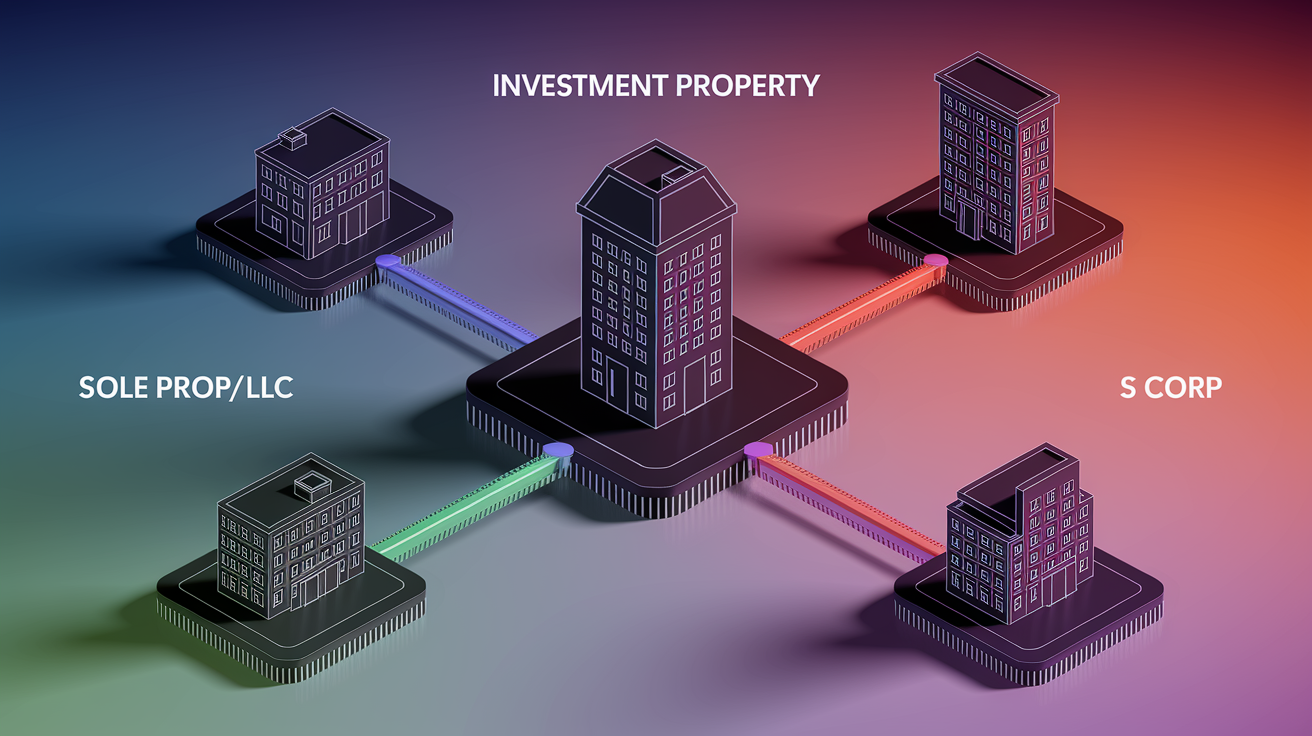
Entity choice doesn’t change the underlying classification of your income, but it can affect how income flows to your personal return and may reduce self-employment tax. A single-member LLC is disregarded for federal tax purposes. Income flows directly to your Schedule C (if dealer) or Schedule E (if rental investor). The LLC gives you liability protection but offers no tax difference from operating as a sole proprietor. You still pay self-employment tax on dealer income and still report investor income the same way.
An S corporation can reduce self-employment tax exposure for active dealers. S corp owners must pay themselves a reasonable salary for services performed, subject to payroll taxes (employer and employee shares totaling about 15.3 percent). Remaining profit is distributed as shareholder distributions, which aren’t subject to payroll or self-employment tax. The IRS watches S corp salary levels closely to prevent abuse. Paying yourself $30,000 salary and taking $150,000 in distributions when you’re the primary worker will trigger an audit adjustment. A reasonable salary might be $80,000 to $100,000 for a full-time flipper doing substantial project management and sales work, with remaining profit taken as distributions.
C corporations rarely make sense for flippers because profits are taxed at the corporate level and again when distributed as dividends. That’s double taxation. C corps are sometimes used for large-scale developers or builders with significant retained earnings and employee benefits, but individual flippers almost always use pass-through structures (sole proprietor, LLC taxed as partnership or S corp, or single-member LLC) to avoid double tax.
Entity Comparison Snapshot
- Sole proprietorship or single-member LLC: Income flows to Schedule C or E. Self-employment tax applies to dealer income. Simple to administer but no payroll-tax reduction.
- S corporation: Allows salary plus distribution structure. Payroll tax only on salary portion. Requires payroll compliance, quarterly filings, and reasonable compensation. Best for dealers with consistent six-figure profits.
- C corporation: Double taxation on distributed profits. Useful for large operations retaining earnings or offering employee stock plans. Almost never optimal for individual flippers.
- Partnership or multi-member LLC: Income allocated per operating agreement. Each partner reports on Schedule K-1. Dealer partners may owe self-employment tax on distributive shares. More complexity than single-member structures.
Limitations of 1031 Exchanges When Flipping Distressed Properties
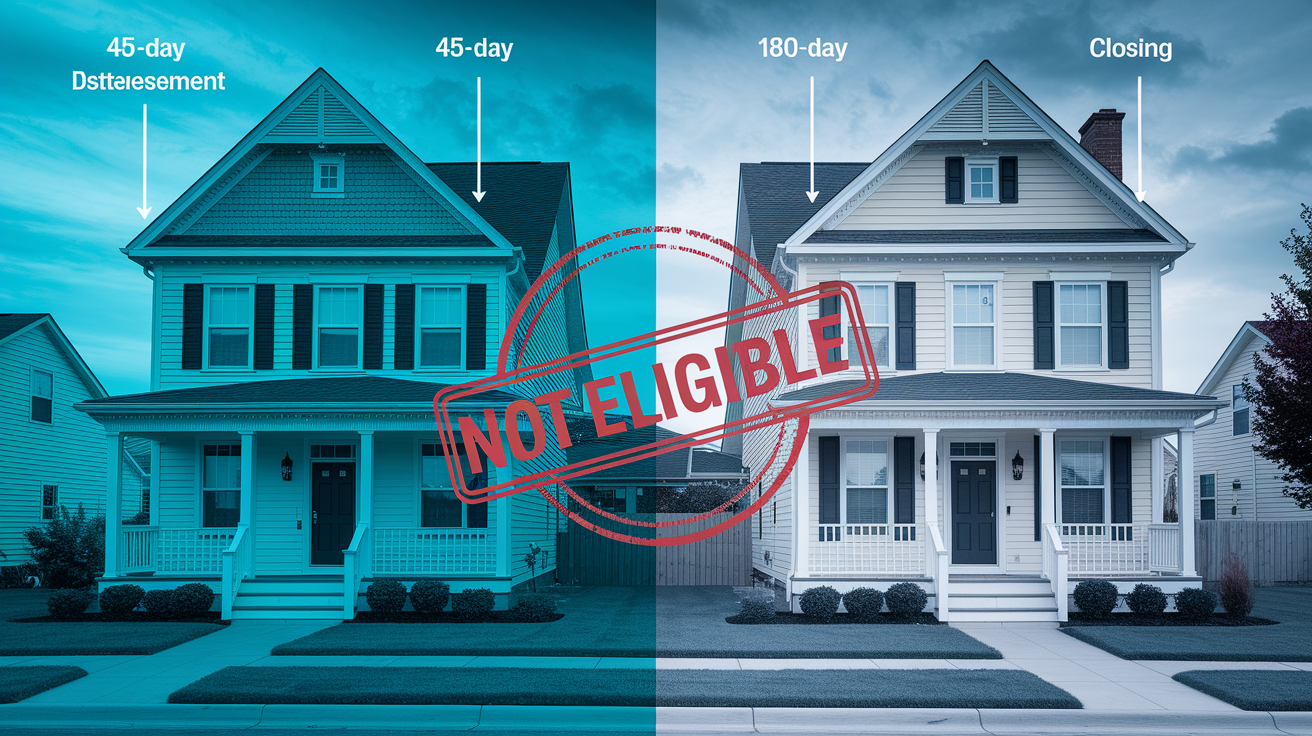
Section 1031 of the Internal Revenue Code allows tax deferral when you exchange real property held for investment or business use for like-kind replacement property. The benefit is powerful. You can sell an appreciated property, reinvest all proceeds into another property, and defer 100 percent of the capital gain. But 1031 exchanges don’t apply to property held primarily for sale. That’s inventory. Flips are inventory. If you buy a distressed house intending to renovate and resell within a year, that property is inventory from day one and you can’t use a 1031 exchange to defer the gain.
The strict 1031 timeline requires you to identify potential replacement properties in writing within 45 days of closing the relinquished property and close on the replacement within 180 days of the relinquished property sale. You must use a qualified intermediary to hold the sale proceeds. If you touch the money, the exchange is blown. The replacement property must be of equal or greater value, and you must reinvest all equity and debt to defer 100 percent of the gain. Partial exchanges are allowed but trigger some taxable gain.
Five eligibility criteria for 1031 exchanges:
- Property must be held for investment or business use, not inventory or personal residence.
- Both relinquished and replacement properties must be real property located in the United States.
- Identification of replacement property must occur within 45 days of relinquished property sale closing.
- Replacement property must be acquired within 180 days of relinquished property sale or by the due date (including extensions) of the tax return for the year of sale, whichever is earlier.
- A qualified intermediary must hold the sale proceeds and facilitate the exchange. You can’t receive or control the funds between sale and purchase.
Documentation, Recordkeeping, and IRS Compliance for Distressed Property Flips

The IRS doesn’t care what you say you spent. They care what you can prove. Every deduction, every basis adjustment, and every expense allocation depends on documentation created at the time. A shoebox of receipts is better than nothing, but organized records are the difference between a clean audit and a costly adjustment. Start a dedicated file for each property the day you make an offer. Include the purchase agreement, inspection reports, appraisal, loan documents, closing disclosure (HUD-1 or settlement statement), and all pre-closing correspondence.
During rehab, collect and organize contractor invoices, subcontractor agreements, materials receipts, permit applications and approvals, utility bills, insurance policies, property tax statements, and loan interest statements. Take time-stamped before and after photos of every room and every major repair. If you replace a roof, photograph the old shingles and the new installation in progress. These images back up the scope of work and prove the expense amount. Store digital copies in the cloud and keep paper copies in a binder or accordion file.
Ten critical recordkeeping items for distressed property flips:
- Purchase and sale closing statements (settlement, HUD-1, or closing disclosure)
- All executed contracts: purchase, construction, subcontractor, and sales agreements
- Contractor and subcontractor invoices showing labor, materials, and scope of work
- Receipts for materials, supplies, appliances, and fixtures purchased directly
- Permit applications, approvals, inspection reports, and certificate of occupancy documents
- Loan documents, promissory notes, deeds of trust, and monthly interest statements
- Insurance policies and premium payment records for the holding period
- Utility bills, property tax statements, and HOA dues paid during ownership
- Before and after photographs with dates and property address metadata
- Bank statements and canceled checks documenting payment of all expenses
Retain these records for at least three years after you file the return reporting the sale, but keep basis documentation indefinitely. The IRS can audit you three years after filing (six years if you underreport income by more than 25 percent, and forever if you file a fraudulent return or no return at all). If you can’t prove your basis, the IRS will assume it’s zero and tax 100 percent of the sale proceeds as gain. Basis reconstruction after the fact is expensive and often incomplete.
State Taxes, Transfer Taxes, and Local Levies Affecting Distressed Property Flips

Federal tax is only part of the bill. State income tax applies to your net gain or profit, and rates vary widely. California imposes a top marginal rate of roughly 13.3 percent on ordinary income and capital gains. New York State tops out around 10.9 percent. Texas and Florida have no state income tax, but they offset that with higher property taxes and sometimes higher local transfer taxes. Add state tax on top of federal and the combined burden on a short-term flip can exceed 50 percent of profit in high-tax states.
Transfer taxes are transaction costs levied by state, county, or city governments when real property changes hands. The seller usually pays, but in some markets the buyer and seller split the cost or negotiate who pays. Transfer tax rates range from zero in a few states to over 2 percent in expensive urban markets. New York City, for example, charges a combined state and city transfer tax that can exceed 2.5 percent on sales over certain thresholds. Add a mansion tax on high-value sales and total transfer costs can reach 3 to 4 percent. These are real dollars that come directly off your net proceeds.
Some jurisdictions also impose transfer taxes on equity transfers when a controlling interest in an entity owning real property changes hands. If you flip a property held in an LLC and sell the LLC membership interest instead of the property itself, some states (New York, for instance) will still impose transfer tax on the deemed real property sale. This closes a loophole and makes sure the taxing authority collects revenue whether you sell the dirt or the entity. Factor transfer taxes into your offer price and resale price. A $300,000 sale with a 2 percent transfer tax means $6,000 less in your pocket. Treat it like another closing cost when calculating net profit and pricing the deal.
Tax Planning Strategies to Improve Profitability on Distressed Property Flips
Tax planning starts before you buy. If your goal is to minimize tax, hold the property longer than twelve months to access long-term capital gains rates. If you’re a dealer and can’t escape ordinary income treatment, structure your entity to reduce self-employment tax exposure. An S corporation with reasonable salary and profit distributions can save 10 to 15 percent of net income compared to sole proprietorship. Timing the sale into a lower-income year can drop you into a lower marginal bracket and reduce both income and capital gains tax.
Accurate cost tracking and classification is the simplest and most reliable way to reduce taxable income. Every dollar of documented expense either reduces gain or creates a deduction. Hire a bookkeeper or use accounting software to categorize expenses by property and by type (materials, labor, interest, taxes, utilities). Reconcile bank statements monthly and flag questionable expenses early so your CPA can advise on treatment. Missing a $10,000 roof replacement because you lost the invoice costs you $2,400 to $3,700 in tax depending on your rate.
Six practical tax planning steps for distressed property flippers:
- Review holding period before listing: If you’re within weeks of the twelve-month mark and qualify as an investor, delay the sale to convert short term to long term and cut your federal rate in half.
- Evaluate entity structure annually: If your flipping income exceeds $75,000 to $100,000 per year and you’re currently a sole proprietor, model the tax savings from electing S corporation status and compare against payroll compliance costs.
- Track and deduct every allowable expense: Maintain real-time records of rehab costs, interest, property taxes, insurance, utilities, and selling expenses. Use separate bank accounts and credit cards for each flip to simplify reconciliation.
- Implement payroll if using an S corp: Pay yourself a reasonable salary for services performed. Take remaining profit as distributions. File quarterly payroll reports and deposit payroll taxes on time to avoid penalties.
- Schedule a pre-sale tax review with your CPA: Meet 30 to 60 days before listing to confirm classification (dealer vs. investor), entity reporting, estimated tax payments, and state/local tax exposure.
- Plan the timing of expenses and income: If profitable in the current year, prepay deductible expenses (property taxes, interest) before year end to accelerate deductions. If expecting higher income next year, defer expenses or accelerate income recognition depending on your tax situation.
Final Words
In the action, you buy the distressed property, rehab it, then sell, and taxes follow every step.
This post walked through the big categories: capital gains vs ordinary income, dealer vs investor status, holding-period rules, how to track basis and rehab costs, self-employment tax triggers, entity choices, 1031 limits, state and transfer taxes, and recordkeeping.
Plan ahead, keep good records, and check with a CPA. With a little tax planning you can protect more profit and move forward confidently with tax implications of buying and flipping distressed properties.
FAQ
Q: How do flippers avoid capital gains tax?
A: Flippers avoid capital gains tax by holding properties over 12 months, choosing tax-friendly entity structures, or planning sales with a CPA; many flips still get ordinary-income treatment and may trigger self-employment tax.
Q: What is the 70% rule in flipping?
A: The 70% rule in flipping is a quick buy-price guideline: pay no more than 70% of after-repair value (ARV) minus rehab costs to leave room for profit, closing, and unexpected expenses.
Q: What are the IRS rules for house flipping?
A: The IRS rules for house flipping treat frequent sales, major rehab, and active marketing as dealer activity, taxed as ordinary income and possibly subject to self-employment tax with Schedule C reporting and strict documentation.
Q: What is the 2 year 5 year rule?
A: The 2 year 5 year rule requires you to own and use a property as your main residence for at least two of the five years before sale to qualify for the Section 121 capital-gain exclusion.