

Want better deals? Stop waiting for Zillow to tell you what’s for sale.
Off‑market homes—properties never listed on MLS—make up a big slice of real transactions and often sell faster with less fuss.
Finding them is less about luck and more about a repeatable system: targeted data, direct outreach, and relationships.
This post walks through six direct access methods that actually surface hidden listings—agent pocket listings, investor networks, direct mail, driving for dollars, public records, and niche tools—so you can build a reliable pipeline, not rely on chance.
Core Methods to Locate Off‑Market Properties Today

Off‑market properties are homes for sale that never make it to the MLS, which means they won’t show up on Zillow, Realtor.com, or any of the usual real estate sites. The MLS Clear Cooperation Policy (Statement 8.0) technically requires agents to submit most marketed listings within one business day, but off‑market deals still account for roughly 20 percent of transactions in some markets, according to NAR.
These properties stay private for different reasons. Some sellers want speed or privacy. Others just don’t want to pay agent commissions. You’ll find distressed sellers dealing with foreclosure, probate, or divorce who aren’t ready to go public. And sometimes agents keep inventory as office‑exclusive listings, or sellers explicitly request no internet exposure. Both are allowed under MLS 8.0.
Buyers and investors go after off‑market properties to cut out competition and occasionally land better pricing. When a home isn’t broadcast to millions of online shoppers, the seller loses some negotiating power. Sellers who skip the listing process often trade a lower price for speed and simplicity. That’s especially true with probate sales, pre‑foreclosures, and properties in rough shape that would look terrible in MLS photos.
The best ways to find off‑market inventory mix relationship building with direct outreach and data targeting. Here are six methods that actually work:
- Agent pocket listings. Experienced agents surface properties before they formally list, either through their network or by keeping deals in‑house as office exclusives.
- Investor networking. Local meetups, real estate clubs, and informal referral chains deliver pre‑market opportunities and introductions to motivated sellers.
- Direct mail and targeted outreach. Letters and postcards sent to absentee owners, probate leads, and long‑term homeowners generate replies when you commit to multiple touches.
- Driving for dollars. You physically scout neighborhoods for vacant, neglected, or distressed properties, then contact the owners directly.
- Public records. Monitor probate filings, foreclosure notices, tax delinquency logs, and code violations to find sellers under financial or legal pressure.
- Online platforms. Tools like Redfin’s coming‑soon listings, PropStream for ownership records and skip tracing, DealMachine for driving workflows, and LoopNet for commercial off‑market inventory give you digital access to unlisted deals.
Building Targeted Lists for Off‑Market Property Leads

Most solid off‑market systems start with a focused list of properties that show predictable seller motivation or financial distress. Instead of blasting a generic “we buy houses” message to every address in a ZIP code, smart investors filter public records to find homeowners who are statistically more likely to consider an off‑market sale.
County clerk websites, tax assessor databases, and court filing indexes contain data on probate cases, pre‑foreclosures, tax liens, code violations, and expired or withdrawn MLS listings. All of these signal either urgency or frustration with the traditional listing process. Investors usually add ownership filters like equity above 30 percent, last sale date five to ten years ago, and out‑of‑state mailing addresses to isolate absentee landlords who might be tired of managing a distant property.
Probate leads convert well because executors often need to liquidate real estate to settle an estate, and the legal timeline (three to twelve months in most places) creates natural urgency. Pre‑foreclosure filings signal distress before the auction date, giving you time to negotiate a short sale or cash offer. Expired and withdrawn listings reveal sellers who tested the retail market but didn’t close, making them more open to creative terms or below‑market cash offers if enough time has passed. Tax delinquency records and code violation logs point to owners who probably lack the cash or motivation to maintain the property, which often means they’ll sell quickly at a discount.
| Lead Type | What It Reveals |
|---|---|
| Probate filings | Estate liquidation needed; executor may have sale authority and timeline pressure. |
| Pre‑foreclosure notices | Owner behind on payments; auction date creates urgency before public sale. |
| Expired / withdrawn MLS listings | Seller tested retail market without success; often more flexible on price or terms. |
| Absentee owners (out‑of‑state mailing address) | Property management burden; higher reply rates when managing from a distance. |
| Tax delinquent or lien records | Financial distress or neglect; owner may prioritize quick sale to resolve debt. |
Direct Mail and Outreach Systems for Off‑Market Property Leads

Once you’ve built a targeted list, direct mail is one of the most cost‑effective ways to start conversations with sellers who aren’t actively hunting for buyers. A 1,000‑piece postcard campaign typically runs between 300 and 1,000 dollars when you factor in list acquisition, printing, and postage. Response rates usually land between 0.5 and 3 percent, which translates to 5 to 30 replies per thousand pieces. Of those replies, roughly 1 to 5 percent convert into a signed purchase agreement or wholesale contract, depending on your follow‑up discipline and market conditions. The economics work because you’re reaching motivated sellers directly, without competing against dozens of retail buyers on the MLS.
Basic postcard copy should focus on speed, simplicity, and eliminating agent fees. A headline like “Sell Your House Fast. No Fees, Quick Close” followed by one or two sentences explaining your cash offer process and a clear phone number or URL will outperform lengthy explanations. Some investors test two or three creative variants in the same campaign to see which messaging works. Cold calling boosts results when paired with mail, but you must scrub your list against the federal Do Not Call registry and any state registries before dialing.
An effective cold‑call opener runs about 20 to 25 seconds: “Hi, I’m [Name], we buy houses in [Neighborhood]. I noticed your property at [address] and was wondering if you’d ever consider selling it off‑market for a fast, all‑cash close?” Keep the tone conversational, acknowledge that you’re calling cold, and focus on whether they’re even open to a conversation rather than pitching terms on the first call.
The single most important operational detail is the follow‑up sequence. One postcard or one phone call produces almost nothing. Most investors commit to five to seven touches spread across four to eight weeks: an initial postcard, a follow‑up postcard seven days later, a phone call or ringless voicemail, another postcard two weeks after that, and at least two more touches before marking the lead as unresponsive. This cadence keeps you visible without crossing into harassment territory.
Legal compliance protects your business from expensive mistakes. The Telephone Consumer Protection Act imposes statutory damages of 500 dollars per unsolicited call or text, rising to 1,500 dollars if the violation is willful. Keep records of consent and scrub your lists regularly. For ringless voicemail and automated SMS, consult an attorney to confirm your practices meet current TCPA standards, because enforcement and interpretation keep evolving.
- Build your list using one of the public‑record sources discussed above.
- Design two or three postcard variants and print enough pieces for a 5‑touch sequence.
- Mail the first piece, wait 5 to 7 days, then mail the second piece.
- On day 10, begin cold calling or leaving ringless voicemails for any lead who hasn’t responded.
- Continue follow‑up every 2 to 4 weeks until the seller opts out or you close a deal.
Driving for Dollars and Neighborhood‑Based Off‑Market Property Discovery

Driving for dollars is the physical act of driving through target neighborhoods and documenting properties that show visible signs of distress, vacancy, or neglect. The telltale indicators include overgrown yards, boarded windows, peeling paint, piles of mail visible through the door slot, broken gutters, and cars on blocks in the driveway. Experienced investors expect to generate one to three actionable leads per 100 to 300 homes canvassed. Productivity improves when you focus on older neighborhoods with a mix of owner‑occupied and absentee‑owned properties. Route‑mapping apps let you plan efficient loops and log addresses on your phone as you drive, which saves you from circling back later trying to remember which house had the sagging porch.
Once you’ve recorded an address, the next step is an owner lookup through a county tax assessor website or a paid skip‑tracing service to get the owner’s name and mailing address. From there, you can send a personalized letter or postcard referencing the specific property condition: “I noticed your property at 123 Oak Street needs some repairs. If you’re considering selling as‑is for cash, I’d like to make an offer this week.” That specificity dramatically improves response rates compared to generic bulk mail because the seller knows you’ve actually seen the house.
Door‑knocking the same day you drive the neighborhood can get even faster conversations, but it requires a short, non‑aggressive script and basic safety precautions. A 15‑ to 30‑second door‑knock introduction might sound like this: “Hi, I’m [Name]. I invest in houses in this neighborhood and noticed your property could use some work. If you’d ever consider selling it as‑is without making repairs, I’d be happy to make you a cash offer. Do you have a minute to talk?” Carry business cards, dress casually but professionally, and never knock after dark or approach homes where residents appear uncomfortable.
Online Platforms and Data Tools for Finding Private Real Estate Deals

Digital tools have made it easier to discover off‑market inventory without leaving your desk, though most platforms require paid subscriptions and regional availability varies. Redfin’s mobile app displays “coming soon” listings in select markets, which are properties that will hit the MLS within a few days but are visible to buyers early. This isn’t technically off‑market, but it gives you a window of time before the listing saturates Zillow and attracts competing offers.
PropStream provides nationwide property ownership records, mortgage balances, estimated equity, and built‑in skip tracing that returns phone numbers and email addresses for property owners. It’s particularly useful for building absentee‑owner lists and targeting owners who’ve held a property for more than a decade without refinancing. DealMachine was designed specifically for investors who drive for dollars, offering mobile address capture, automatic owner lookups, and integrated direct‑mail campaigns that you can launch from the app. LoopNet focuses on commercial and multifamily properties, where off‑market deals circulate more freely than in the single‑family space because institutional sellers and brokers often test interest privately before going wide.
Beyond subscription platforms, you can source leads from:
- Facebook investor groups. Local real estate investment groups often share pocket listings, wholesale deals, and FSBO opportunities before they’re widely advertised.
- LinkedIn networking. Searching for property managers, contractors, probate attorneys, and builders in your market can surface referral‑based deals and early construction inventory.
- Craigslist rental and FSBO sections. Landlords occasionally post rentals when they’re quietly testing interest in selling; FSBO ads reveal motivated sellers who want to avoid agent commissions.
- Driving for dollars apps. Besides DealMachine, various regional tools let you photograph properties, log GPS coordinates, and queue follow‑up tasks.
Social media outreach works when you provide value first. Instead of cold‑messaging “I buy houses,” comment thoughtfully on local market discussions, share useful content about landlord challenges or probate timelines, and make it clear you’re an active buyer. Over time, sellers and referral partners reach out when they encounter off‑market opportunities. The key is consistency and credibility, not volume. One vetted seller contact from a LinkedIn conversation can produce more deals than 500 impersonal Facebook messages.
Working with Agents, Wholesalers, and Investor Networks for Off‑Market Deals

Relationship sourcing remains the highest‑quality channel for off‑market deals because motivated sellers often pick up the phone and call someone they know before they ever consider listing publicly. Experienced real estate agents maintain private buyer lists and will reach out to those buyers before submitting a listing to the MLS, either to gauge interest or to execute an office‑exclusive transaction that complies with MLS 8.0 exceptions. When you build trust with an agent who specializes in your target neighborhood or property type, you become the first call when a seller wants to test the market quietly.
Make it easy for agents to work with you by showing you’re a serious buyer: provide proof of funds, close quickly, and don’t renegotiate deals over minor inspection items. Agents remember buyers who make their lives easier, and that reputation translates into early access to pocket inventory.
Investor meetups and local real estate clubs create referral loops where wholesalers, flippers, buy‑and‑hold investors, and agents share deal flow. Attending one meetup per month and exchanging contact information with five to ten people will generate more inbound opportunities than any single marketing campaign, especially after you’ve closed a few deals and built a track record. These networks also surface joint‑venture opportunities and partnerships with bird dogs, individuals who scout properties and refer leads in exchange for a finder’s fee of two thousand to five thousand dollars per closed transaction.
How Wholesaler Deal Flow Works
Wholesalers contract properties at below‑market prices and then assign those contracts to end buyers for an assignment fee, which typically ranges from three thousand to twenty thousand dollars depending on the property’s value and the discount secured. Active wholesalers close one to five deals per month and often maintain an email list or text‑message group where they blast new opportunities to their buyer network. The properties are usually distressed, require significant repairs, or involve a seller under time pressure (probate, divorce, pre‑foreclosure).
To vet a wholesaler’s credibility, ask how many deals they’ve closed in the past six months, request references from previous buyers, and verify that they actually have the property under contract before you submit earnest money. Solid wholesalers provide property photos, repair estimates, comparable sales data, and a realistic after‑repair value. If they’re evasive about any of those details, walk away. The best wholesalers become repeat sources of profitable deals once you’ve shown you can close quickly and honor the agreed‑upon assignment fee.
Evaluating Off‑Market Properties Without MLS Data Access
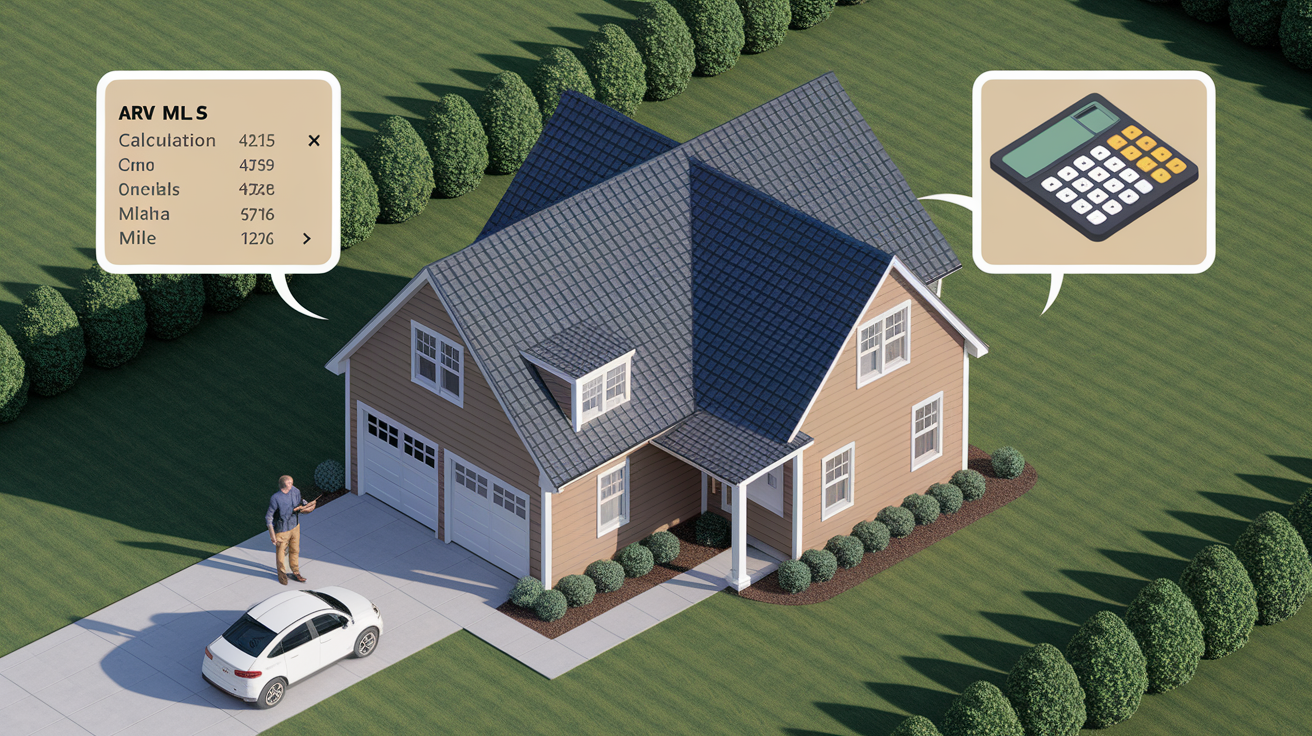
Off‑market deals lack the public pricing transparency and broad comparable‑sales data that MLS listings provide, so you need alternative methods to calculate after‑repair value and estimate repair costs. Tools like PropStream, county tax assessor websites, and public records databases let you pull recently sold comparables within a half‑mile radius of the subject property, filtered by square footage, bedroom count, and sale date within the past six months. If the neighborhood has low turnover and comps are sparse, widen your radius to one mile or use properties from adjacent subdivisions with similar age and construction quality.
Calculate ARV by averaging the price per square foot of your three to five best comps, then multiplying that figure by the subject property’s square footage. Adjust for condition, lot size, and any major features the subject property lacks (garage, basement, updated kitchen).
Repair cost estimation starts with a walkthrough checklist that covers roof condition, HVAC age, plumbing and electrical systems, foundation cracks, cosmetic updates needed in kitchens and bathrooms, and flooring condition. If you’re new to estimating rehab budgets, bring a licensed contractor on the walkthrough and pay for a written scope of work and line‑item bid. Over time you’ll develop your own per‑square‑foot benchmarks for different levels of renovation (light cosmetic, moderate rehab, full gut). Budget an additional 10 to 20 percent contingency for unexpected issues like hidden mold, outdated wiring, or structural repairs that only become visible once walls are opened.
When evaluating off‑market properties, always follow this four‑step process:
- Pull three to five comparable sales within the past six months to establish a realistic ARV.
- Walk the property with a detailed inspection checklist or hire a contractor to generate a repair estimate.
- Calculate your maximum allowable offer using the formula: ARV minus repair costs minus your desired profit minus holding costs and closing costs.
- Verify that the deal meets your return threshold (cash‑on‑cash return, equity capture, or rental yield) before submitting an offer.
Legal, Policy, and Compliance Considerations for Off‑Market Acquisitions

MLS Clear Cooperation Policy, formally known as MLS Statement 8.0, requires that any property publicly marketed by a listing broker (meaning advertised on websites, social media, or through signage) must be submitted to the MLS within one business day. The policy was designed to increase inventory transparency and reduce the practice of agents quietly holding listings to benefit select buyer clients. Despite that rule, off‑market transactions continue to happen legally through several exceptions: office‑exclusive listings (where the property is marketed only within the listing broker’s firm), seller requests to exclude the listing from internet display, and transactions handled by agents who aren’t NAR members and therefore aren’t bound by MLS 8.0. Private sales between individuals, estate sales, and wholesaler assignments also fall outside MLS reporting requirements because no listing agreement exists.
When you acquire property off‑market, disclosure laws vary significantly by state. Some states mandate that sellers disclose all known material defects in writing, while others operate on an “as‑is” basis where the buyer assumes most risks. Title searches become even more critical in off‑market deals because you won’t have the same level of agent oversight or lender scrutiny that accompanies an MLS transaction. Order a title commitment early in your due diligence period to identify liens, unpaid taxes, easements, and any clouds on title that could delay closing or affect your ownership rights. Budget for a title company to conduct the search and issue title insurance, which protects you from undiscovered claims after you take ownership.
If you’re reaching out to sellers through direct mail, cold calling, or door‑knocking, you must comply with federal and state marketing regulations. The Telephone Consumer Protection Act applies to calls and text messages sent to cell phones, and violations carry statutory damages of 500 to 1,500 dollars per incident. Scrub your calling lists against the National Do Not Call Registry and maintain call logs that document consent. Some municipalities require solicitation permits for door‑knocking, and a few have outright bans on unsolicited real estate solicitation in certain neighborhoods. Check local ordinances before you knock doors or risk fines and reputational damage.
Key compliance steps for off‑market acquisition include:
- Order a title search and commitment within 7 days of contract execution to identify liens and encumbrances.
- Verify local and state disclosure requirements with a real estate attorney, especially for as‑is purchases.
- Scrub outreach lists against Do Not Call registries and document consent for any phone or text communication.
- Confirm that your marketing methods comply with local solicitation rules if you plan to door‑knock or distribute flyers.
Budgeting, KPIs, and Scaling Your Off‑Market Property Acquisition System

Successful off‑market acquisition runs on repeatable processes, accurate tracking, and continuous optimization of your marketing spend. Start by defining cost‑per‑lead and cost‑per‑acquisition for each channel you test. For example, a direct mail campaign of 1,000 postcards costing 700 dollars that generates 10 responses yields a cost‑per‑lead of 70 dollars. If one of those leads converts into a signed contract, your cost‑per‑acquisition for that deal is 700 dollars. Compare that figure against your profit (whether it’s an assignment fee, wholesale spread, or rental cash flow) to determine whether the channel is worth scaling.
Cold calling and driving for dollars carry lower hard costs but higher time investments, so track hours spent and calculate an hourly return to decide where to focus your effort.
Lead‑to‑close conversion rates across cold outreach channels typically range from 0.5 to 3 percent, meaning you’ll need to contact 30 to 200 property owners to generate one closed transaction, depending on list quality and follow‑up discipline. CRMs designed for real estate investors (examples include Podio, REsimpli, and FreedomSoft) cost between 30 and 200 dollars per month and let you automate follow‑up sequences, tag leads by motivation level, and track every interaction from initial contact to closing. Dialing systems and ringless voicemail platforms add another 30 to 200 dollars per month but dramatically increase your contact rate when you’re working large lists.
Best practice is to implement a 5‑ to 7‑touch sequence for every lead, spacing touches across four to eight weeks. After the initial contact (postcard, call, or door knock), follow up at 3 to 7 days, then again at 2 weeks, 4 weeks, and 8 weeks unless the seller explicitly opts out. Most conversions happen between touch three and touch six because sellers need time to consider an off‑market sale, consult family members, or resolve whatever issue is preventing them from listing traditionally.
| Metric | Benchmark |
|---|---|
| Direct mail response rate | 0.5–3% (5–30 replies per 1,000 pieces) |
| Lead‑to‑close conversion | 0.5–3% across cold channels; higher for probate and expired listings |
| Cost‑per‑lead (direct mail) | $30–$150 depending on list quality and campaign size |
| CRM and automation tools | $30–$200/month; dialing systems $30–$200+/month |
To scale your acquisition system, start with small tests in each channel (250 to 1,000 mail pieces, 500 cold calls, or 100 to 300 homes canvassed) and measure results over 60 to 90 days. Double down on the channel with the best cost‑per‑acquisition and gradually increase volume. Hire part‑time help (virtual assistants for list‑building and skip tracing, callers for outbound dialing, or drivers for neighborhood canvassing) once you’ve proven a channel works and your deal flow justifies the labor cost. A small team of one to three salespeople plus one acquisitions manager can support one to three closings per month in most mid‑sized markets, and that volume is enough to cover overhead and generate meaningful profit if your underwriting is sound.
Final Words
You’re out finding leads now: agent pocket listings, driving for dollars, direct mail, public records, online platforms, and investor networks.
This post showed how to build targeted lists, run outreach systems, underwrite deals without MLS comps, and respect rules like MLS Statement 8.0 and TCPA compliance.
Start small, test one channel, track simple KPIs, and scale what works. If you want practical steps on how to find off-market properties, use the methods above, measure results, and iterate. You’ll find better, quieter deals over time.
FAQ
Q: What’s the best way to find off-market properties?
A: The best way to find off-market properties is using a mix of agent pocket listings, investor networks, direct mail, driving for dollars, public records, online tools, plus consistent outreach and follow-up.
Q: What is the 3 3 3 rule in real estate?
A: The 3 3 3 rule in real estate is a tenant/owner check-in schedule: contact new tenants or buyers after 3 days, 3 weeks, and 3 months to catch problems early and build rapport.
Q: Are off-market listings available to the public?
A: Off-market listings are generally not public; sellers keep them private for speed, privacy, or lower commissions. Exceptions include office-exclusive listings, coming-soon premarket posts, and private buyer networks.
Q: What is the 70% rule in flipping?
A: The 70% rule in flipping is a quick buy-price guideline: offer no more than 70% of the after-repair value (ARV) minus estimated rehab costs to protect profit and cover carrying costs.