

Most house hackers sell too soon.
After a successful house hack you have equity, rental history, and landlord experience.
What you do next decides whether you take a lump sum, collect steady monthly cash, or use the deal to scale your portfolio.
This post walks through three practical exit paths – sell, convert to a rental, or scale – and shows the key numbers, tax checks, and risks to run before you choose.
You’ll get quick screens and clear tradeoffs so you can make a low-regret decision.
Key Exit Strategies After a Successful House Hack (Comprehensive Overview)
After you’ve house hacked successfully, you’re sitting on equity, rental history, and some actual property management experience. What you do next decides whether you cash out, build a bigger portfolio, or just collect passive income. Most owner-occupied loans make you live there at least 12 months. That’s your minimum. A lot of house hackers wait 2–3 years to build real equity before picking an exit, but the clock starts ticking once you move out and turn your old home into a straight investment property.
Your exit needs to match what you’re trying to do next. Need capital for another house hack? Cash-out refi or sale. Want steady monthly income without hunting for a new primary residence? Convert to a rental. Scaling fast? Repeat the house hack cycle or use a 1031 exchange to trade up. The smart house hackers walk into every deal with two or three exit plans ready so market shifts, life changes, or financing problems don’t box them in.
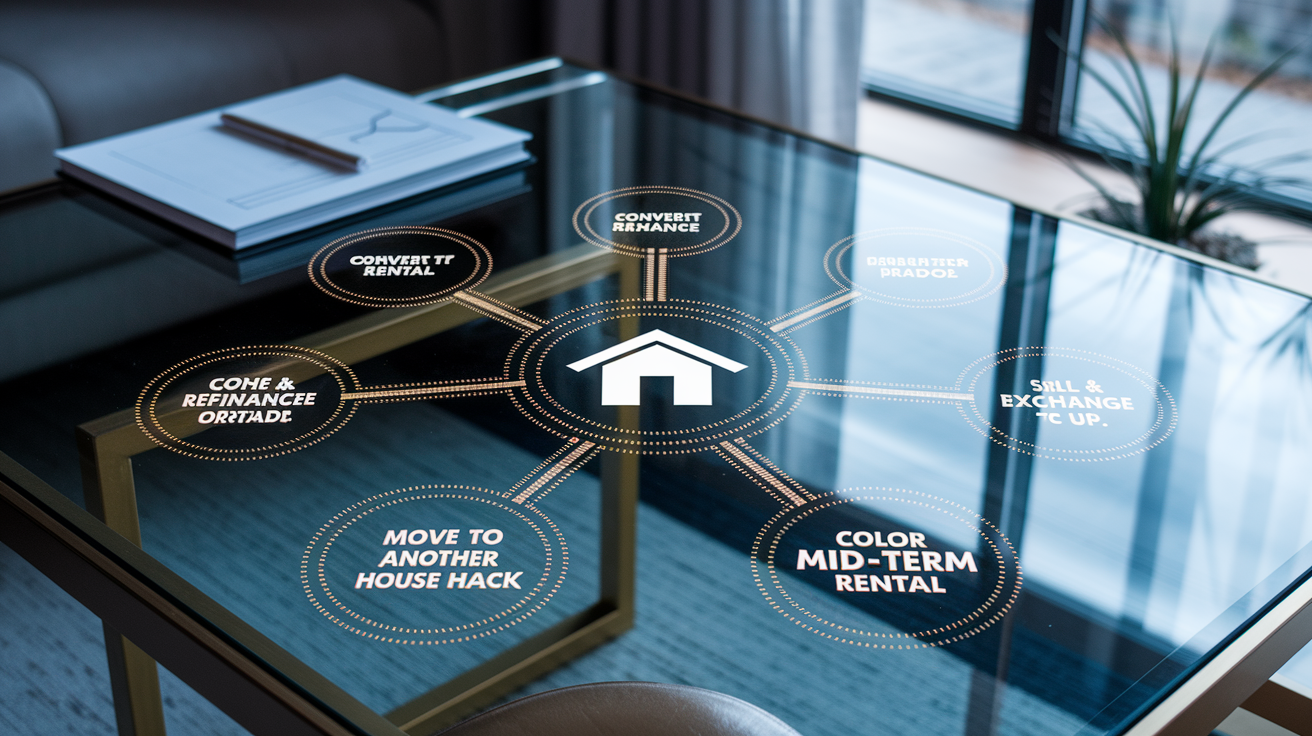
Here are six major exit paths every house hacker should run numbers on before locking anything in:
- Convert to a full rental — collect monthly cash flow, let tenant rent pay down your mortgage, hold for appreciation. Manage it yourself or hire someone.
- Refinance — pull equity through cash-out refinance or BRRRR (buy, rehab, rent, refinance, repeat) to recycle capital into your next deal without selling.
- Sell and trade up — use Section 121 capital-gains exclusion (up to $250k single or $500k married) if you lived there 2 of the last 5 years, then reinvest what you made.
- 1031 exchange — defer capital-gains taxes by swapping the property for a like-kind replacement within tight IRS timelines (45 days to identify, 180 days to close).
- Move to another house hack — repeat the cycle. Buy a new owner-occupied property, convert the old one to a rental, scale your portfolio one house hack at a time.
- Short-term or mid-term rental conversion — earn higher gross rents switching to Airbnb or 90+ day corporate stays, if your market and local regs allow it.
Converting the House Hack Into a Full Rental (Operational & Cash‑Flow Details)

When you move out and flip your house hack to a full rental, you’re crossing from homeowner to landlord. That changes your insurance, your rent strategy, your monthly expenses. Landlord insurance usually costs 15–25% more than your old homeowner’s policy. You’ve got to decide if you’ll self-manage or hire a property manager. And you need reserves for maintenance (budget around 8% of gross rents) and vacancy (5% is a common baseline). Hire a manager and you’re paying 8–10% of gross rent each month.
Before you make the switch, run full cash-flow numbers. Start with gross monthly rent from all units. Subtract your PITI (principal, interest, taxes, insurance), then subtract management fees if you’re hiring help, then deduct maintenance and vacancy reserves. What’s left is your net monthly cash flow. If that number’s positive, you’re good. If it’s negative or thin, you’ll need to either self-manage to save the fee, raise rents when leases turn, or wait for the market to improve.
| Task | Cost Impact | Time Required | Best For |
|---|---|---|---|
| Self‑manage | Save 8–10% of rent | 5–10 hours/month | Local owners with flexible schedules |
| Hire property manager | −8–10% of rent | 1–2 hours/month | Out‑of‑state or scaling investors |
| Tenant placement only | Flat fee (~1 month rent) | 3–5 hours upfront | Owners who want control but hate marketing |
| DIY maintenance | Materials only | Variable (could be 20+ hours/issue) | Handy owners with margin to protect |
Here’s a real example using a duplex bought for $320,000. Unit A rents for $1,400, Unit B for $1,450. Gross monthly income is $2,850. Your mortgage payment (PITI) is $2,400. Hire a manager at 10% and that’s $285. Maintenance reserve at 8% is $228. Vacancy reserve at 5% is $143. Add it up: $2,400 + $285 + $228 + $143 = $3,056. Subtract that from $2,850 in rent and you’ve got a monthly shortfall of $206. This property doesn’t cash flow with professional management unless rents go up or you self-manage to save that $285.
Using Refinancing as an Exit Strategy (Cash‑Out, Rate/Term, and BRRRR)
Refinancing lets you pull equity from your house hack without selling. Most common route is a cash-out refinance. The lender gives you a new loan based on current appraised value, pays off your old mortgage, hands you the difference in cash. The practical cap for most conventional cash-out refis is around 75% loan-to-value (LTV). That means the new loan can’t go over 75% of the appraisal. This works great when you’ve built equity through appreciation or principal paydown, but it falls apart in the first few years when your balance is still close to what you originally paid.
Here’s why early cash-out refis rarely work. Say you bought a duplex for $320,000 with 3.5% down. Your initial loan was $308,800. After one year, you owe around $300,000. Property appraises at $380,000. At 75% LTV, the lender will loan you $285,000. That’s less than your current balance. No cash to pull out. Even after three years, when you owe roughly $295,000 and the property appraises at $370,000, the max loan is only $277,500. Still short of your balance. You’ll typically need 4–5 years of appreciation and principal paydown, or forced appreciation through renovations (the BRRRR model) to make the numbers work.
BRRRR flips that timeline by adding value through rehab before you refinance. Buy a fixer at $200,000, put $35,000 into repairs, and the property appraises at $300,000. You can refinance at 75% LTV ($225,000), pay off your original loan plus rehab costs, and potentially pull cash to repeat the process. BRRRR only works if the numbers justify it. Appraisal risk, contractor delays, interest-rate spikes can all blow up the formula.
Here’s how to prep for a refinance when the time’s right:
- Line up appraisal comps — pull recent sales in your zip and beds/baths range to confirm your property will hit the value you need.
- Stabilize occupancy and NOI — lenders want 12–24 months of rental history and consistent net operating income before they’ll refinance an investment property.
- Check DSCR requirements — most rental-property refinances need a debt-service coverage ratio (DSCR) of at least 1.0 to 1.25. Your property’s NOI must cover 100–125% of the new mortgage payment.
- Factor in closing costs — budget 2–3% of the loan amount for appraisal, title, origination, lender fees. These eat into your net cash-out.
- Watch interest-rate environment — if prevailing rates are higher than your current loan, your monthly payment jumps even if you’re pulling cash. That can turn positive cash flow into a loss.
Selling the House Hack for Maximum Equity (Capital Gains, Timing, Repairs)
Selling your house hack outright gets you the biggest immediate lump sum. And if you lived in the property for 2 of the last 5 years, you can exclude up to $250,000 in capital gains if you’re single or $500,000 if you’re married filing jointly under Section 121. That exclusion is powerful. Buy a duplex for $320,000 and sell it for $450,000 three years later? Your $130,000 gain is completely tax-free (assuming you meet the occupancy rule). Timing matters. Getting close to the 2-year mark? Waiting a few extra months to qualify for Section 121 can save you tens of thousands in taxes.
Before listing, decide which repairs deliver the best return on investment. The goal isn’t to max out the sale price. It’s to net the most cash after costs. Focus on cosmetic upgrades that appeal to the broadest buyer pool: fresh paint, updated fixtures, clean landscaping, minor kitchen or bath refreshes. Skip major structural work unless it’s a safety issue or will kill the appraisal. Energy-efficiency upgrades like new windows or a programmable thermostat can help in some markets, but don’t assume you’ll recoup every dollar.
High-ROI upgrades to prioritize before listing:
- Neutral interior paint (returns roughly $2–$3 for every $1 spent in most markets)
- Landscaping curb appeal (mow, mulch, trim. Buyers form an opinion in the first 10 seconds)
- Minor kitchen refresh (cabinet paint, hardware, backsplash tile)
- Updated light fixtures and outlet covers (cheap signal that the home’s well-maintained)
- Deep clean and declutter (staging doesn’t mean furniture. It means space and light)
- Pre-inspection to catch deal-killers early (roof, HVAC, foundation issues surface fast in buyer inspections)
| Expense Category | Typical Range | Notes |
|---|---|---|
| Agent commission | 5–6% of sale price | Negotiable; flat-fee or FSBO options exist |
| Closing costs (seller side) | 1–3% of sale price | Title, escrow, transfer taxes, pro-rated property tax |
| Pre-sale repairs/staging | $2,000–$10,000 | Cosmetic work, inspection fixes, cleaning |
| Capital gains tax | 0% (if Section 121 applies) or 15–20% | Depends on occupancy history and income bracket |
Run a simple cost-benefit analysis. Take your expected sale price, subtract agent fees, closing costs, repair expenses, then subtract your remaining mortgage balance. What’s left is your net proceeds. Compare that to the cash flow you’d collect if you kept the property as a rental for another 5 years. If selling nets you $80,000 today and renting nets you $300/month ($18,000 over 5 years), selling might make sense if you can redeploy that $80k into a bigger deal or another house hack.
Combining Section 121 and 1031 Exchange Rules for Multi‑Unit House Hacks
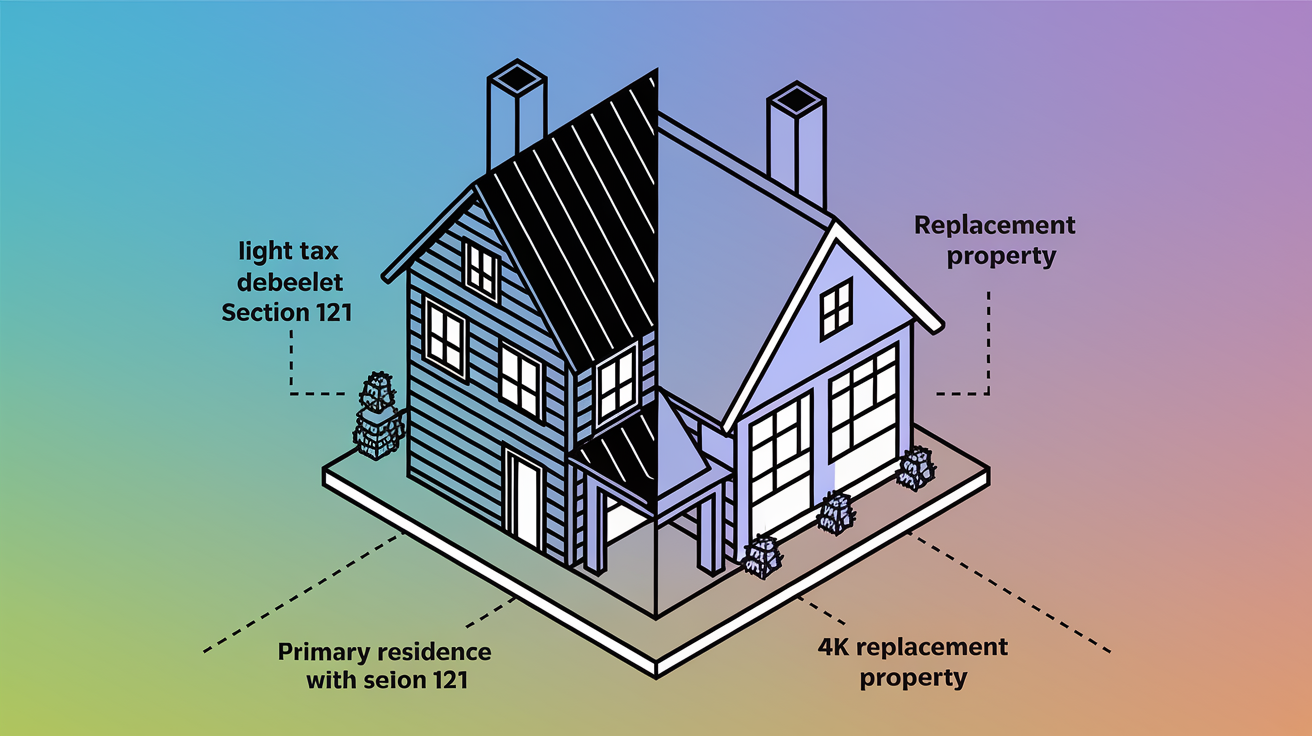
If you house hacked a duplex, triplex, or fourplex, you can split the tax benefits between your owner-occupied unit and the rental units when you sell. Section 121 applies to the portion you lived in as your primary residence (assuming you meet the 2-of-5 year rule). A 1031 exchange can apply to the rental portion. This hybrid exit defers capital gains on the rental units while taking the exclusion on your personal unit. You get both immediate tax savings and the ability to trade up into a larger investment property without paying tax on the rental portion’s gain.
Here’s how the math works. Say you bought a duplex for $400,000 and lived in one unit while renting the other. After three years, you sell for $600,000, netting a $200,000 gain. Half the property (your unit) qualifies for Section 121, so you can exclude $100,000 of gain tax-free. The other half (the rental unit) has a $100,000 gain that would normally get taxed as a long-term capital gain. Instead of paying tax on that $100k, you identify a replacement property within 45 days, close within 180 days, and roll the rental-unit proceeds into a new investment property via a 1031 exchange. Result: zero capital-gains tax on the entire sale. You’ve traded up from a duplex into a larger multifamily or single-family rental.
Timing and documentation are critical. You must have lived in the property as your primary residence for at least 2 of the 5 years before the sale to qualify for Section 121. The IRS also requires you to allocate the gain proportionally based on square footage or number of units, so keep records of which unit you occupied and for how long. The 1031 exchange portion follows strict rules: you can’t touch the proceeds (they go to a qualified intermediary), you must identify up to three replacement properties in writing within 45 days of closing, and you must close on at least one of them within 180 days. Miss a deadline and you lose the deferral. Work with a CPA and a qualified intermediary who specialize in this hybrid structure. Not a DIY project.
Repeating the House Hack Cycle (Scaling With Multiple Owner‑Occupied Purchases)

One of the simplest ways to scale your portfolio is to house hack again. The strategy is straightforward: buy a new primary residence using another low-down-payment owner-occupied loan (FHA, VA, conventional with 3–5% down), move into the new property, and convert your old house hack into a full rental. Repeat every 1–2 years. After 4–5 years you can own three or four properties, all acquired with minimal cash out of pocket. Each property builds equity, generates cash flow, compounds your net worth without you needing to save for a traditional 20–25% down payment on an investment property.
The key is planning your move-out dates and rental transitions carefully. Most lenders require you to occupy the new property within 60 days of closing and live there for at least 12 months. That means you’ll need to time your next purchase so you’re ready to move, your current tenants are in place or the property’s rent-ready, and your debt-to-income ratio still qualifies you for the new loan. Lenders will count 75% of your rental income from the old house hack once you have a signed lease in place.
Here’s the repeat-cycle timeline in four steps:
- Month 0–12 — live in house hack #1, stabilize expenses, document rental income if you have roommates or a rented unit, save for the next down payment.
- Month 10–14 — start shopping for house hack #2. Get pre-approved using your current income plus 75% of projected rental income from house hack #1 once you move out.
- Month 12–15 — close on house hack #2, move in within 60 days, immediately list house hack #1 for rent or continue existing tenant leases.
- Month 15–24 — repeat the process. By year 4 or 5, you own three properties with cumulative equity, cash flow, and principal paydown funded largely by tenants.
Track every move-out date, insurance change, and lease start in a simple spreadsheet. When you apply for house hack #3, lenders will want to see the full rental history and proof of occupancy timelines. Missing documentation can slow your approval or kill your debt-to-income calculation.
Short‑Term and Mid‑Term Rental Exit Options After a House Hack

Converting your house hack into a short-term rental (Airbnb, VRBO) or mid-term rental (30–90+ day corporate stays) can deliver higher gross revenue than a traditional long-term lease. But it also means higher operating expenses, more management work, exposure to local regulations and seasonal demand swings. The math only works if the revenue premium outweighs the extra costs and effort. Before making the switch, model your cash flow using realistic vacancy rates (5–8% is common for long-term rentals, but STRs can see 20–40% vacancy depending on season and market) and operating expenses (30–40% of gross rent for long-term, often higher for STR when you include cleaning, utilities, platform fees, turnover supplies).
Mid-term rentals sit between short-term and long-term. They target traveling professionals, nurses on contract, corporate relocations, people in life transitions who need a furnished place for 1–6 months. MTRs reduce turnover compared to nightly STRs. They often command a 20–50% rent premium over unfurnished long-term leases. The tradeoff is you’ll need to furnish the property, handle utilities, manage booking platforms or work with corporate housing agencies. MTRs work best near hospitals, universities, or corporate employment hubs where demand’s consistent.
Here are the key pros and cons for STR and MTR exits:
- Pro: Higher gross rental income in the right market. STRs can double or triple long-term rent during peak season.
- Pro: Flexibility to block dates for personal use or sell the property on short notice without breaking a long lease.
- Con: Full hospitality operation required. Messaging, cleaning coordination, dynamic pricing, guest reviews, restocking supplies.
- Con: Local regulations can change overnight. Some cities have banned or heavily restricted STRs, killing your business model.
- Con: Seasonal or event-driven demand means cash flow can swing wildly month to month, requiring deeper cash reserves.
Run a side-by-side comparison using a rental cash-flow calculator. Plug in your long-term rent estimate, then model STR or MTR gross income (use Airdna or similar tools for comps), subtract platform fees (Airbnb takes roughly 3% from hosts), cleaning costs (typically $75–$150 per turnover), utilities, extra insurance, higher maintenance from frequent use. If the net monthly cash flow beats long-term rent by at least 25–30%, the STR or MTR model might be worth the extra work. If it’s close, stick with long-term. Less hassle, more predictable income, fewer regulatory landmines.
Portfolio-Level Exit Strategy Planning After a Successful House Hack

Once you’ve completed your first house hack exit (whether you sold, refinanced, or converted to a rental), the next decision is how to deploy the capital or cash flow into your broader investment strategy. A single successful house hack is a building block, not a finish line. The best investors think in terms of portfolio construction: diversifying across properties, markets, asset types to reduce risk and build long-term wealth. Using the proceeds or equity from your first house hack to buy another property, scale into commercial real estate, or build cash reserves for future opportunities is how you turn one good deal into financial independence.
Geographic diversification is one option. If your house hack was in an expensive coastal market, you might use a 1031 exchange or cash-out refinance proceeds to buy two or three cash-flowing rentals in lower-cost Midwest or Southeast markets. Spreading your holdings across multiple metro areas reduces your exposure to a single local economy, natural disaster zone, or regulatory environment. You can also diversify by property type. Pair single-family rentals with small multifamily, or add a short-term rental in a vacation market to your portfolio of long-term holds. The goal is avoiding concentration risk while keeping your total leverage and cash reserves within your comfort zone.
Here are four common diversification paths after a house hack exit:
- Trade up via 1031 exchange — sell your house hack (rental portion only if using Section 121 on your unit), defer capital gains, buy a larger multifamily or commercial property with stronger cash flow and professional management in place.
- Use cash-out refinance proceeds to acquire another house hack — pull $40k–$60k in equity, use it as down payment on house hack #2, repeat the cycle while keeping property #1 as a rental.
- Reinvest sale proceeds into multiple markets — take $100k in net proceeds from a sale, buy two $150k rentals in different cities with 20% down, hire local property managers to run them remotely.
- Build a 6–12 month cash reserve — park proceeds in a high-yield savings account or short-term Treasury ladder to cover vacancies, CapEx events (roof, HVAC replacement), down payments on future deals without forcing a sale or refinance under pressure.
The transition from active (house hacking, self-managing, doing your own repairs) to passive (hiring managers, owning stabilized cash-flowing assets, focusing on acquisitions rather than operations) happens when your portfolio generates enough monthly income to cover professional management and still leaves you with positive cash flow. For most investors, that inflection point occurs around 3–5 rental properties. Plan your exits with that trajectory in mind, and every house hack becomes a stepping stone toward a portfolio that works without you.
Final Words
You now have a clear playbook: convert the owner-occupied unit to a rental, refinance later, sell using Section 121, pair the rental piece with a 1031, try short- or mid-term rentals, or repeat the house-hack cycle to scale.
Remember the timing and math: most owner-occupied loans need 12 months, and cash-flow models should budget management 8–10%, maintenance 8%, vacancy 5%, plus higher landlord insurance.
These exit strategies after a successful house hack give practical ways to lock equity or grow a portfolio. Run the numbers and pick the path that fits your time and risk tolerance.
FAQ
Q: What is the 3 3 3 rule in real estate?
A: The 3 3 3 rule in real estate is an informal quick-screen some investors use: check three core numbers in three minutes for a typical three-year hold—purchase price, rehab estimate, and rent or ARV.
Q: What are four exit strategies?
A: Four common exit strategies are: sell for cash (use Section 121 if eligible), convert to a long-term rental, do a cash-out or rate-and-term refinance, or use a 1031 exchange to defer gains.
Q: What devalues a house the most?
A: The things that devalue a house most are location and major physical problems—foundation failure, chronic water damage, mold, or a failing roof—because they cut buyer demand and drive high repair costs.
Q: What is the 70% rule in house flipping?
A: The 70% rule in house flipping means pay no more than 70% of the after-repair value (ARV) minus rehab costs: Maximum purchase = ARV × 0.70 − estimated rehab.