

What if a single line in your lease could save you thousands—or turn a small problem into a legal fight? Contingency clauses are that line: a clear lease item that lets a tenant or landlord walk away or change terms if a named event happens (failed repair, job transfer, or the tenant’s home not selling on time). This post walks through the most useful residential and commercial contingencies, shows sample wording with exact deadlines and dollar amounts, and explains the tradeoffs so both sides get real protection instead of vague promises.
Core Purpose of Contingency Clauses in Rental Agreements
A contingency clause lets either party walk away or adjust the lease if something specific happens or doesn’t happen by a certain date. Maybe a tenant needs to sell their house by June 15, 2026 before they can move in. Or a landlord agrees to drop the rent if a repair drags past 14 days. The point is to put the risk sharing in writing so nobody’s stuck breaking a contract if the thing falls through.
Courts won’t enforce it unless both parties sign, it’s in the lease or an addendum, and the wording is precise. Vague stuff like “repairs completed in a reasonable time” gets tossed. Write “landlord must restore heat within 72 hours; tenant gets 50 percent rent cut until it’s fixed.” That’s measurable. Exact deadlines, dollar figures, and named events keep you out of court and give the judge something concrete if you do end up there.
Some things can’t be waived no matter what you write. You can’t skip habitability protections, lead paint disclosure for pre-1978 units, or anti-retaliation rules. Security deposit caps vary by state. California limits you to two months’ rent for unfurnished places, three for furnished. New York caps it at one month statewide. Texas has no cap at all. If your clause breaks local tenant law, the court ignores it even if everybody signed.
Common Residential Contingency Clauses in Rental Agreements

Most residential contingencies cover property condition, income checks, home sales, and early exit options. They give tenants time to confirm the place is livable and let landlords verify finances or cancel if promises don’t pan out.
An inspection contingency usually runs 7 to 14 days from signing. Tenant hires an inspector or does their own walk. They find something broken (furnace, roof, mold), they tell the landlord in writing, and the landlord gets another 7 to 14 days to fix it. Landlord refuses or misses the deadline? Tenant can cancel and get their deposit back within seven days. Move-in acceptance works the other way around: “tenant has three days from move-in to report problems not already disclosed; no notice means you accept the condition.” That protects landlords from getting blamed later for old damage.
Employment and income clauses ask the tenant to prove they earn at least three times the monthly rent, typically within 5 to 10 days before move-in. If they lose the job between signing and moving, or the landlord catches fake pay stubs, the lease can be voided before the tenant ever sets foot inside. Sale of current home contingencies are common when a renter is also selling property: lease kicks in only if the tenant’s house sells by a hard date like June 30, 2026. Most allow one 30-day extension if the tenant shows proof of an active listing. After that, if the house hasn’t sold, tenant walks without penalty.
Other standard clauses you’ll see:
Early termination for job transfer or military service. Tenant gives 30 to 90 days’ notice in writing and pays an exit fee (one or two months’ rent), landlord releases them. Military clauses usually need 90 days of active duty and 30 to 60 days’ written notice.
Pet trial periods. Tenant brings the pet in for 14 to 30 days with a refundable deposit of $200 to $500 or a nonrefundable fee of $100 to $500. Landlord can revoke pet approval during the trial if there’s documented damage or noise complaints.
Habitability and repair escrow. If heat or water goes out and isn’t fixed within 7 to 14 days, tenant gets a prorated rent cut (often 50 percent off after the deadline) or can terminate if the problem lasts more than 30 days.
Utilities and critical systems outage. Lease says landlord must restore heat or water within 72 hours in winter, seven days for non-essential stuff like a broken dishwasher. Miss the deadline and tenant gets automatic rent reduction or termination rights.
Financing contingencies (rare in rentals). Some tenants ask for approval contingent on getting a mortgage if they’re buying at the same time. Works like homebuyer contingencies, usually with a 60 to 90-day window.
Commercial Lease Contingency Clauses and How They Differ

Commercial leases don’t have the same protections as residential rentals. Fewer mandatory rules, more room to negotiate custom terms. Contingencies in commercial deals often hinge on build-out money, lender approval, co-tenancy requirements, and the property’s mortgage situation. Both sides typically have more leverage and bigger dollars on the line, so deadlines and cure periods get negotiated harder.
The enforcement difference is the big one. Residential law protects renters with habitability guarantees, deposit return timelines, and eviction notice rules. Commercial tenants don’t get those backstops. The lease defines almost everything. If a commercial tenant blows a financing deadline, the landlord can terminate right away and keep nonrefundable fees without following the same statutory eviction steps that apply to residential leases.
High-Impact Commercial Contingencies
Tenant improvement (TI) allowances let the landlord kick in a fixed dollar amount per rentable square foot (commonly $20 to $60, though it varies by market) to fund office build-out, retail fixtures, or warehouse mods. The clause spells out a payment schedule tied to completion milestones and an acceptance deadline. Example: “Landlord pays TI allowance of $40 per rentable sq ft within 30 days of receiving final lien waivers and Tenant’s written acceptance of completed work.” If construction runs past the outside date, tenant might delay rent or terminate and recover deposit.
Financing and loan approval contingencies give the commercial tenant a window (typically 60 to 120 days) to lock down SBA or conventional financing before the lease becomes binding. Clause usually permits one 30-day extension if the tenant provides proof of a pending application. Financing doesn’t come through by the final deadline? Tenant cancels without penalty. Landlords often want a bigger earnest money deposit or a nonrefundable admin fee to keep tenants from using the contingency as a free look.
Co-tenancy and anchor tenant clauses protect retail tenants who depend on foot traffic from major chains. Clause might require at least two anchor stores or 50 percent of the shopping center’s leasable space to stay occupied. If an anchor leaves and the space sits empty for more than 90 days, tenant’s base rent drops by a set percentage (often 50 percent), and tenant can terminate after 180 days of vacancy. These shift serious risk to the landlord and get negotiated hard in retail deals.
Sample Contingency Clause Wording for Rental Agreements
Clear sample language gives both sides confidence the deadlines, dollar amounts, and notice methods will hold up. The examples below show you how to structure common residential and commercial clauses with exact timelines and measurable conditions. Each sample includes precise days, stated fees or refunds, and plain wording a court can interpret without guessing.
An inspection contingency might read: “Tenant shall have ten calendar days from execution of this lease to conduct inspections of the premises. If Tenant notifies Landlord in writing of material defects within that period, Landlord shall cure within 14 days. If Landlord fails to cure, Tenant may terminate this lease and receive full deposit refund within seven days.” Notice the three hard deadlines (10 days to inspect, 14 days to cure, 7 days to refund) and the written notice requirement. That removes ambiguity.
For a sale of home contingency, try: “This lease is contingent upon Tenant’s sale of real property located at 123 Oak Street, Cityville, ST 12345, by June 30, 2026. If the property has not sold by that date, Tenant has the right to cancel this lease within five business days of June 30. Tenant may request one extension of 30 days with proof of an active MLS listing.” The clause names the address, sets the hard deadline, defines the cancellation window, and allows a single extension with documentation.
| Clause Type | Sample Text |
|---|---|
| Early Termination for Job Transfer | “Tenant may terminate this lease with 60 days’ written notice and payment of an early termination fee equal to two months’ base rent. Landlord will release Tenant from further obligations after fee payment.” |
| Habitability Repair Escrow | “If an essential system (heat, water, electricity) fails and Landlord does not restore service within seven days of written notice, Tenant receives 50 percent rent abatement until repair is complete. If system remains unrepaired for more than 30 days, Tenant may terminate and receive full deposit refund within seven days.” |
| Pet Trial Period | “Tenant may bring pet onto premises for a 14-day trial period. Tenant shall pay a refundable pet deposit of $400. Landlord may revoke pet approval during trial if pet causes documented property damage or verified noise complaints. Upon revocation, Tenant must remove pet within 48 hours or forfeit deposit.” |
| Commercial TI Allowance | “Landlord agrees to provide $40 per rentable square foot in tenant improvement allowance, payable within 30 days of Landlord’s receipt of final lien waivers and Tenant’s written acceptance of completed work.” |
Each clause specifies what triggers the contingency, how much time or money is at stake, and what happens if deadlines aren’t met. Include the method of notice (email to a stated address, registered mail, or hand delivery) to avoid fights over whether notice was received. When both sides know exactly what to do and when, fewer contingencies end in court.
Legal and Enforceability Rules for Lease Contingency Clauses
A contingency clause has to be in writing and signed by both parties to hold up in court. Verbal agreements or unsigned addenda carry zero weight if either side disputes the terms later. Beyond signature, the clause needs specific, measurable benchmarks. A clause that says “landlord will repair in a reasonable time” invites argument. “Landlord will repair within 14 days” doesn’t. Courts prefer hard dates, dollar amounts, and clear trigger events.
Contingencies can’t override mandatory legal protections. You can’t write a clause waiving the implied warranty of habitability, retaliation protections, anti-discrimination rules, or federal disclosure requirements. Example: the lead based paint disclosure is mandatory for residential units built before 1978. A clause trying to skip that disclosure is void. Same goes for clauses that try to waive a tenant’s right to a livable place or to sue for retaliatory eviction. They’ll be struck down. State and local security deposit caps, maximum late fees, and required notice periods also limit what you can include.
Enforceability also depends on good faith performance. If a landlord drags out repairs just to trigger a termination, or a tenant fakes a failed home sale to escape a lease, courts might find the clause was exercised in bad faith and refuse to enforce it. Document everything: proof of active listing, lender pre-approval letters, inspection reports, repair invoices, and written notices. That paper trail shows both parties acted honestly and met their obligations under the clause.
Common enforceability pitfalls:
Vague timelines. “As soon as possible” or “within a reasonable period” are unenforceable. Use exact days.
Overly broad penalty fees. A clause charging $10,000 to exit a $1,200 per month lease might be deemed unconscionable and struck down.
Waiver of statutory rights. Any clause trying to waive habitability, quiet enjoyment, or anti-retaliation protections is void.
Failure to comply with local deposit rules. If your state caps deposits at one month’s rent, a contingency tied to a two month deposit is unenforceable.
Missing notice method. If the clause doesn’t specify how and where to send notice, disputes over receipt can invalidate the whole thing.
State-Specific Impacts on Contingency Clauses in Rental Agreements
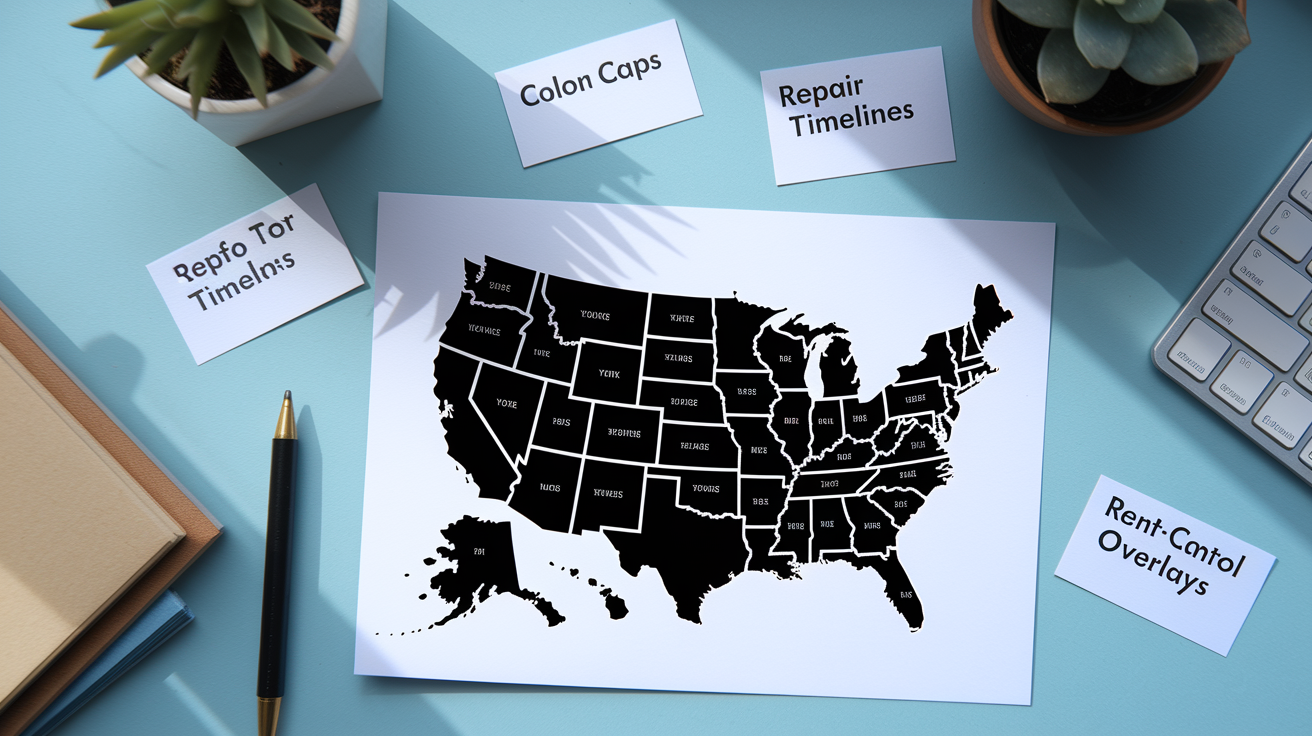
State landlord tenant statutes shape which contingencies work and which don’t. Security deposit caps, repair timelines, eviction notice periods, and rent control overlays all vary by jurisdiction, and these rules directly affect how you draft and enforce contingency clauses. Always verify local law before finalizing lease language.
California enforces strong habitability protections and caps security deposits at two months’ rent for unfurnished units or three months for furnished. Any contingency tied to deposit handling has to stay within those limits. California courts also expect landlords to act fast on essential repairs, so contingency cure periods that stretch beyond what courts consider reasonable (often 7 to 14 days for serious issues) might be invalidated. Rent control ordinances in cities like San Francisco and Los Angeles add more restrictions on lease terms, including which contingencies are allowed and how they’re enforced.
New York enforces a statewide security deposit cap of one month’s rent for most residential leases, and New York City tenants get additional protections under rent stabilization rules. Contingency clauses requiring larger deposits or trying to work around rent stabilization guidelines are unenforceable. Eviction notice periods and repair timelines are also tightly regulated, so landlords have to make sure their contingency cure windows comply with local housing court procedures.
Texas has no statutory cap on security deposits, giving landlords more flexibility in structuring deposit related contingencies. However, local eviction and notice requirements still apply. Most Texas jurisdictions follow a three day pay or quit notice for nonpayment, and repair cure periods vary by city ordinance. Some Texas cities have enacted tenant protection ordinances that limit certain lease clauses, so verify municipal codes before relying on a contingency that might conflict with local rules.
Key state comparison points:
Security deposit caps. CA (2 months unfurnished / 3 months furnished), NY (1 month statewide), TX (no statutory cap).
Eviction notice periods. Many states require 3 day notice for nonpayment; some allow longer for lease violations (10 to 30 days).
Repair cure timelines. Commonly 7 to 14 days for standard repairs; essential services like heat or water often require 24 to 72 hours depending on season and local ordinance.
Rent control overlays. Cities with rent control may restrict or prohibit certain contingency clauses, especially those tied to automatic rent increases or tenant replacement.
Negotiating Contingency Clauses in Rental Agreements

Negotiation starts with understanding what each party actually needs. Landlords want short contingency windows, proof the tenant’s acting in good faith, and the ability to walk if a better offer shows up. Tenants want time to verify income, sell a home, or inspect the unit without risking their deposit if something falls through. The best clauses balance those interests with clear deadlines and documented proof requirements.
Landlords should limit contingency periods to 7 to 14 days whenever possible. A two week inspection window is enough for a professional inspection and written repair request. Longer windows tie up the property and increase the chance a tenant backs out late. Require proof of good faith actions: an active MLS listing for a sale contingency, a lender pre-approval letter for financing, or pay stubs for income verification. Consider charging a small refundable administrative fee (often $500) that the tenant forfeits if they fail to provide documentation on time. That discourages casual use of contingencies as free look periods.
Tenants should ask for precise repair standards and clear abatement formulas. Instead of accepting “landlord will repair in a reasonable time,” request “landlord must restore heat within 72 hours of written notice; tenant receives 50 percent rent reduction for each day beyond 72 hours until repair is complete.” Negotiate one time extension options for sale or financing contingencies. A single 30 day extension with proof of active effort gives breathing room without leaving the landlord in limbo indefinitely. Require landlords to supply documentation of repair schedules and tenant improvement timelines in commercial deals, so you have written proof if deadlines slip.
Negotiation tactics for tenants:
Request short inspection periods (7 to 10 days) paired with explicit repair deadlines (14 days) and automatic deposit refund if landlord doesn’t cure.
Ask for sale contingency extensions (one 30 day extension) with proof of listing or pending offer.
Insist on written rent abatement formulas for essential service outages, with automatic termination if outage exceeds 30 days.
Negotiation tactics for landlords:
Cap contingency windows at 7 to 14 days and require written notice within that period.
Demand proof of good faith actions (pay stubs, listing agreements, lender letters) before extending deadlines.
Include mutual termination rights if major capital expenses arise during the contingency period, protecting both sides from unanticipated costs.
Practical Scenarios Illustrating Contingency Clauses in Rental Agreements

A tenant signs a lease with a sale of home contingency on March 1, 2026, with a hard deadline of June 15, 2026. The lease says the tenant can cancel by June 20 if the property hasn’t sold. On June 10, the tenant requests a 30 day extension and provides proof of an active listing and a pending offer. The landlord grants the extension, moving the deadline to July 15. On July 12, the home closes, and the tenant confirms the lease will proceed. The landlord had the right to market the unit starting June 1, accepting backup offers in case the tenant’s sale fell through. Because deadlines and extension rules were in writing, both parties knew their options at every step.
In another scenario, a tenant completes a 10 day inspection and discovers a broken furnace and water damage in the basement. The lease includes an inspection contingency requiring the landlord to cure material defects within 14 days of written notice. The tenant sends a certified letter listing the issues on day 8. The landlord hires contractors but can’t complete the work within 14 days because of parts delays. On day 15, the tenant exercises their termination right and receives a full deposit refund within seven days. The lease specified the cure window and the refund timeline, so the tenant didn’t have to argue or sue.
A commercial retail tenant’s lease includes a co-tenancy clause requiring at least two anchor stores to remain open. Six months in, one anchor closes and the space sits vacant for 95 days. The clause states rent drops by 50 percent if the vacancy exceeds 90 days, and the tenant can terminate after 180 days of unresolved vacancy. The tenant notifies the landlord in writing on day 91 and begins paying half rent. On day 120, the landlord signs a new anchor tenant, and construction begins. The original tenant’s rent returns to full within 30 days of the new anchor opening. The clause protected the tenant from losing foot traffic while giving the landlord time to re-lease before termination became an option.
Required documentation for enforcing contingencies:
Proof of listing or sale. MLS screenshot, executed purchase agreement, or closing statement for home sale contingencies.
Inspection reports and repair invoices. Professional inspection summary, contractor estimates, and landlord’s written response or completion certificates.
Income and employment verification. Recent pay stubs, offer letters, or employer verification letters for income contingencies.
Written notices and responses. All notices exercising, extending, or satisfying contingencies must be in writing, dated, and delivered via the method specified in the lease (email, registered mail, hand delivery).
Final Words
You’re in the thick of drafting or reviewing a lease: define the trigger, set a measurable deadline, and get signatures.
This post walked through why contingency clauses exist, common residential examples, how commercial clauses differ, sample wording, legal enforceability, state impacts, negotiation tactics, and real scenarios to test your language.
Use the quick screens, keep clear records, and pressure-test “what if” moments. Clear contingency clauses for rental agreements cut dispute risk and make worst‑case outcomes manageable.
FAQ
Q: What is an example of a contingency clause?
A: An example of a contingency clause is a 10-day inspection window that lets a tenant cancel or require repairs if major defects are found, with written, measurable deadlines and a clear notice method.
Q: What are the important clauses in a rental agreement?
A: Important clauses in a rental agreement include inspection contingencies, habitability repair timelines with rent abatement, income verification (often 3× rent), move-in defect reporting, and clear early‑termination terms—written and signed.
Q: What are some red flags in a lease agreement?
A: Red flags in a lease agreement are vague or missing timelines, clauses that try to waive habitability, unclear rent‑abatement math, excessive deposit demands, and one‑sided cure or notice requirements that lack measurable steps.
Q: What are the three contingencies in real estate?
A: The three common contingencies in real estate are inspection, financing (loan approval), and sale‑of‑home contingencies—each should specify a deadline, measurable conditions, and a signed notice procedure.