

Want to cut your housing cost in half, or wake up to a tenant knocking on your door?
House hacking a duplex, which means you buy a two-unit property, live in one unit and rent the other, often results in rent covering 50% or more of your mortgage, lower owner-occupied loan requirements, and faster equity paydown.
But it depends: you trade privacy, become the landlord, and face shared spaces and stricter lender rules; this post lays out the benefits, the main risks, and a quick 10-minute screen to see if a duplex fits your budget and tolerance for hassle.
Key Advantages and Disadvantages of Duplex House Hacking (Clear Breakdown)
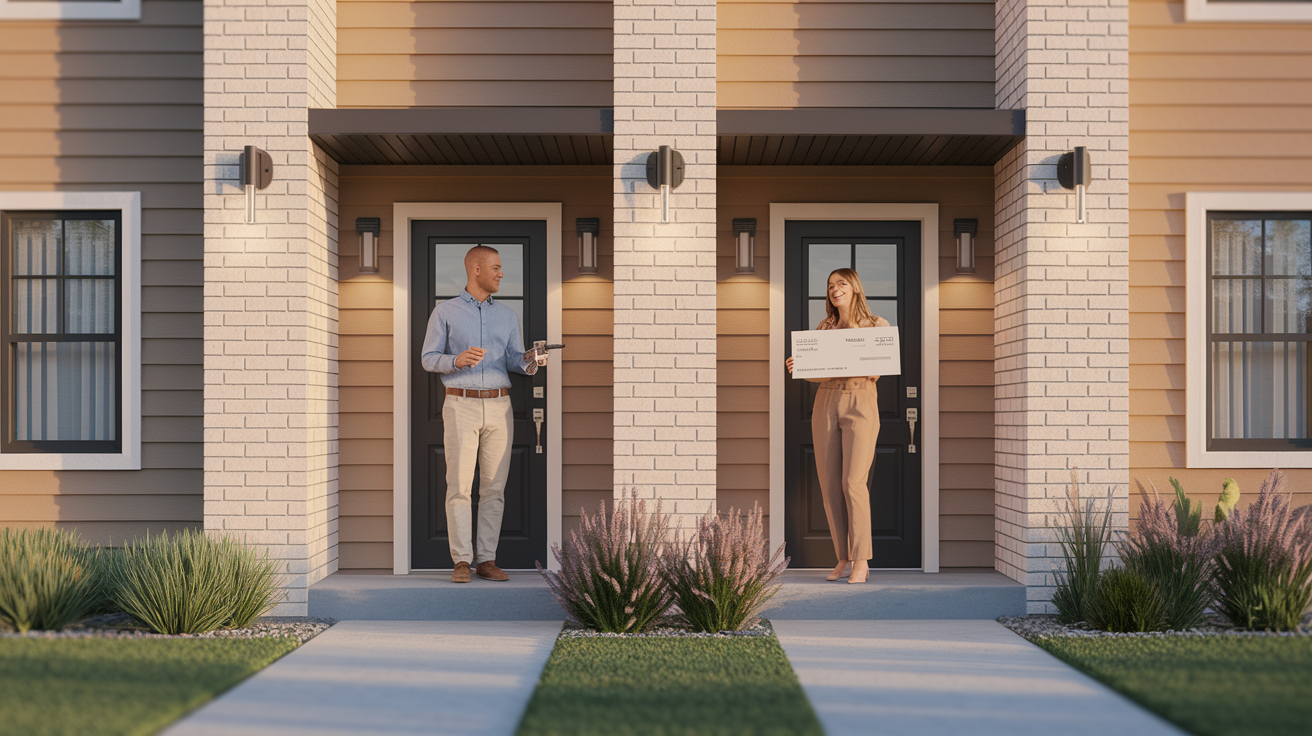
Duplex house hacking is pretty straightforward. You buy a two-unit property, live in one side, rent the other. In most markets, that rental income covers 50% or more of your mortgage. Real examples show people saving around $1,450 a month compared to owning a condo or renting solo.
But it’s not free money. You’re giving up privacy and becoming a landlord. You’ll share the yard, laundry, driveway, maybe a basement. And you’re the one screening tenants, signing leases, fixing things when they break.
Finding duplexes can be tough in suburban or rural areas where everything’s zoned single-family. Check local zoning rules before you get serious. Some cities require rental registration or inspections.
What works in your favor:
- Your housing cost drops by half (or more) when rent covers the mortgage
- Owner-occupied financing means lower down payments and better rates
- Your tenant pays down your mortgage while you build equity faster
- Living onsite makes coordinating maintenance easier
- The property flexes with your needs. Move out and rent both units, or take over both yourself
- Tax deductions and depreciation shelter rental income
What doesn’t:
- You’re the landlord. Advertising, screening, leases, repairs, bookkeeping
- Privacy takes a hit when someone lives next door
- Shared spaces limit how you use your own property (noise, guests, where you put stuff)
- Duplexes usually cost more than single-family homes nearby
- Some condo boards and HOAs ban rentals
- Lenders can be pickier with multi-unit properties. Bigger reserves, sometimes higher down payments
Financial Upside of Duplex House Hacking

Duplex house hacking delivers real cashflow and equity growth when you run the numbers right. A $350,000 duplex renting for $1,500 and $1,300 per unit brings in $2,800 monthly, or $33,600 a year. After property tax, insurance, maintenance reserves, and a 5% vacancy cushion, net operating income usually lands around $24,432. That’s a cap rate near 7%. Use an FHA loan at 3.5% down and you’re in for roughly $16,250 including closing costs. Annual cashflow of $5,052 divided by that $16,250 equals a cash-on-cash return above 31%. Way stronger than most stock or bond portfolios.
Beyond cashflow, there’s equity paydown and depreciation. Every month your tenant’s rent chips away at your mortgage principal. Over 30 years, that forced savings builds serious equity even if property values don’t move. Depreciation shelters rental income from taxes. On a $350,000 purchase with a $297,500 building allocation, you can deduct roughly $10,818 per year over 27.5 years. That write-off often wipes out taxable income on the rental unit, turning cashflow into tax-free returns until you sell.
To evaluate any duplex, run these six calculations:
- Net Operating Income (NOI) = Gross rent minus operating expenses (tax, insurance, maintenance, vacancy). Example: $33,600 − $9,168 = $24,432.
- Cap Rate = NOI ÷ purchase price. Example: $24,432 ÷ $350,000 = 7.0%.
- Cashflow = NOI minus annual debt service. Example: $24,432 − $19,380 = $5,052.
- Cash-on-Cash Return = Annual cashflow ÷ total cash invested. Example: $5,052 ÷ $16,250 = 31.1%.
- Equity Paydown = Principal reduction in Year 1. On a $337,750 loan at 4%, expect roughly $5,400 first-year principal.
- Depreciation Deduction = Building value ÷ 27.5 years. Example: $297,500 ÷ 27.5 = $10,818.
| Metric | Example Value | Why It Matters |
|---|---|---|
| Cap Rate | 7.0% | Shows property’s yield independent of financing; helps compare deals |
| Cash-on-Cash Return | 31.1% | Measures annual cashflow against your down payment and closing costs |
| Depreciation Deduction | $10,818/year | Shelters rental income from taxes, boosting after-tax returns |
Financing a Duplex House Hack: What to Expect
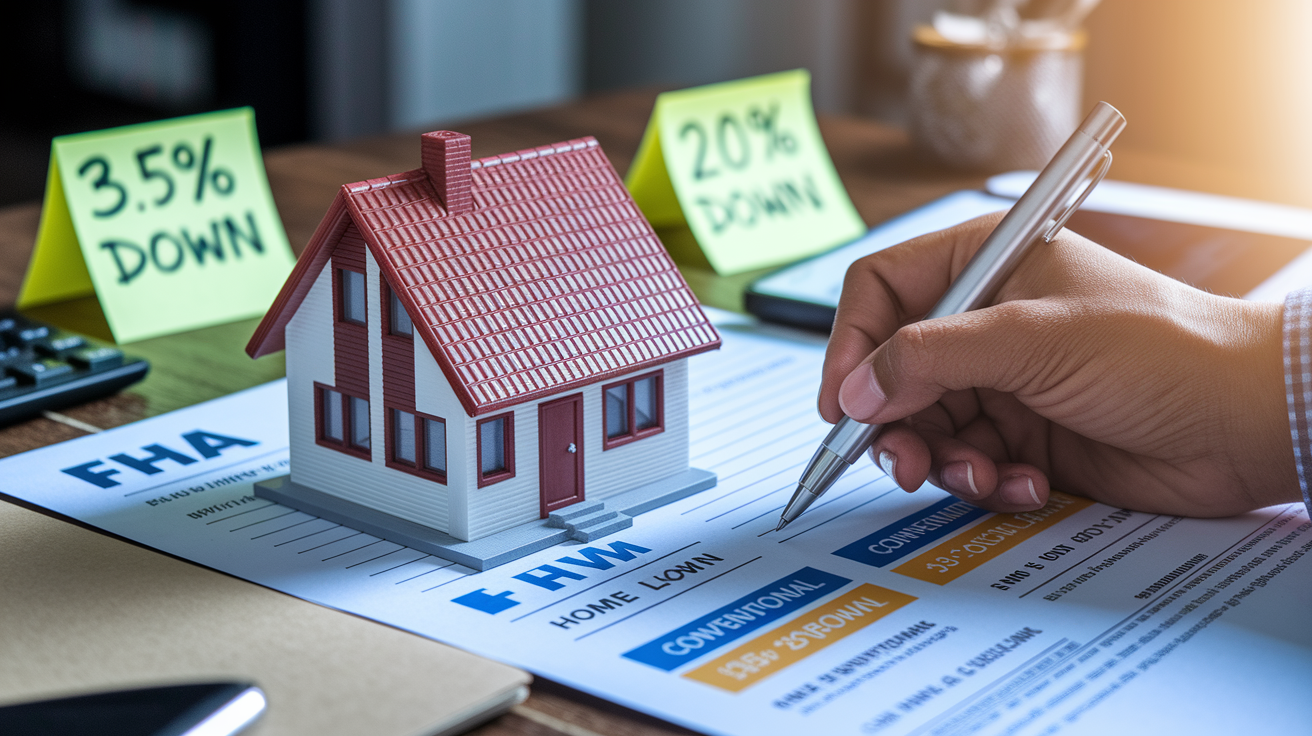
Buying a duplex as an owner-occupant gets you lower down payments and better mortgage rates than pure investment loans. Lenders treat it as your primary residence even though you’re renting half. That’s a real advantage when you’re starting with limited capital.
FHA loans allow 3.5% down on 2–4 unit properties if you plan to live in one unit for at least a year. On a $350,000 duplex, that’s $12,250 down plus closing costs. Your mortgage balance is $337,750, producing a principal and interest payment around $1,615 monthly at 4%. Conventional loans typically require 15%–25% down for duplexes. 20% is common to avoid PMI. At 20%, you put $70,000 down and finance $280,000, dropping your monthly payment to roughly $1,337. The higher down payment reduces your leverage but also lowers default risk and may get you a slightly better rate.
FHA vs Conventional:
- Down payment: FHA 3.5% vs Conventional 15%–25%
- Occupancy requirement: FHA typically 1 year, Conventional often the same
- Mortgage insurance: FHA requires upfront and annual MIP. Conventional requires PMI if less than 20% down
- Interest rate: FHA rates are competitive. Conventional may be slightly lower with 20%+ down
- Reserve expectations: FHA often wants 2 months PITI reserves. Conventional may want 3–6 months for multi-unit
Lender Requirements Overview
Lenders want proof you can afford the mortgage even if the rental unit sits empty. They typically count only 75% of projected rental income in your debt-to-income calculation until you have a signed lease and rental history. You’ll need to document employment, income, credit score (usually 620+ for FHA, 680+ for best conventional rates), and cash reserves. For a duplex, expect lenders to ask for 3–6 months of mortgage payments plus operating costs in liquid reserves. On a $1,615 monthly payment, that’s roughly $4,845 to $9,690 in savings before closing. If you’re converting a basement or building an ADU, lenders may require the work to be complete and inspected before they’ll count rental income from that unit.
Tax Benefits and Write-Offs for Duplex House Hackers

Living in one unit and renting the other creates a hybrid tax situation. Your rental unit generates taxable income, but you get deductions pure homeowners can’t claim. Tracking these write-offs properly can turn break-even cashflow into positive after-tax returns.
You can allocate roughly 50% of shared expenses to the rental unit when both units are identical in size. Deductible items include mortgage interest, property taxes, insurance, utilities you pay, repairs, maintenance, advertising, and property management fees. If you spend $1,200 on a new water heater that serves both units, you deduct $600 against rental income. Keep receipts and track every expense by unit or allocate shared costs proportionally.
Depreciation is the biggest non-cash deduction. Residential rental property depreciates over 27.5 years. If your $350,000 purchase allocates $297,500 to the building (excluding land), your annual depreciation deduction is $10,818. That shelters rental income from ordinary income tax. If your rental unit produces $16,800 in rent and $6,000 in deductible expenses before depreciation, your taxable income is $10,800. The $10,818 depreciation deduction wipes that out, leaving zero tax liability on the rental side.
When you sell, depreciation recapture tax applies to the rental portion. The IRS taxes recaptured depreciation at 25%, so plan for that when calculating long-term returns. If you live in the property for more than a year, the owner-occupied unit may qualify for the $250,000 (single) or $500,000 (married) capital gains exclusion, reducing your tax bill at sale.
Key deductions and rules:
- Mortgage interest on the rental portion
- Property taxes allocated to the rental unit
- Insurance premiums split proportionally
- Depreciation over 27.5 years on the building value
Depreciation Example Walkthrough
Start with the purchase price: $350,000. Estimate land value using the county tax assessment. Assume land is 15% of total value, or $52,500. Building value is $297,500. Divide that by 27.5 years: $297,500 ÷ 27.5 = $10,818 annual depreciation. Since only one unit is rented, you claim 50% of that if both units are equal size: $5,409 per year. File Schedule E with your tax return to report rental income, expenses, and depreciation. Consult a tax professional to confirm allocation percentages and track your adjusted cost basis for future sale calculations.
Operating a Duplex: Landlord Responsibilities and Daily Realities

Owning a duplex transforms you into a landlord, even if your tenant is only steps away. You’re responsible for advertising vacancies, screening applicants, drafting leases, collecting rent, coordinating repairs, managing contractors, keeping financial records, and following local landlord-tenant laws. When the water heater fails at 9 p.m., you’re getting the call.
Living onsite makes some tasks easier. You can check on the property daily, let contractors in without scheduling hassles, and fix small problems faster. But proximity also means tenants knock on your door for minor stuff instead of submitting formal requests. You’ll need boundaries and clear communication to avoid becoming the 24-hour maintenance hotline.
Most successful duplex house hackers either self-manage or hire a property manager once the workload gets too heavy. Self-managing saves 8%–12% of monthly rent but requires time, systems, and patience. Hiring a manager costs $224 to $336 per month on a $2,800 duplex, but it separates you from the tenant, protects your evenings, and provides professional lease enforcement and legal compliance.
Core landlord tasks:
- Advertising vacancies on rental platforms and local listings
- Screening tenants with credit checks, income verification (2.5–3× rent), employment confirmation, and reference calls
- Drafting and signing written leases that follow state and local laws
- Collecting rent on time and enforcing late fees when needed
- Coordinating repairs with licensed contractors and tracking work orders
- Keeping organized records of income, expenses, receipts, and maintenance logs
- Following local fire codes, rental registration, and inspection requirements
When to Hire a Property Manager
Consider hiring a manager if you value privacy, don’t have time for tenant calls, or plan to move out and rent both units. Property managers typically charge 8%–12% of monthly rent, plus leasing fees for new tenants (often one month’s rent). On a $2,800 duplex, that’s $224 to $336 per month in management fees. The tradeoff is freedom from day-to-day operations and professional handling of difficult tenants or legal disputes. If you’re house hacking to learn landlording, self-manage for the first year to build skills, then hand off operations once you buy your next property and move out.
Lifestyle and Privacy Tradeoffs When Living Beside Tenants

Sharing a property with a tenant reshapes your home life. You’ll hear conversations through shared walls, coordinate laundry schedules, and think twice before hosting loud gatherings. Tenants see when you come and go, hear your arguments, share your driveway. That proximity can feel intrusive, especially if you’re used to single-family privacy.
Common shared elements include laundry rooms, yards, basements, driveways, and sometimes garages or storage. If the duplex has one washer and dryer, you’ll negotiate schedules or upgrade to separate machines. Outdoor space becomes semi-public. Your tenant may grill on the patio or leave bikes in the yard. Storage shrinks when part of the basement or garage belongs to the rental unit.
Living beside tenants also limits spontaneity. You can’t paint the exterior, landscape the yard, or install a fence without thinking about how it affects the rental unit. Noise complaints run both ways. If your tenant plays music late, you’re the one who has to address it. If you host a party, you risk disturbing the person who pays half your mortgage.
Privacy and lifestyle impacts:
- Shared walls and floors mean noise travels. Footsteps, TV, conversations
- Outdoor spaces become semi-public when tenants use the yard or driveway
- Storage and utility access must be divided or scheduled
- Lifestyle behaviors (guests, noise, parking) require more thought than in a single-family home
Risks, Costs, and Vacancy Challenges in Duplex House Hacking

Duplex house hacking introduces vacancy risk that single-family homeowners never face. If your tenant moves out, you lose 50% of your rental income overnight. A one-month vacancy on $2,800 monthly rent costs you $2,800 in lost cashflow. Most investors budget 5%–10% of gross rent annually for vacancy. That’s $1,680 to $3,360 per year on a $33,600 rental income duplex.
Maintenance costs run higher than most new landlords expect. Budget 5%–10% of gross rent, or $250 to $500 per unit per month, for repairs and upkeep. Older duplexes demand more. Roofs, HVAC systems, water heaters, and appliances fail without warning. A roof replacement can cost $8,000 to $15,000. An HVAC system runs $4,000 to $7,000. Water heater replacement is $1,200 to $2,000. Plan for at least one major repair in the first two years.
Renter turnover adds hidden costs. Every time a tenant leaves, you pay for advertising, showings, background checks, and lease prep. If the unit needs cleaning, painting, or minor repairs between tenants, expect $500 to $1,500 in turnover costs. Longer leases and quality tenant screening reduce churn, but turnover is inevitable.
| Risk | Example Cost/Impact | Mitigation Strategy |
|---|---|---|
| Vacancy | One month vacancy = $2,800 lost rent | Budget 5%–10% vacancy reserve; screen tenants carefully; offer lease renewal incentives |
| Major Repair | Roof $8,000–$15,000; HVAC $4,000–$7,000 | Maintain 3–6 months reserves ($5,000–$10,000); inspect before purchase; budget annual capex |
| Tenant Damage | Carpet replacement $1,200; painting $800 | Collect security deposit; conduct move-in and move-out inspections; enforce lease terms |
| Turnover Costs | $500–$1,500 per vacancy | Retain good tenants with competitive rent and responsive maintenance; use professional cleaning between leases |
To stress-test your deal, run three scenarios:
- Optimistic: Full occupancy, 5% maintenance, no major repairs. Annual cashflow matches your pro forma.
- Expected: 5% vacancy, 8% maintenance, one $2,000 repair per year. Cashflow drops 15%–20%.
- Stressed: 10% vacancy, 10% maintenance, one $5,000 major repair in Year 1. Cashflow may turn negative for that year.
- Reserve check: Can you cover 3–6 months of mortgage + operating costs from savings? On a $1,615 mortgage, that’s $4,845 to $9,690.
- Financing contingency: If rent drops 10%, can you still make the payment from your job income alone?
Renovations, Unit Layouts, and Increasing Duplex Rental Potential

Smart renovations boost rent, reduce vacancy, and improve tenant quality. Before buying, get at least three contractor quotes for any planned work. A basement conversion or ADU build can easily exceed $150,000 depending on local codes and site conditions. City reassessment after major improvements may raise your property tax bill on the entire parcel, cutting into cashflow gains.
High-return upgrades focus on functional improvements tenants notice. Updated kitchens and bathrooms justify higher rents. Separate utility meters let you shift electric and gas costs to tenants, increasing net operating income. In-unit laundry or a second parking space can add $50 to $150 per month in rent. Soundproofing between units reduces complaints and tenant turnover.
Low-cost cosmetic fixes often deliver better ROI than major renovations. Fresh paint, modern light fixtures, refinished floors, and updated hardware cost $2,000 to $5,000 but can lift rent $100 to $200 per month. Landscaping and curb appeal attract higher-quality tenants and reduce time on market.
High-ROI improvement list:
- Separate utility meters for electric, gas, and water (payback 2–4 years)
- Kitchen upgrades: new countertops, backsplash, cabinet hardware (payback 3–5 years)
- Bathroom refresh: new vanity, faucet, mirror, tile (payback 3–5 years)
- In-unit washer/dryer or hookups (payback 4–6 years)
- Soundproofing insulation and sealing between units (reduces turnover, hard to quantify)
ROI Calculation Snapshot
To estimate payback, divide the renovation cost by the annual rent increase. If you spend $4,000 on a kitchen refresh and raise rent $150 per month, your annual rent gain is $1,800. Payback period is $4,000 ÷ $1,800 = 2.2 years. After that, the extra rent flows straight to your bottom line. Always stress-test whether the improvement will actually attract tenants willing to pay more. Run rent comps in your neighborhood before committing to upgrades.
Market Conditions and Neighborhood Selection for a Duplex House Hack

Duplex availability varies widely by location. Urban and gentrifying neighborhoods often have more multi-unit inventory because zoning allows it. Suburban and rural areas lean single-family, making duplexes scarce and often more expensive per unit. Strong rental markets with job growth, low vacancy rates, and rising rents offer the best house-hacking conditions.
Run detailed rent comps before making an offer. Pull listings for similar units within a half-mile radius. Compare square footage, bedrooms, bathrooms, parking, and amenities. If comparable two-bedroom units rent for $1,400 to $1,600, price your duplex unit at $1,500 and adjust based on condition and location. Overestimating rent by 10% can turn a profitable house hack into a monthly loss.
Zoning checks are non-negotiable. Confirm the property is legally zoned for two units and that both units meet local building and fire codes. Some municipalities require rental registration, annual inspections, or owner-occupancy affidavits. Violating zoning or rental laws can result in fines, forced evictions, or inability to collect rent.
Neighborhood selection criteria:
- Rental vacancy rate below 5% signals strong tenant demand
- Proximity to jobs, transit, schools, and amenities supports stable rents
- Low crime and walkable streets attract higher-quality tenants
- Zoning allows multi-unit residential without special permits or variances
Step-by-Step Framework for Evaluating a Duplex House Hack

Before you make an offer, work through a structured evaluation to confirm the numbers and risks make sense. This framework assumes you’ve identified a potential duplex and want to decide whether to proceed.
Start by collecting the basic inputs: purchase price, estimated rents for both units, property taxes, insurance quotes, and financing terms. Then stress-test the deal with realistic operating assumptions and reserve requirements.
- Confirm zoning and legal status. Call the city planning department or check online zoning maps. Verify both units are legally permitted and meet current building codes. Confirm rental registration and inspection requirements.
- Order a professional home valuation or appraisal. Establish a tax basis for the rental unit when you start collecting rent. This also helps you avoid overpaying relative to comparable sales.
- Get three contractor quotes for any planned renovations. If you’re converting a basement or adding an ADU, collect detailed bids including permits, materials, and timelines. Add a 10%–20% contingency for overruns.
- Calculate monthly mortgage, taxes, and maintenance costs. Add principal, interest, property tax, insurance, and 5%–10% of rent for maintenance. Compare total cost to projected rent from the second unit.
- Set rent competitively using comps. Search rental listings within a half-mile radius. Match unit size, bedrooms, parking, and amenities. Price at market or slightly below to reduce vacancy risk.
- Decide on utilities and include that in rent pricing. If you pay water, electric, or gas, raise rent to cover those costs or install separate meters.
- Build a 3–6 month reserve fund. Calculate your mortgage payment plus operating costs, multiply by three to six, and set that cash aside before closing. On a $1,615 mortgage, that’s $4,845 to $9,690 minimum.
Example Scenario Using the Framework
You find a $350,000 duplex with two 2-bedroom units. Comps show $1,500 and $1,300 rents. You plan to use an FHA loan (3.5% down, $12,250 plus $4,000 closing costs = $16,250 total cash). Your mortgage is $337,750 at 4%, giving you a $1,615 monthly P&I payment. Property tax is $300/month, insurance $100/month, maintenance reserve $280/month (10% of rent). Total monthly cost is $2,295. Rent from the second unit is $1,300, reducing your net housing cost to $995 per month. Annual cashflow after all expenses is roughly $5,052. Your cash-on-cash return is 31%, and you’ve cut your housing cost by more than half. Reserves of $6,000 cover four months of payments. You proceed with the purchase.
| Step | Input Needed | Outcome Produced |
|---|---|---|
| 1. Zoning Check | City planning records, building permits | Confirmation both units are legal and compliant |
| 4. Cost Calculation | Mortgage rate, taxes, insurance, maintenance % | Total monthly cost and net housing expense after rent |
| 7. Reserve Planning | 3–6 months of mortgage + ops costs | Minimum cash reserve target before closing |
Final Words
Start with the money. Rental income from one unit often covers half or more of your mortgage, and some owners save around $1,450 a month versus a condo. That financial upside is real.
But there are tradeoffs. Expect shared spaces, less privacy, tenant management, zoning checks, and reserve needs for vacancy and repairs.
Run the quick screens, stress test worst cases, and plan reserves. Weigh the pros and cons of house hacking a duplex honestly. Done right, it’s a low-cost way to build equity and lower living costs.
FAQ
Q: Can you house hack with a duplex?
A: You can house hack with a duplex by living in one unit and renting the other; rental income often covers a large portion of the mortgage, though expect shared spaces, tenant duties, and local zoning checks.
Q: What is the 1% rule for duplexes?
A: The 1% rule for duplexes says monthly rent should be about 1% of the purchase price; use it as a quick screening metric, not a substitute for detailed expense and market analysis.
Q: What is the 70% rule in house flipping?
A: The 70% rule in house flipping says buy a fixer for 70% of the after-repair value (ARV) minus repair costs; it’s a conservative buy-price guide to preserve profit margin and cover surprises.
Q: What decreases property value the most?
A: The factors that decrease property value the most are severe structural problems, major water damage, poor location (high crime or bad schools), extensive deferred maintenance, and zoning or code violations.