

Think foreclosures are bargain hunting? Think again—without a tight workflow they blow up fast.
Many investors find a cheap address, get excited, then run into cash deadlines, hidden liens, or an auction with no inspection rights.
This guide gives the exact acquisition workflow you need: how to source leads, spot the foreclosure stage, run a quick profit screen, check title red flags, line up funds, bid or submit offers, and close cleanly.
Read it to avoid common traps and scale with less risk.
Overview of the Foreclosure Acquisition Workflow for Investors

Most investors walk into foreclosure deals blind. They find a property, get excited about the price, and then reality hits: tight cash deadlines, messy title situations, bidding wars they didn’t see coming. Buying foreclosures isn’t like buying a regular house. There’s no two-week inspection window. No seller sitting across the table answering questions. You’re often bidding on a property you’ve never stepped inside.
You need a system. Not because systems are fun, but because every stage of a foreclosure deal has different rules, different timelines, and different ways to lose money. Miss one step and you either walk away empty-handed or end up owning something that bleeds cash for months.
Here’s what actually happens between finding a distressed property and owning it:
- Source leads from county filings, auction sites, the MLS, or lender lists.
- Figure out the foreclosure stage. Pre-foreclosure, auction, and REO deals play by completely different rules.
- Run your numbers: ARV estimate, repair costs, holding expenses, financing fees. Then calculate your max offer.
- Do your homework: title search, lien check, tax records, permits. Whatever access you can get.
- Line up your money: cash, hard money, proof of funds. Auctions don’t wait for loan approvals.
- Make your move: bid at auction or submit an offer on an REO. Each has its own process.
- Close it out: wire the money, sign the papers, take the keys. Usually faster than a normal closing.
- Execute your plan: flip it, rent it, or wholesale it to the next investor.
Looks simple on paper. In practice, you’re juggling multiple deals at once. One property’s in due diligence while you’re bidding on another and closing a third. That’s why you can’t wing this stuff. Systems let you scale without missing deadlines or buying a disaster.
How Investors Find Foreclosure Opportunities

Finding foreclosures before the crowd shows up is half the game. Most investors check the same public sources, so your edge comes from speed and how many places you’re looking.
Start at the county recorder’s office. Notices of default, lis pendens filings, auction schedules. It’s all public. Some counties post everything online, others make you show up in person or pay for a third-party service that pulls filings from multiple regions.
The MLS has REO listings once banks own the property. Filter for terms like “bank-owned,” “REO,” “as-is.” Watch for recent price cuts. Auction platforms like Auction.com and Hubzu list upcoming sales with addresses, opening bids, dates. Set alerts and check daily.
Wholesalers and investor-focused agents get early leads before anything goes public. Build relationships with people who work distressed deals full time.
Direct sourcing takes more work but cuts competition. Here’s where to look:
- County filings: Notice of Default, Notice of Trustee Sale, lis pendens
- Auction calendars: trustee sites, Auction.com, Hubzu, legal newspapers
- MLS searches: bank-owned, REO, short sale, estate, fixer keywords
- Lender portals: Fannie Mae HomePath, Freddie Mac HomeSteps, HUD Home Store
- Wholesaler networks: off-market pre-foreclosures, assignment contracts
- Direct outreach: mail campaigns to pre-foreclosure owners using skip-traced contact info
Good investors don’t pick one channel and hope. They track county filings for early deals, watch auction calendars for discounts, and scan REO sites for properties they can actually finance. If you wait around for the perfect deal from a single source, someone else already bought it.
Understanding the Different Types of Foreclosures

Pre-foreclosure starts when the lender files a Notice of Default or lis pendens. The owner still has the title. You’re negotiating with a person, not a bank or an auction crowd. If the owner has equity, they might sell to avoid foreclosure wrecking their credit. If they’re underwater, the lender might agree to a short sale.
You can usually inspect the property, work out terms, close with normal financing. The hard part is finding motivated sellers. Most aren’t listed anywhere, and a lot of them don’t answer the phone when you call. If you can build a pipeline through direct mail, door knocking, or wholesaler referrals, pre-foreclosure offers the best risk-to-reward setup.
Auctions happen on the courthouse steps or online when the lender schedules a trustee sale. Highest bid wins. Cash due same day or within 24 hours. You’re buying as-is with no inspection, no title insurance, no contingencies. Liens, back taxes, maybe even people still living there. Depends on the state and what position the foreclosing lien held.
Experienced investors love auctions because discounts can be huge. Beginners lose money because they didn’t budget enough for repairs, missed a lien, or can’t evict an angry occupant without spending months in court.
REO means the bank took the property back at auction because nobody bid high enough. Banks list REOs through agents or platforms like Fannie Mae HomePath. You get inspections, standard contracts, and you can use conventional or hard money financing. Title insurance usually available, which kills the biggest auction risk.
Tradeoff? Price. Banks want to recover their loss, so discounts are smaller. You’re also competing with other investors and sometimes regular buyers if the place is livable. REO works when you can’t deploy cash instantly, want leverage, or need an inspection to feel comfortable.
Government-owned foreclosures show up when Fannie, Freddie, FHA, or VA take back a property. They run portals where you search inventory, submit offers, close with standard financing. Process is similar to REO. Clean title, inspection periods, agent involved. Some programs offer renovation financing or first-look periods for owner-occupants that delay investor access.
Discounts? All over the map. Some are priced near retail, some reflect years of deferred maintenance or rough neighborhoods. Treat them like any REO: run numbers, inspect, don’t assume “government” means safer or cheaper without doing the work.
Property Evaluation for Foreclosure Investments

You can’t evaluate a foreclosure like a normal listing. Access is limited, condition is a mystery. At auction, you might get a five-minute drive-by. Pre-foreclosure owners sometimes let you inside, sometimes they refuse. REO properties sometimes allow full inspections, but banks sell as-is and won’t fix anything. Every dollar of deferred maintenance, every code violation, every hidden problem lands on you.
Start with what you can actually verify:
- Exterior: roof condition, siding damage, foundation cracks, overgrown yard, broken windows
- Public records: prior sales, tax assessor photos, permit history, code violations, old inspection reports
- Neighborhood comps: recent sales, active listings, days on market, rental rates if you’re holding
- Utilities: if power or water’s shut off, budget turn-on fees and possible system failures from sitting idle
- Occupancy: vacant, owner occupied, or squatted? Each scenario changes your timeline and costs
Can’t see inside? Assume the worst. Mechanical systems shot, plumbing trashed, electrical sketchy, structure questionable. Back into your offer with a bigger repair cushion. Maybe 15 to 25 percent of ARV instead of the usual 10.
Red flags: boarded windows, visible mold, fire damage, unpermitted additions. Pull permit records at city hall. Unpermitted work can stall your renovation, void insurance, kill a future sale. Walk the block, talk to neighbors. They’ll tell you about problem tenants, prior damage, recurring issues no listing will mention.
Financial Analysis and Profit Assessment
Before you bid, you need a profit number and enough margin to survive surprises. Foreclosure math rewards pessimism.
Start with ARV. Use recent comparable sales of similar homes in similar condition within half a mile. Adjust for size, beds, baths, finishes, lot features. If comps are sparse, widen your search or cross-check with price per square foot. Always use actual closed sales, not active listings.
Build your cost stack:
- Purchase price: your winning bid or accepted offer
- Repairs: line-item everything. Roof, HVAC, plumbing, electrical, flooring, kitchen, bath, paint, landscaping. Get contractor bids when possible, use per-square-foot benchmarks when you can’t.
- Holding costs: taxes, insurance, utilities, HOA, loan interest for however long you’ll own it
- Financing costs: hard money points and fees, or mortgage interest
- Selling costs: agent commissions (usually 5 to 6 percent), title and escrow, transfer taxes, buyer concessions
Add a 10 to 20 percent contingency buffer on top of your repair estimate. Then work backward from ARV to find your max offer.
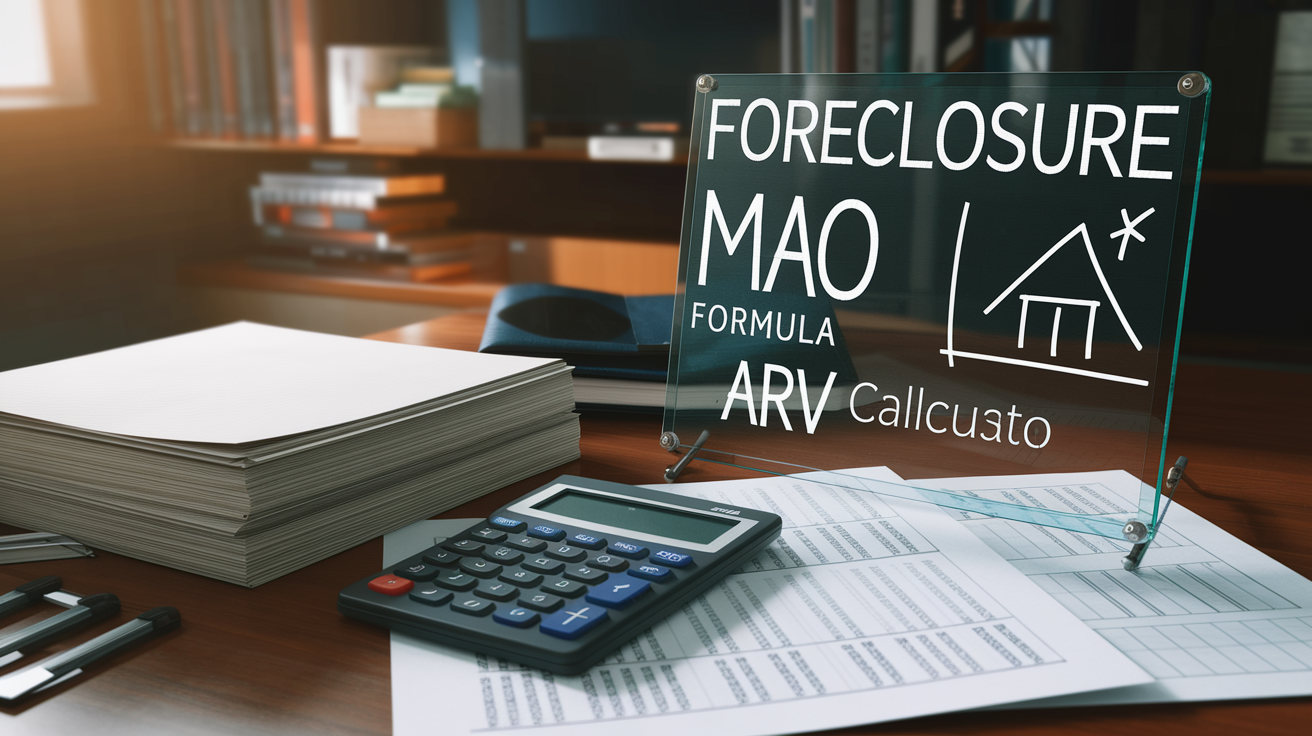
Common formula: MAO = (ARV × 0.70) – Repairs – Holding – Financing – Selling
The 0.70 leaves room for profit and unexpected costs. Adjust up or down based on your risk tolerance.
Quick example. ARV is $200,000. Repairs are $30,000. Holding, financing, and selling costs add up to $20,000. You want a 30 percent margin.
MAO = ($200,000 × 0.70) – $30,000 – $20,000 = $90,000
If the opening bid is $95,000, walk. You’ll break even or lose money. If you can buy at $85,000, you’ve got $5,000 of cushion and the deal makes sense.
Run this before you ever show up. Stick to your number even when other bidders push the price higher.
Holding time affects annualized return. A $15,000 profit in 90 days is roughly 60 percent annualized. Same $15,000 over six months drops to 30 percent. Faster renovations compound your returns, so factor time into your exit plan and financing structure.
Investor Financing Options for Foreclosure Purchases
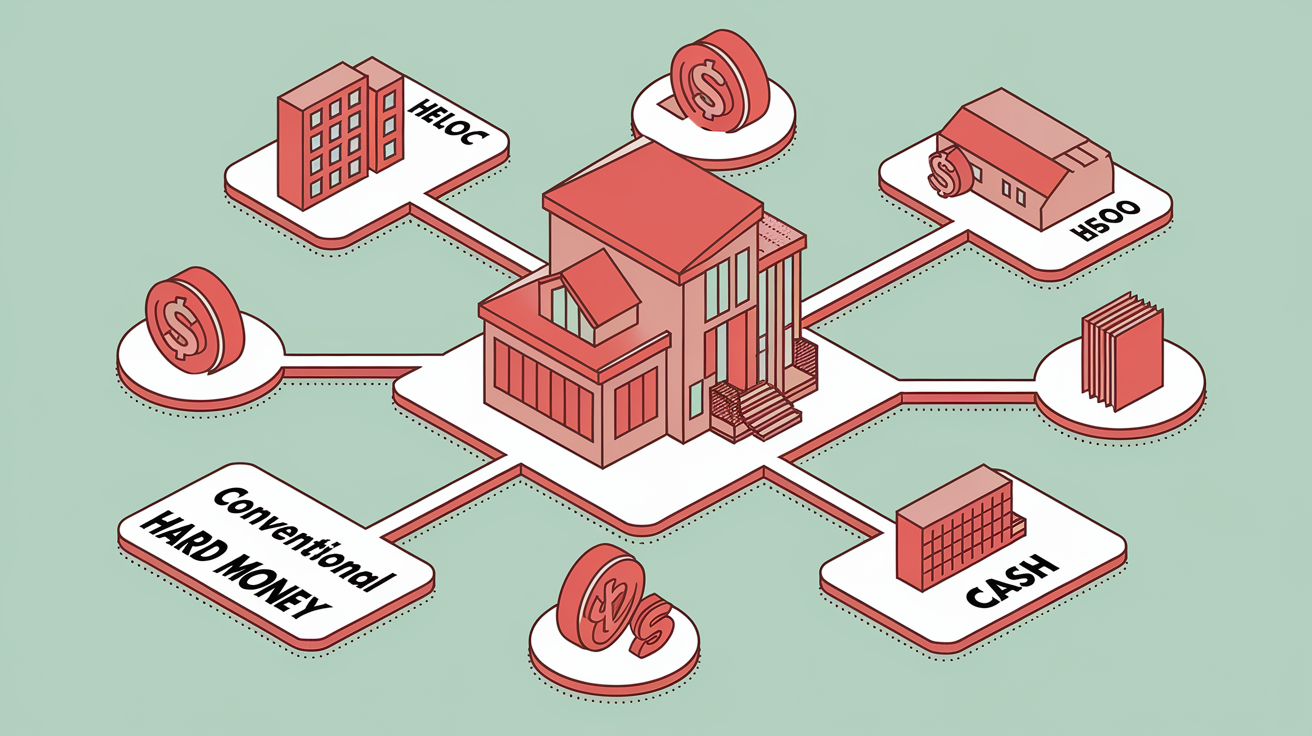
Auctions need immediate cash or proof of funds. That kills conventional mortgages and pushes you toward hard money, private lenders, or liquid capital.
Hard money closes in days. Funds both acquisition and repairs, often up to 75 percent of purchase and 100 percent of rehab. Credit doesn’t have to be perfect, underwriting is quick. You’ll pay 8 to 12 percent interest plus 2 to 4 points at closing. But speed and flexibility make hard money the standard tool for auctions and competitive REO offers where cash strength wins.
If you own property with equity, a HELOC turns that equity into available cash. Draw only what you need, pay interest on the drawn balance, close foreclosures like you’re paying cash. After acquisition, refinance into a rental loan or sell and repay the HELOC. Works well if you want auction access without liquidating other positions. Requires existing equity and enough income to qualify.
REO purchases allow more options because you have time for underwriting. Conventional investment mortgages offer the lowest rates and longest terms but don’t fund repairs. Renovation loans like FHA 203k, Fannie Mae HomeStyle, or portfolio rehab products combine purchase and repair funds into one loan. Repair money releases in draws as work gets completed.
These take longer to close than hard money, so they work best for REO deals where you can negotiate a 30 to 45-day escrow and the property isn’t drawing heavy competition.
Cash is still the strongest position. No appraisal contingencies, no underwriting delays, no lender repair requirements. Cash buyers close in a week. Banks and auctioneers love that.
Don’t have liquid cash? Partner with a private lender or another investor who brings capital in exchange for equity or a fixed return. Structure it clearly: who funds what, who manages the project, how profits split. Put everything in writing before you bid.
Legal and Title Considerations in Foreclosure Purchases

Buying a foreclosure without understanding lien priority is a fast way to lose money. When a property forecloses, the foreclosing lender’s position determines which debts get wiped and which survive.
If a first mortgage forecloses, junior liens like second mortgages, HELOCs, judgment liens usually get wiped. But if a second mortgage or HOA forecloses, the first mortgage and any senior liens survive. You inherit them.
Tax liens are super-senior. County property taxes, IRS liens, municipal assessments survive almost any foreclosure. You’re responsible after you take title. Always check the county tax assessor before bidding. Unpaid back taxes can add thousands to your cost.
HOA liens can survive in some states, especially if state law grants them super-lien status. Pull CC&Rs, call the HOA, verify balances and priority. Mechanic’s liens for unpaid contractor work may or may not survive depending on timing and recording. Search the property’s legal description in the county recorder for filed liens.
Title insurance is your safety net, but usually unavailable at auction. REO and pre-foreclosure purchases typically allow it, protecting you if an undisclosed lien, boundary dispute, or ownership claim surfaces later.
For auctions, you’re on your own. Order a preliminary title report before bidding. It’s not insurance, but it shows recorded liens and helps you estimate clearing costs. Some investors hire real estate attorneys for full chain-of-title research before high-value bids.
Watch for:
- Unreleased prior mortgages: refinances that weren’t properly recorded can leave phantom liens
- IRS tax liens: carry a 120-day redemption right, meaning the IRS can reclaim the property by matching your bid within four months
- Fraudulent reconveyances: title errors or fraud creating conflicting ownership claims
- Code violations and unpermitted work: cities may record liens or stop-work orders that transfer with the property
Budget time and money to clear title defects. For REO, the bank usually clears major liens before listing, but verify with your title company. For auctions, assume you’re responsible for everything and price it into your bid.
Auction Bidding Strategies for Investors

Auctions reward preparation. The lender sets an opening bid, usually the loan balance plus fees. You’re bidding against other investors, the bank, sometimes the borrower trying to stall.
Research every property on the calendar days ahead. Drive by, pull comps, check title, verify taxes, estimate repairs, calculate max bid. Show up with a cheat sheet: address, max bid, liens to clear, deal-killer red flags.
Six strategies that work:
- Only bid properties you’ve researched. Never chase a “deal” you haven’t analyzed.
- Set a hard walk-away number. Write it down before the auction. Don’t exceed it.
- Arrive early and watch. See how other bidders behave, note who’s aggressive, find properties with light competition.
- Bid in small increments near your max. Don’t jump straight to your ceiling. Let the auction reveal others’ limits.
- Bring proof of funds and know payment rules. Some auctions require cashier’s checks or wires within hours.
- Target properties others skip. Cosmetically distressed homes, odd locations, complicated title. They scare off competition.
Pitfalls: bidding emotionally, underestimating repairs because you can’t inspect, ignoring senior liens, failing to verify occupancy. If the property’s occupied and you can’t take possession immediately, add eviction costs to your stack. In some states, occupants have redemption rights or protections that delay your timeline by months.
After winning, move fast. Wire funds, record the deed, secure the property, start eviction or renovation within days. Auctions compress timelines. Delays cost you holding expenses and let problems compound.
Negotiation Strategies for Bank-Owned (REO) Properties

Banks are motivated, not desperate. They want clean, fast closes with minimal risk. Your offer needs to show strength even if the price is lower than asking.
REO asset managers juggle dozens of properties. They prioritize offers that won’t fall apart in escrow. Lead with proof of funds or a solid pre-approval from a reputable lender. Shorten your inspection and financing periods to 10 to 14 days instead of 21. Don’t ask the bank to make repairs. They won’t.
Price your offer based on actual ARV and repair costs, not the listing price. Banks often overprice initially, then drop weekly until they hit market. If a property’s been listed 30-plus days with no offers, you’ve got leverage.
Submit a lower offer with a strong close date and clean terms. No seller credits, no repair requests, no extended escrows. Include a note explaining your rationale: comps, repair estimates, ability to close quickly. Asset managers respond to logic.
If the bank counters, don’t assume their number is final. They’re testing your ceiling. Counter back with a modest increase and restate your strengths: cash or hard money, short timeline, as-is acceptance. Banks often accept 5 to 10 percent below list if you can close in two weeks and waive repair contingencies.
For properties in rough shape or slow markets, discounts of 15 to 20 percent are possible if you’re the only serious buyer.
Timing matters. REO inventory spikes during foreclosure waves, giving you more room. In tight markets with low inventory, expect multiple offers and less wiggle room.
Always run your numbers first. If the deal doesn’t work at asking, it probably won’t work at 95 percent either. Better to walk and wait than force a marginal deal that burns profit in holding costs.
Risks and Challenges in Foreclosure Investing

Foreclosure deals carry risks you won’t hit in normal purchases. Underestimate them and they’ll kill your profit.
Six to plan for:
- Hidden damage: no inspection means you’re guessing on foundation, roof, HVAC, plumbing, electrical until after you own it
- Unpermitted work or code violations: prior owners add rooms, decks, systems without permits. You inherit the liability and correction costs.
- Title defects and unresolved liens: missed liens, IRS claims, fraudulent docs, boundary disputes that surface after closing
- Occupancy and eviction costs: squatters, hostile former owners, tenants with leases can delay possession and add legal fees
- Neighborhood decline or market shifts: buying in a falling market can trap you with negative equity or long holding periods
- Overleveraged capital: auction cash requirements or hard money costs drain reserves, leaving you unable to finish renovations or cover carrying costs
Mitigate by increasing repair and contingency buffers. Always order title reports or full attorney searches for auctions. Budget for worst-case eviction timelines. Keep 20 to 30 percent of your total budget in liquid reserves.
Walk any deal where the numbers depend on perfect execution. In foreclosure investing, things go wrong more often than they go right. Your margin and speed turn problems into manageable costs instead of disasters.
Post-Purchase Strategy: Renovation, Renting, or Reselling
After you close, profit depends on execution speed and exit strategy alignment.
Fix-and-flip investors prioritize fast, cosmetic renovations that boost ARV without overcapitalizing. Focus on kitchens (paint cabinets, new hardware, updated countertops), bathrooms (re-grout, new vanity, modern fixtures), fresh paint, durable flooring like luxury vinyl plank. Avoid major additions, custom finishes, long-lead projects. Budget 60 to 90 days for renovation, another 30 to 60 to market and close the sale. Faster sale, higher annualized return, lower holding costs.
Buy-and-hold investors can take more time and invest in systems that cut long-term maintenance. Quality HVAC, water heaters, roof repairs, energy-efficient windows. Goal is stable cash flow and low turnover, so prioritize durability over curb appeal.
Screen tenants carefully. Price rent at or slightly below market to minimize vacancy. Budget 1 percent of property value annually for ongoing repairs and capex reserves. If you financed with hard money, refinance into a conventional rental loan within six months to lower interest and improve monthly cash flow.
Wholesaling works when you can’t or don’t want to fund the renovation. Assign your contract or resell immediately after closing to another investor for a fee, typically $5,000 to $15,000 depending on deal margin. Requires speed and a strong buyer network. Other investors won’t pay you unless the underlying deal has clear profit for them.
Holding period comparison:
- Fix-and-flip: 90 to 180 days total (renovation plus sale). Highest annualized return, highest transaction costs.
- Buy-and-hold: indefinite. Lower annualized cash return but appreciation and loan paydown build long-term wealth.
- Wholesale/assignment: 0 to 30 days. Fast cash, no renovation risk, smallest absolute profit per deal.
Choose your exit before you buy. If you bid assuming a flip but the market slows and you can’t sell, you’ll burn cash in holding costs. If you plan to hold but underestimate renovation time and costs, your cash-on-cash return craters.
Align your financing, timeline, and renovation scope with your exit from day one. Only adjust if the numbers still work after the change.
Final Words
You’re at the courthouse steps, bid paddle in hand, or scrolling MLS for a pre‑foreclosure lead. This guide puts the full workflow in one place so you can act with fewer surprises.
We covered sourcing, the three foreclosure types, quick property checks, financial math, financing options, title and legal traps, auction tactics, bank negotiation, and post‑purchase choices. We also named common risks and how to plan for them.
Treat the checklist as your backbone for the foreclosure buying process for residential investors. Start small, test assumptions, and keep reserves. There’s a clear path forward.
FAQ
Q: How does purchasing a foreclosure work?
A: Purchasing a foreclosure works by buying a distressed property at pre‑foreclosure, auction, or bank‑owned (REO) stages, then doing deal sourcing, quick due diligence, arranging financing or cash, submitting a bid/offer, closing, and planning rehab or exit.
Q: What is the 120 day foreclosure rule?
A: The 120 day foreclosure rule is a timeline some jurisdictions or lenders use that gives about 120 days between notice and sale or eviction; the exact start, rights, and remedies vary by state and loan type.
Q: Is it a good idea to buy foreclosed properties, and what common problems should I expect?
A: Buying foreclosed properties can be a good idea for investors seeking discounts, but common problems include hidden repair costs, title liens, limited inspection access, and longer timelines—match the deal to your cash, rehab skills, and risk tolerance.