

What if you could buy a place with little or no down payment and have tenants cover most of the mortgage?
House hacking does that, but the financing you pick makes or breaks the deal.
Owner-occupant loans let first-time buyers use FHA, VA, USDA, or low-down conventional programs that accept smaller down payments and count rental income when qualifying.
Each program has tradeoffs like mortgage insurance, occupancy rules, credit limits, and location or service requirements.
This post walks through each loan, quick screening math, and the risks so you can pick the best path.
Core Financing Paths That Enable First-Time Buyers to House Hack
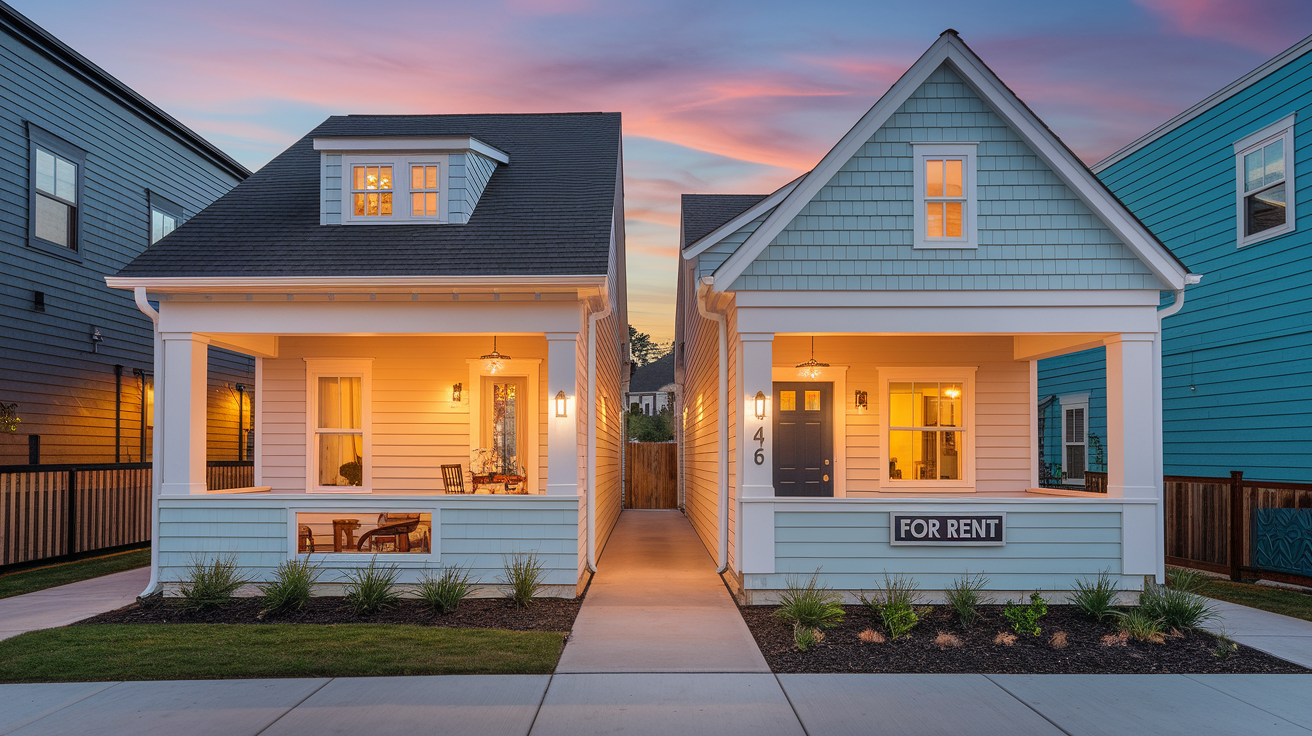
House hacking means you buy a property, live in part of it, and rent out the rest to cover the mortgage. The financing advantage is straightforward: you get access to owner-occupant loans that need way less money down and accept weaker credit than investor mortgages. Most people target 2–4 unit buildings. As long as you’re living in one unit, the property counts as residential, which opens up FHA, VA, USDA, and low-down conventional loans instead of the commercial products that want 20–25% down and charge higher rates.
Rental income from the other units gets factored into underwriting, and that changes the math. Lenders count some of your projected rent when they calculate debt-to-income ratio (DTI), which can bump up your buying power pretty significantly. For 3- and 4-unit properties using FHA, there’s a self-sufficiency test: 75% of the appraiser’s rent estimate has to exceed your monthly mortgage payment. That 75% haircut is there to account for vacancies and repairs. If the property passes, you qualify without needing extra income to cover the full payment. For duplexes or conventional loans, lenders just add 75% of rental income straight into your qualifying income without the pass/fail screen.
All owner-occupant programs come with occupancy requirements (usually one year minimum), and most charge mortgage insurance when you put down less than 20%. FHA requires it for the life of the loan unless you refinance. Conventional lets you drop PMI once you hit 20–22% equity. Credit requirements vary: FHA accepts scores as low as 580 for 3.5% down, while conventional lenders usually want 620 or better. VA and USDA offer zero-down options but limit who qualifies based on service status or location.
Five major financing categories for first-time house hackers:
- FHA loans: 3.5% down, flexible credit, up to 4 units, rental income counts, permanent mortgage insurance.
- Conventional loans: 5% down on multi-units (updated 2023), stricter credit, PMI removable at equity milestones, no self-sufficiency test.
- VA loans: 0% down for eligible veterans and service members, rental income rules apply, no mortgage insurance, limited to qualified borrowers.
- USDA loans: 0% down for rural and some suburban properties, income and location limits, occupancy and rental-income restrictions.
- Down Payment Assistance (DPA) programs: grants or second mortgages covering down payment or closing costs, often stackable with FHA or conventional financing.
FHA Loan Options That Support House Hacking for First-Time Buyers

FHA loans are the easiest entry point for first-time house hackers. You need just 3.5% down if your credit score is 580 or higher, and you can buy up to four units as long as you live in one of them. Lenders count projected rental income from the other units when they figure out how much you can borrow, which improves your DTI and increases purchasing power. FHA also forgives more credit problems than conventional financing. Serious issues like scores below 500 or recent foreclosures will block you, but the bar is lower than most portfolio or conventional products. Because you’re living in the property, FHA treats it as owner-occupied residential debt instead of an investment mortgage, which means lower rates and easier underwriting compared to rental-property loans.
FHA appraisals enforce livability and safety standards. The property has to meet minimum condition requirements: working utilities, safe electrical and plumbing, no peeling lead paint, solid roof and foundation. If a property needs big repairs (new HVAC, roof replacement, major electrical work), it might not pass a standard FHA appraisal. But you can still finance the purchase using an FHA 203(k) Renovation Loan. The 203(k) bundles the purchase price and rehab costs into a single mortgage, and the appraiser values the home based on its finished, post-repair condition. That lets you buy a fixer-upper duplex or triplex that wouldn’t qualify otherwise. FHA loan limits vary by county and reflect local housing costs. In affordable markets (Grand Rapids, Lansing, parts of Detroit), FHA limits are often high enough to cover small multi-family purchases. In high-cost areas you might hit the ceiling before you find a property.
FHA loans come with mandatory mortgage insurance premiums (MIP): an upfront fee (typically 1.75% of the loan amount, rolled into the mortgage) and an annual premium split into monthly payments. Unlike conventional PMI, FHA mortgage insurance doesn’t drop off automatically once you reach a certain equity level. It stays for the life of the loan unless you refinance. You’re also required to live in the property for at least one year after closing. After the one-year mark, you can move out and convert the property into a full rental without violating FHA’s occupancy rule.
| Program Feature | FHA Requirement |
|---|---|
| Down Payment | 3.5% minimum with credit score 580+ |
| Credit Score | Typically 580+ for 3.5% down; below 500 generally disqualifies |
| Unit Count | Up to 4 units, buyer must occupy one unit |
| Occupancy | Minimum 1 year as primary residence |
Conventional Mortgage Paths for Buyers Planning a House Hack

Conventional loans offer a cleaner long-term equity story for house hackers willing to meet stricter underwriting. The biggest advantage over FHA is that private mortgage insurance (PMI) can be removed once you reach 20% equity through payments or appreciation. That lowers your monthly cost without requiring a refinance. Conventional loans also skip the FHA self-sufficiency test for 3- and 4-unit properties, so lenders don’t impose a pass/fail screen based on rental income. Instead, they just add 75% of projected rent to your qualifying income, which can make it easier to qualify for larger properties if you have stable W-2 income or other documented revenue.
As of late 2023, Fannie Mae and Freddie Mac updated guidelines to allow 5% down on 2–4 unit properties. That’s a big change from the previous 15–25% minimums for multi-family purchases. It makes conventional financing competitive with FHA on down payment size, especially for buyers with credit scores above 680 and clean income documentation. Conventional underwriting generally wants higher credit scores (620 minimum, often 640–680 for best pricing), and most lenders ask for at least six months of mortgage payment reserves when you’re buying a multi-unit property. Reserves can include retirement accounts, liquid savings, or documented rental income from other properties, so the bar is higher than FHA but not impossible for disciplined savers.
Buyers planning to hold the property long term and eventually move out benefit most from conventional financing. After the one-year occupancy period, you can relocate and the property becomes a full rental without refinancing. Because PMI drops off and rates on conventional loans are often competitive with FHA (especially if your credit is strong), your long-term cost of capital can be lower. If you’re house hacking a duplex and planning to buy another property in two years, the ability to eliminate PMI and avoid FHA’s permanent mortgage insurance can save hundreds per month once you hit 20% equity.
Four qualification priorities lenders commonly evaluate for multi-unit conventional loans:
- Credit score of 620 or higher, with better pricing typically starting at 680+.
- Reserves equal to at least six months of mortgage payments (PITI) across all financed properties.
- Documented income sufficient to cover the mortgage after applying 75% of projected rent to qualifying income.
- Low debt-to-income ratio, typically 43–50% depending on credit strength and reserve cushion.
Zero-Down House Hacking Options Through VA and USDA Programs

VA and USDA loans eliminate the down payment requirement entirely, which makes them the most capital-efficient option for eligible buyers. VA loans are available to active-duty service members, veterans, and qualifying surviving spouses. The program allows up to 4-unit properties with zero down as long as you occupy one unit, and it doesn’t charge monthly mortgage insurance. Lenders can count rental income from the additional units when qualifying you, though policies vary by lender. Some use 75% of appraised rent, others require lease agreements or a history of rental income. VA loans come with a one-time funding fee (typically 2.15–3.3% of the loan amount for first-time use, which can be rolled into the mortgage), but the absence of ongoing PMI or MIP often makes VA the cheapest monthly payment option if you qualify.
USDA loans target rural and eligible suburban areas and offer 0% down for borrowers meeting income limits and geographic requirements. The property has to be in a USDA-eligible zone, which includes many small towns and exurban markets but excludes most urban cores. USDA financing works for single-family and sometimes 2-unit properties if local rules allow, but 3–4 unit properties are generally excluded. USDA also charges an upfront guarantee fee (1% of the loan) and an annual fee (0.35% of the outstanding balance), which is lower than FHA’s mortgage insurance. Because USDA has income caps and location restrictions, it’s a niche option. But for buyers in qualifying areas, it’s a powerful way to house hack without tying up savings in a down payment. Both programs require you to occupy the property as your primary residence, and rental income is factored into DTI calculations similarly to FHA and conventional loans.
| Program | Down Payment | Key Requirement |
|---|---|---|
| VA | 0% | Eligible veteran or active-duty service member, occupancy required |
| USDA | 0% | Property in eligible rural/suburban area, borrower income below program limits |
| FHA | 3.5% | Credit score 580+, up to 4 units, 1-year occupancy |
Using Renovation-Friendly Financing to Improve House Hack Returns
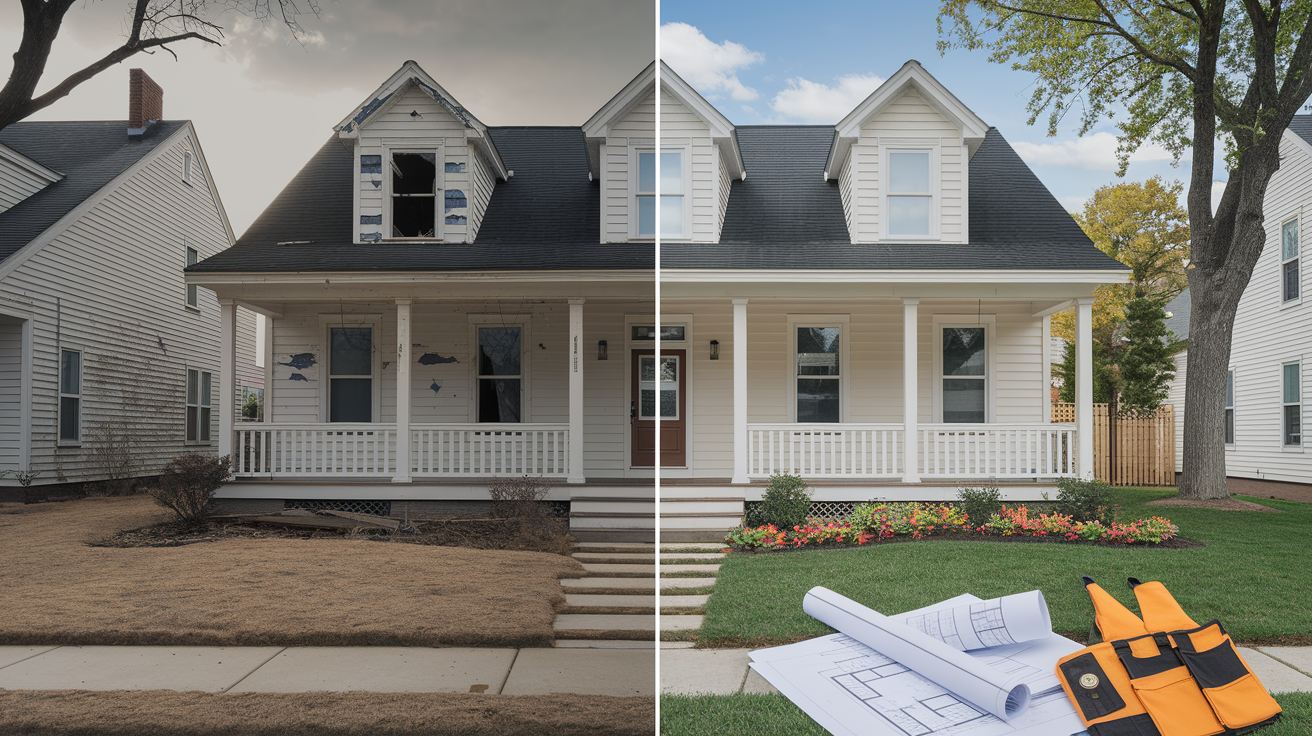
Renovation loans let you buy properties that need work and fold the repair costs into a single mortgage. The FHA 203(k) is the most common tool for first-time house hackers targeting distressed multi-family properties. It covers everything from minor updates (new flooring, paint, appliances) to major structural repairs (foundation work, roof replacement, adding a second bathroom). The appraiser values the property based on its completed, post-renovation condition, which means you can qualify for a loan amount that reflects the improved value rather than the current run-down state. So if you find a duplex selling below market because it needs $30,000 in upgrades, you can finance the purchase and the rehab together, then live in the property while contractors finish the work or tackle cosmetic repairs yourself after closing.
A home equity line of credit (HELOC) is another option, typically used by buyers who already own a property with equity or who want to fund renovations after purchasing with a standard loan. HELOCs work well for smaller projects like finishing a basement to create a rentable bedroom, adding an accessory dwelling unit (ADU) in the backyard, or converting a garage into a studio apartment. Because HELOCs are revolving credit, you draw only what you need and pay interest on the outstanding balance, which gives you flexibility to stage improvements over time. The downside is that HELOC rates are variable and higher than first-mortgage rates, and you’ll need enough existing equity or income to qualify for the line. Some buyers use a HELOC as bridge financing to buy a property quickly, then refinance once renovations are done and the home appraises higher.
Three common renovation categories funded through 203(k) or HELOC:
- Safety and code compliance repairs: electrical upgrades, roof replacement, lead paint remediation, foundation fixes required to pass FHA appraisal.
- Unit conversion or expansion: finishing a basement to add a rentable bedroom, building an ADU, converting a single-family into a legal duplex.
- Value-add cosmetic upgrades: new kitchens, bathrooms, flooring, and paint that increase rent potential and appraisal value without major structural work.
Rental Income Qualification Rules for First-Time House Hackers
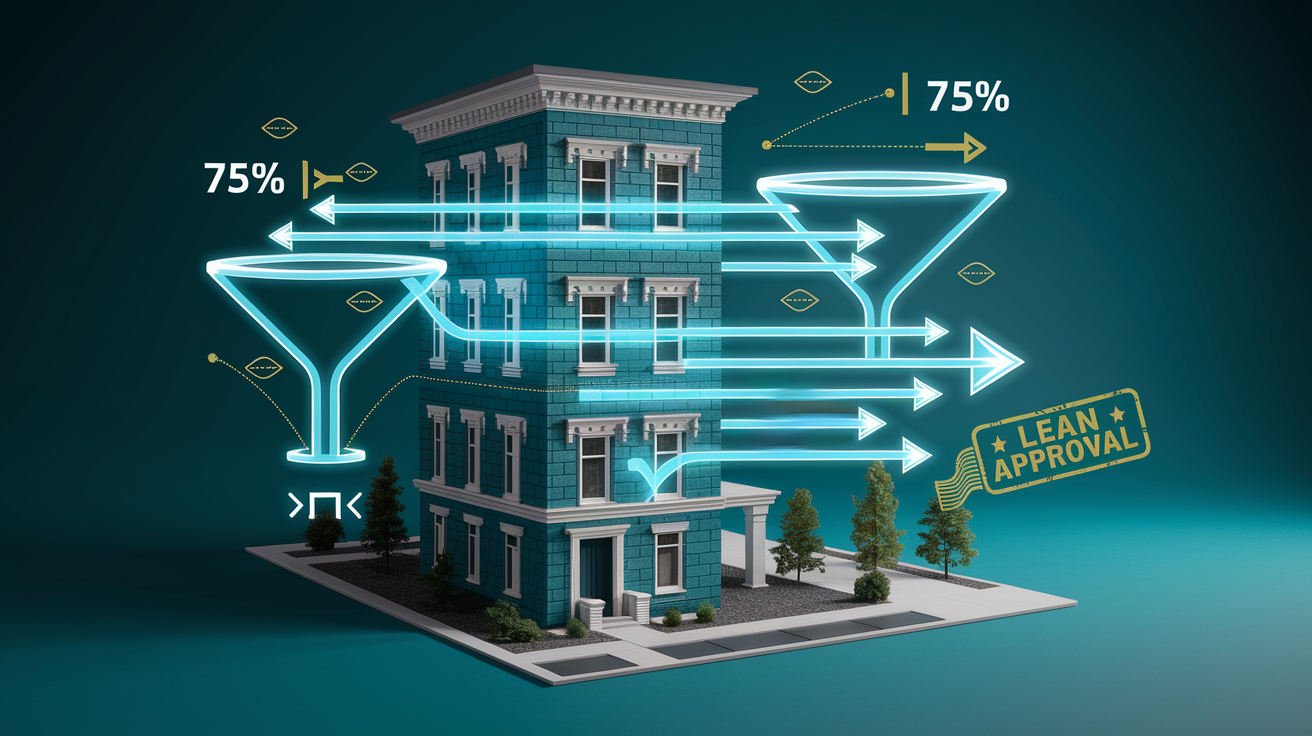
Rental income is determined by the appraiser during the valuation process. The appraiser researches comparable rental properties in the area (similar unit count, size, condition) and provides a market rent estimate for each unit in the appraisal report. That figure becomes the official rental income projection used by the lender, even if you don’t have signed leases yet. For 2-unit properties, most lenders just add 75% of the appraised rental income to your qualifying income when calculating DTI. If the appraiser says each unit rents for $1,200, the lender credits you with $900 per unit ($1,200 × 0.75), so a duplex would add $1,800/month to your income for qualification purposes.
For 3- and 4-unit properties financed with FHA, lenders apply a self-sufficiency test. They take the total appraised rental income for all units (including the one you’ll occupy), multiply by 75%, and compare that figure to your total monthly mortgage payment (principal, interest, taxes, insurance, and HOA dues if applicable). If 75% of total rent exceeds the payment, the property passes and you can qualify without additional income. If it falls short, you’ll need documented W-2 or other income to cover the gap. Example: a triplex with three units renting at $1,500 each produces $4,500/month total rent. 75% of $4,500 = $3,375. If your mortgage payment is $3,370, the property passes the self-sufficiency test and rental income alone supports the loan. If your payment were $3,500, you’d need an extra $125/month in documented income to qualify.
This rental-income calculation boosts purchasing power significantly. Without rental income, a buyer earning $60,000/year might qualify for a $250,000 mortgage. With $1,800/month in rental credit from a duplex, that same buyer’s qualifying income jumps to roughly $81,600/year, which can support a loan in the $350,000+ range depending on rates and DTI limits. The rental credit lets you buy a more expensive property than you could afford on salary alone. That’s the entire financial premise of house hacking.
| Qualification Factor | Description | Inclusion Method |
|---|---|---|
| Projected Rent | Appraiser’s estimate of market rent per unit | Documented in appraisal report, used as income source |
| 75% Haircut | Lenders count 75% of projected rent to account for vacancy/maintenance | Applied to all units before adding to borrower’s income |
| Self-Sufficiency Test (3–4 units, FHA) | 75% of total rent must exceed monthly mortgage payment | Pass/fail threshold; if passed, no additional income required |
| DTI Impact | Rental credit reduces effective DTI, increasing loan capacity | Added to gross monthly income on loan application |
Down Payment Assistance and Layered Financing for House Hackers

Down payment assistance (DPA) programs can cover part or all of your upfront cash requirement, making it possible to buy a house-hacking property with minimal savings. Many state housing finance agencies, city programs, and nonprofit organizations offer grants or low-interest second mortgages that pay for down payment or closing costs. Some DPA programs are structured as forgivable loans that disappear after you live in the property for a set number of years (often 3–5). Others are repayable second mortgages with deferred payments, meaning you don’t make monthly payments but have to repay the balance when you sell or refinance. DPA is often stackable with FHA, conventional, VA, and USDA loans, though each program has its own rules about maximum assistance amounts and eligible properties.
Gift funds from family members are another way to cover the down payment. FHA and conventional loans let you use gifted money for the entire down payment as long as the donor provides a signed gift letter stating the funds are a gift, not a loan. VA and USDA also permit gift funds. The lender will verify the source of the gift (usually by reviewing the donor’s bank statements and a paper trail showing the money moved into your account), so informal cash gifts won’t work. Some buyers combine a small personal contribution with a larger family gift to meet the minimum down payment while preserving emergency savings for repairs and vacancies after closing.
Five common assistance mechanisms for first-time house hackers:
- DPA grants: outright gifts from government or nonprofit programs, often no repayment required if occupancy requirements are met.
- DPA forgivable loans: second mortgages that forgive after a set period (3–5 years), typically requiring continued occupancy.
- Community seconds: low- or zero-interest subordinate loans provided by cities or employers, repayable upon sale or refinance.
- Lender credits: seller-paid closing costs or lender rebates applied to reduce cash needed at closing (common in Fannie Mae HomePath program, which offers 3% off closing costs).
- Gift funds: money from family members documented with a gift letter and bank statements, allowed on most loan programs.
Key Underwriting Requirements for First-Time Buyers Using House Hacking
FHA credit guidelines allow 3.5% down at a minimum score of 580, but lenders can add overlays (internal credit standards stricter than FHA’s baseline). Scores below 580 typically require 10% down, and scores below 500 generally disqualify borrowers entirely. Conventional loans usually require 620 minimum, with best pricing and lowest PMI rates starting around 680. Both programs review recent bankruptcies and foreclosures. FHA requires at least two years of clean credit after a foreclosure and one year after Chapter 13 bankruptcy discharge. Conventional guidelines impose longer waiting periods (typically four years post-foreclosure and two to four years post-bankruptcy depending on circumstances).
Reserves are cash or liquid assets equal to a certain number of months’ mortgage payments, held in savings or retirement accounts after closing. FHA doesn’t mandate reserves for 1–2 unit properties, but many lenders require at least two months’ reserves as an overlay. Conventional loans typically require six months’ reserves for 2–4 unit properties. Reserves reassure the lender you can cover the mortgage during vacancies or if tenants don’t pay. Documentation requirements include recent pay stubs (last 30 days), W-2s (past two years), tax returns (past two years for self-employed borrowers or if rental income from other properties is used), and bank statements (typically two months’ worth showing down payment and closing costs). If you’re counting rental income from the property you’re buying, the appraiser’s rent estimate is your documentation. If you already own rentals, the lender will want lease agreements and possibly tax returns showing rental income.
Recent credit problems raise red flags. A bankruptcy discharged last year, collections accounts left unpaid, or a short sale within the past three years can delay or block approval. Lenders also scrutinize large recent deposits in your bank account. If you suddenly deposited $15,000 two weeks before applying, they’ll ask for proof it came from a documented source (sale of an asset, gift, work bonus) rather than an undisclosed loan. Tax liens, judgments, and delinquent student loans can also disqualify you or require resolution before closing.
Four common underwriting pitfalls for first-time house hackers:
- Insufficient reserves: closing with zero savings left and no cushion for first vacancy or repair.
- Unverified or inflated rent projections: assuming rent higher than the appraiser’s estimate, which doesn’t help qualification and sets up cash-flow disappointment.
- Property failing appraisal or inspection: discovering major code violations, foundation issues, or safety hazards that prevent FHA approval without a 203(k) loan.
- Excessive DTI: total debt payments (including new mortgage, existing car loans, student loans, credit cards) exceed 43–50% of gross income, even after adding rental credit.
Evaluating Cash Flow and Payment Structure on House Hack Mortgage Options

Estimating total monthly housing costs is the first step in evaluating whether a deal makes financial sense. Your mortgage payment includes principal and interest (determined by loan amount and interest rate), property taxes, homeowner’s insurance, and mortgage insurance (MIP on FHA, PMI on conventional, or none on VA). For a house hack, you also need to account for operating expenses: maintenance, utilities you pay (water, trash, sometimes heat in older multi-families), vacancy reserves, and property management fees if you hire help. Gross rental income is the total rent you could collect if all units stay occupied year-round. Subtract your operating expenses from gross rental income to get net operating income (NOI), which represents the property’s profitability before mortgage payments and income taxes.
The 1% rule is a quick screen: monthly gross rent should equal roughly 1% of the purchase price to indicate strong cash-flow potential. For a $300,000 triplex, you’d want total rent around $3,000/month. If you’re living in one unit and renting two units at $1,200 each, you’re collecting $2,400/month, which falls short of the 1% rule but might still work if your mortgage payment is low enough. A more precise calculation involves running a full NOI analysis. Example: a property generating $28,800/year in rent ($2,400/month) plus a one-time lease fee of $200 totals $29,000 gross income. If operating expenses (taxes, insurance, maintenance, vacancy allowance) are $10,240/year, NOI is $18,760 ($29,000 − $10,240). Divide NOI by 12 to get monthly NOI ($1,563), then compare to your mortgage payment. If your payment is $2,400/month and NOI is $1,563, you’re covering about 65% of the mortgage with rental income. The remaining $837/month is your effective housing cost, far below market rent for a comparable place to live.
Amortization schedules show how each monthly payment splits between interest and principal. Early in the loan, most of your payment goes to interest. Over time, more pays down principal and builds equity. On a 30-year FHA loan at 6.25%, a $270,000 mortgage costs roughly $1,662/month in principal and interest. Add $400/month in taxes, $150/month in insurance, and $200/month in MIP, and your total PITI payment is around $2,412. If you’re house hacking a duplex and collecting $1,200/month in rent (75% = $900 counted for qualification), your out-of-pocket housing cost after rental offset is roughly $1,512/month. That’s your effective “rent,” and it includes equity buildup, tax deductions, and future appreciation.
| Metric | Definition | Example Value |
|---|---|---|
| Gross Rent | Total monthly rent from all units if fully occupied | $2,400 (two units at $1,200 each) |
| Operating Expenses | Taxes, insurance, maintenance, utilities, vacancy reserve | $853/month ($10,240 annual ÷ 12) |
| Net Operating Income (NOI) | Gross rent minus operating expenses | $1,547/month ($2,400 − $853) |
| Break-Even Point | Mortgage payment covered by NOI; leftover is profit or shortfall | If mortgage = $2,400, shortfall = $853/month (your housing cost) |
Risk Management and Operational Readiness for Owner-Occupant Investors

Vacancies are the biggest operational risk for first-time house hackers. If one of your rental units sits empty for two months, you lose two months of income but still owe the full mortgage. Plan for at least one month of vacancy per unit per year when budgeting, even in strong rental markets. That means setting aside 8–10% of gross rent as a vacancy allowance. If you’re collecting $1,200/month from a unit, reserve $100–120/month ($1,200–1,440/year) for turnover costs and lost rent. Combine that with a separate maintenance and repair reserve (another 5–10% of rent) to cover water heater replacements, appliance failures, and unexpected fixes. A $20,000 emergency fund is a reasonable target for a duplex or triplex, covering roughly six months of mortgage payments or several major repairs.
Tenant screening and lease enforcement matter more when you’re living on-site. You’ll interact with your tenants daily, so selecting reliable people is critical. Run background checks, verify income (pay stubs or tax returns showing rent is less than 30% of gross income), check references from previous landlords, and use a standard lease that spells out rent due dates, late fees, maintenance responsibilities, and house rules. Living next door to a problem tenant is worse than managing one remotely. You can’t ignore noise complaints, lease violations, or late rent when it’s happening in the unit above you. Enforce lease terms consistently and document everything in writing. If you allow informal arrangements or skip enforcement early, it becomes harder to hold tenants accountable later.
Property inspections before purchase and regular condition checks after closing reduce surprise expenses. Hire a qualified inspector to evaluate the roof, foundation, HVAC, plumbing, and electrical systems before you buy. Negotiate repairs or price reductions for major issues, or walk away if the property needs more work than you can afford. FHA appraisals flag safety hazards, but they’re not full inspections. You still need an independent inspector to catch deferred maintenance and estimate repair costs. Once you own the property, inspect units between tenants and address small problems (leaky faucets, worn weatherstripping, clogged gutters) before they become expensive failures.
Three core risk-mitigation practices for new house hackers:
- Vacancy planning: budget for 8–10% annual vacancy; keep reserves equal to at least two months’ rent per unit to cover turnover and lost income.
- Repair and maintenance budgeting: allocate 5–10% of gross rent monthly for routine repairs, and maintain a separate emergency fund for major systems (roof, HVAC, foundation).
- Tenant screening basics: verify income, run credit and background checks, contact previous landlords, and use written leases with clear terms for rent, late fees, and property rules.
Final Words
We ran through the financing routes – FHA, Conventional, VA/USDA, renovation loans, and down-payment help – and how lenders use projected rent for 1-4 unit owner-occupant deals.
Key takeaways: owner-occupancy rules, typical down payments, mortgage insurance tradeoffs, and the underwriting checklist – credit, reserves, paystubs, and verified rent.
Use this as a checklist when comparing house hacking financing options for first-time buyers. Run the numbers, budget for repairs, and pick the path that fits your risk and cash. You can start building equity and rental income.
FAQ
Q: What is the best loan for house hacking?
A: The best loan for house hacking and many first-time buyers is often an FHA loan – 3.5% down, allows 2–4 unit owner-occupancy, and lenders can count projected rental income toward qualification.
Q: What is the 3 3 3 rule in real estate?
A: The 3-3-3 rule in real estate depends on context; common meanings include 3 months of reserves, 3 percent for down/closing, or a three-month vacancy/repair buffer – verify the local usage.
Q: How much income to qualify for a $200,000 mortgage?
A: To qualify for a $200,000 mortgage you typically need about $51,000–$74,000 yearly, depending on rate, debts, and DTI; example: at 6%/30-year, $1,199 payment needs ~$4,280/month (28% rule).