

Think a fresh coat of paint will max your ARV? It won’t.
A BRRRR renovation checklist that ties each task to refinance and rent goals is what does.
Plan a line-item budget with 15 to 20% contingency, fix structure and mechanicals first, do value-driving kitchens and baths next, then cosmetics.
Follow that order and you protect equity, pass appraisal, and hit the rent and DSCR you need.
Core BRRRR Renovation Checklist Essentials for Investors
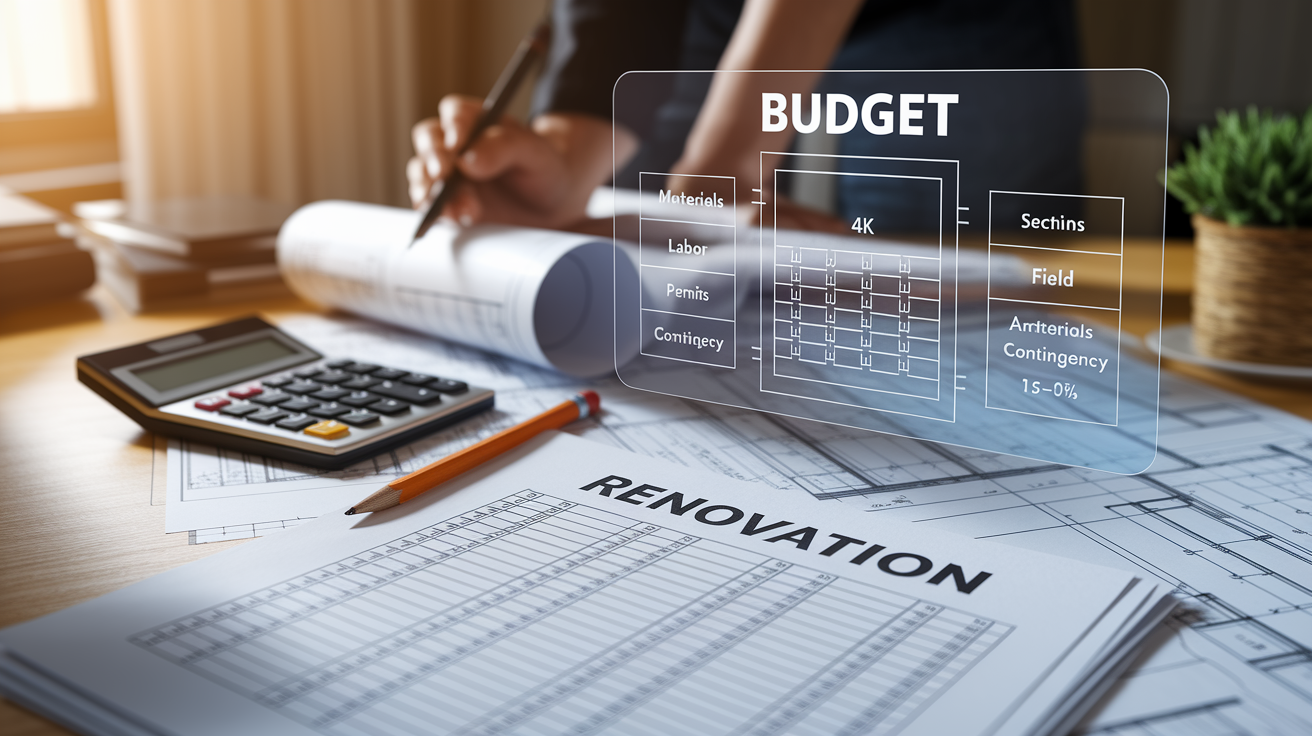
- Set your total renovation budget with line-item unit costs and a 15–20% contingency to absorb unknowns.
- Define the full scope of work before buying materials, prioritizing structural and mechanical repairs first.
- Complete all structural and envelope repairs (foundation, framing, roof, bulk water intrusion) before moving to interior trades.
- Upgrade or replace mechanical systems that fail code or inspection standards (HVAC, electrical panel, plumbing mains).
- Execute value-driving interior improvements in order of ROI: kitchens, bathrooms, added bedrooms, finished basements.
- Apply cosmetic finishes last (paint, flooring, fixtures, landscaping) to protect the new surfaces from trades damage.
- Coordinate contractor draw schedules and milestone inspections with photos and signed punch lists at each phase.
- Prepare refinance-ready documentation including permit sign-offs, contractor invoices, before-and-after photos, and lease agreements.
BRRRR only works if your renovation checklist lines up with refinancing and rental goals. The rehab phase sits between purchase and refinance. Every dollar spent and every day lost either pushes you toward a higher After-Repair Value and stable rent, or pulls you away from it. Skip steps or flip the order and you’re burning cash on rework, delaying your refinance, and leaving equity sitting on the table.
Your checklist needs actual numbers. Buy at 70% of ARV minus repair costs. Target rent that supports a 1.2 to 1.3 DSCR after refinance. Then map every task to one of those outcomes. A $1,500 HVAC repair keeps your appraisal from getting tossed based on comp rejection. A $3,000 kitchen refresh can lift rent by $150 a month and bump ARV by $6,000. The math breaks if you’re guessing at the sequence.
Good prioritization keeps you on budget and refinance-ready. Lenders and appraisers verify that mechanicals work, permits are closed, and the property meets current rental standards in your market. Front-load safety and systems. Layer in value next. Cosmetics last. That’s how you stay code-compliant, protect your budget, and make the property attractive to tenants and underwriters at the same time.
Pre-Purchase Property Evaluation for BRRRR Renovation Success

You can’t afford to overpay or misestimate your rehab budget. Before you write an offer, you need three numbers locked in: what the property will appraise for after repairs, what those repairs will actually cost, and what rent you can collect once it’s lease-ready. If any one comes in weak, your refinance math collapses and you’re stuck holding expensive short-term debt with no way out.
Comps, inspection findings, and rent estimates decide whether you get your capital back or watch it sit trapped for years. Pull three sold comps from the past six months within half a mile. Adjust for condition, square footage, and finish level. Walk the property with an inspector who’ll flag foundation movement, roof life, knob-and-tube wiring, cast-iron waste stacks, mold, pests. Any one of those can double your rehab budget or kill the deal outright.
Get 3 comparable sales sold in the past 6 months, located within 0.5 miles, and adjust for size, bed/bath count, and finishes. Complete a full home inspection covering structure, foundation, roof, HVAC, electrical, plumbing, windows, doors, grading, and drainage. Test for mold, asbestos, lead paint, and pests in pre-1980 homes or properties with visible moisture damage. Pull rent comparables for similar units in the immediate neighborhood to estimate stabilized monthly income. Review zoning, permits, and title to confirm legal use, uncover code violations, and verify clean ownership. Estimate total rehab costs using contractor walk-throughs and unit-cost pricing before you finalize your purchase offer.
BRRRR Renovation Scope of Work: Structuring Repairs for Maximum ARV

Appraisers compare your finished property to neighborhood comps, not to what you paid or hoped to achieve. Over-improve with luxury finishes in a working-class neighborhood and the appraiser caps your ARV at the top of local sales. You lose money. Skip a roof replacement to save cash and the appraiser downgrades condition. You lose equity. Your scope has to match both the market ceiling and lender standards.
Cost ranges and value-driving upgrades tell you where to focus. Kitchens run $8,000 to $25,000 depending on whether you’re replacing cabinets or just refacing them, what countertop material you pick, and which appliance tier you choose. Bathrooms cost $4,000 to $12,000 per full bath. A cosmetic refresh with new vanity, tile surround, and fixtures sits at the low end. Gut it and change the layout and you hit the top. Full interior paint costs $1,000 to $3,000, laminate or luxury vinyl plank flooring runs $1,500 to $6,000, HVAC replacement is $3,000 to $7,000, roof replacement $4,000 to $10,000, windows $300 to $800 each. Every dollar needs to either lift rent, satisfy an appraiser’s condition requirement, or both.
Cosmetic work comes last after major systems are done. Installing drywall, paint, and flooring before plumbing or electrical rough-ins is a guaranteed rework loop. Hanging cabinets before the roof is watertight risks water damage. Finish the envelope, mechanicals, and framing first. Move to value-driving interiors next. Apply cosmetics when no trades will walk through and scuff your new floors.
| Category | Example Improvements | Typical Cost Impact |
|---|---|---|
| Structural & Envelope | Foundation repair, roof replacement, water intrusion fixes | $4,000–$15,000; required for appraisal and code |
| Mechanical Systems | HVAC replacement, electrical panel upgrade, PEX re-pipe | $3,000–$12,000; ensures safety and lender requirements |
| Value-Driving Interiors | Kitchen remodel, bathroom upgrades, added bedroom, finished basement | $8,000–$30,000; highest ARV and rent increase per dollar |
| Cosmetic Finishes | Interior paint, flooring, light fixtures, cabinet hardware | $3,000–$10,000; improves marketability and tenant appeal |
| Curb Appeal | Landscaping, siding/trim paint, new front door, driveway repair | $1,500–$6,000; supports appraisal comps and faster lease-up |
BRRRR Budgeting and Renovation Cost Planning

Get at least three contractor bids per trade. One bid might be a lowball with exclusions buried in fine print. Another might pad the estimate to cover the contractor’s own uncertainty. Three bids let you spot outliers, compare line-item unit costs, and negotiate from a position of knowledge. If all three cluster around the same total, your budget is probably realistic.
Build a 15 to 20% contingency into your total rehab budget. Unknowns surface once walls open and old systems come apart. A $30,000 rehab estimate should carry a $4,500 to $6,000 contingency line. Lenders may finance 100% of renovation costs but reimburse via draw schedules, so you’ll need operating capital to cover contractor payments between draws. Otherwise you’re stuck waiting for lender inspections and wire transfers while work stops.
Compare at least 3 contractor bids for each major trade (framing, electrical, plumbing, HVAC, flooring, kitchen/bath) and use unit pricing to verify line items. Build a 15 to 20% contingency into your total budget to absorb hidden structural issues, permit delays, and material price swings. Split costs into labor and materials so you can track markup and negotiate separately on each component. Map time to cost by estimating how many weeks each phase takes and multiplying by weekly holding costs (interest, taxes, insurance, utilities). Estimate holding costs separately and add them to your total capital requirement. Mortgage interest on acquisition financing can run $500 to $1,500 per month depending on loan size and rate.
Contractor Management & BRRRR Renovation Quality Control

Typical contractor payment schedules follow a 30% deposit, 40% mid-project, and 30% near completion structure, with 5 to 10% retainage held until a final punch list closes. The deposit covers material orders and mobilization. The mid-project draw funds labor through rough-in and framing. The final payment releases when all work passes inspection. The retainage ensures the contractor returns to fix defects discovered during final walk-through.
Permit triggers include electrical panel upgrades, plumbing re-routes, structural modifications, HVAC replacements, and any additions or layout changes that affect walls, exits, or load paths. Skip permits to save fees or time and you’re creating appraisal risk. Lenders and appraisers verify that major systems have inspection sign-offs. Unpermitted work can delay or kill your refinance. Required documentation includes contractor licenses, liability and workers’ comp insurance certificates, lien waivers at each payment milestone, and dated photos of work in progress and completed phases.
Verify contractor license, liability insurance, and workers’ compensation coverage before signing anything. Use a written contract that defines scope, materials, timeline, payment milestones, and dispute resolution process. Require lien waivers from the general contractor and all subcontractors at each payment to protect against mechanic’s liens. Pull all required permits for electrical, plumbing, structural, and HVAC work and get signed inspections before closing out phases. Conduct milestone inspections with photo documentation at rough-in, drywall, and final stages to catch defects early. Hold 5 to 10% retainage until a signed punch list is complete and all minor defects are corrected. Maintain a project schedule with weekly check-ins to track progress, manage delays, and adjust the timeline or budget as needed.
BRRRR Renovation Timeline Planning and Holding Cost Management

Rehab duration breaks into three tiers. Minor cosmetic work takes 1 to 3 weeks and includes paint, flooring, and light fixture swaps. Kitchen or bathroom remodels run 3 to 8 weeks each when you’re replacing cabinets, countertops, tile, and fixtures. Full whole-house rehabs with structural, mechanical, and interior upgrades stretch 6 to 12+ weeks depending on permit timelines and contractor availability. Every extra week adds holding costs and delays your ability to lease and refinance.
Holding costs include mortgage interest on your acquisition or hard-money loan, property taxes, insurance, utilities for construction, and any HOA fees. A $150,000 hard-money loan at 12% annual interest costs $1,500 per month in interest alone. Add $250 for taxes, $100 for insurance, and $50 for utilities. You’re burning $1,900 per month while the property sits vacant. A two-month delay in your renovation timeline costs $3,800 in pure carry with no income to offset it.
Estimate total rehab duration by trade: framing and rough-in (1 to 2 weeks), mechanical installs (1 to 2 weeks per system), drywall and paint (1 to 2 weeks), flooring and trim (1 week), kitchen (3 to 6 weeks), bathrooms (2 to 4 weeks each). Add permit and inspection buffer time. Plan 1 to 2 weeks for permit approval and schedule inspections at rough-in, final electrical, final plumbing, and final mechanical before drywall closes walls. Calculate monthly holding costs including loan interest, taxes, insurance, utilities, and HOA fees, then multiply by the number of months from purchase to lease signing. Plan for a seasoning period of 6 to 12 months between purchase and refinance, depending on lender requirements, and ensure rent income covers carrying costs during that window. Track contractor start and completion dates weekly, adjust the schedule when delays occur, and communicate changes to your lender if draw timelines shift.
Rental-Ready Standards After BRRRR Renovations
Screening starts with income verification. Require gross monthly income of 2.5 to 3 times the rent. For a $1,500/month unit that means $3,750 to $4,500 monthly income. Credit score thresholds typically sit at 620 or higher for investment-grade tenants, though some landlords accept lower scores with larger security deposits or co-signers. Landlord references from the past two rentals reveal payment history and property care habits. Background checks uncover eviction filings, criminal records, and identity fraud.
Market rent comparables come from 3 to 5 similar properties within half a mile that leased in the past 90 days. Adjust for bedroom count, square footage, parking, and amenities like in-unit laundry or updated kitchens. Apply a 5 to 10% vacancy buffer when projecting annual income to account for turnover and lease-up gaps. If comps rent for $1,600 to $1,750, price your unit at $1,650 to lease quickly while leaving room to raise rents after the first year if the market supports it.
Move-in documentation protects both landlord and tenant and supports your refinance appraisal. Take dated, timestamped photos of every room, all appliances, flooring, walls, and fixtures before the tenant moves in. Use a written move-in checklist that the tenant signs, noting any existing wear or damage. Collect the security deposit and first month’s rent via certified funds, and provide a signed lease that complies with local landlord-tenant law and Fair Housing standards.
Run tenant screening including credit report, background check, eviction history, income verification (pay stubs or tax returns), and contact info for the past 2 to 3 landlords. Set rent based on 3 to 5 comparable leases from the past 90 days, adjusting for unit size, condition, and amenities. Market the property with professional photos on Zillow, Trulia, Facebook Marketplace, and local rental listing sites to reach qualified applicants quickly. Use a standardized lease agreement that includes rent amount, due date, late fees, maintenance responsibilities, pet policy, and lease term. Collect security deposit and first month’s rent in certified funds before handing over keys, and provide a signed receipt. Document move-in condition with dated photos and a signed checklist to limit disputes and support damage claims at move-out.
Refinance-Ready Renovation Standards in the BRRRR Strategy

Refinancing happens on ARV, not purchase price, with a typical LTV cap of 75% for cash-out refinances on investment properties. If your property appraises at $240,000 after renovations, a 75% LTV refinance will loan you $180,000. If you bought for $150,000 and spent $30,000 on rehab, that $180,000 loan pays off the original acquisition financing and returns your rehab capital, leaving you with a long-term rental financed at standard investment rates.
DSCR targets sit at 1.2 to 1.3 times to ensure the property’s rent covers the new mortgage payment, taxes, insurance, and a reserve cushion. A DSCR of 1.25 means monthly rent is 125% of the total monthly housing expense. If your mortgage payment is $1,100, taxes $250, and insurance $100 (total $1,450), you need rent of at least $1,813 to hit 1.25 DSCR. Lenders calculate DSCR by dividing net operating income by debt service, so accurate rent comps and expense estimates matter.
Required documents for refinance include signed lease agreements showing stabilized rent, contractor invoices and lien waivers proving the scope and cost of improvements, before-and-after photos for the appraiser, copies of all permit sign-offs, and 12 months of profit-and-loss statements if the property has been rented that long. Seasoning periods of 6 to 12 months are common. Many lenders require you to hold title for at least six months before allowing a cash-out refinance. Loan processing takes 30 to 45 days from application to closing, so plan your renovation and lease-up timeline to meet those windows without burning extra holding costs.
| Requirement | Why It Matters for Refinance | Typical Standard |
|---|---|---|
| Signed Lease Agreement | Proves stabilized rental income for DSCR calculation | Minimum 12-month lease with tenant in occupancy |
| Appraisal at ARV | Determines maximum loan amount at 75% LTV | 3 comps sold within 6 months, adjusted for condition and size |
| Permit Sign-Offs | Confirms all major work is code-compliant and legally complete | Final inspections signed for electrical, plumbing, mechanical, structural |
| Seasoning Period | Lender policy to reduce fraud and verify stable ownership | 6–12 months from purchase closing to refinance application |
High-ROI Renovation Items That Boost BRRRR Appraisals

Low-cost upgrades raise rent by $50 to $200 per month and include full interior paint in neutral colors, professional landscaping and curb appeal work, modern lighting fixtures, updated cabinet hardware and faucets, and a deep clean of all surfaces and systems. A $2,000 investment in paint, landscaping, and new light fixtures can lift monthly rent by $100 to $150, adding $18,000 to $27,000 to ARV when appraisers capitalize that income at typical market rates.
Mid-cost items like bathroom refreshes and flooring replacement provide strong ARV and rent increases without the timeline and budget risk of full gut remodels. Replacing a builder-grade vanity, mirror, and light bar with mid-tier finishes costs $800 to $1,500 per bathroom and appeals to quality-conscious tenants. Luxury vinyl plank flooring throughout common areas runs $1,500 to $4,000 and eliminates the maintenance and turnover costs of old carpet, while also improving appraisal comps by matching the finish level of newer rentals in the neighborhood.
Interior paint in light neutral tones (gray, beige, white) costs $1,000 to $3,000 for a full house and refreshes every room with minimal downtime. Landscaping and curb appeal including mulch, trimmed shrubs, fresh sod or seed, and a clean driveway typically runs $500 to $2,000 and creates strong first impressions for appraisers and tenants. Updated lighting fixtures and ceiling fans in living areas and bedrooms cost $300 to $800 total and modernize the property’s look without structural work. Kitchen cabinet hardware and faucet upgrades run $200 to $600 and deliver a visual refresh when full cabinet replacement isn’t in budget. Bathroom vanity, mirror, and fixture replacement costs $800 to $2,500 per bath and appeals to tenants willing to pay premium rents for updated finishes.
Risk Management Checklist for BRRRR Renovation Investors
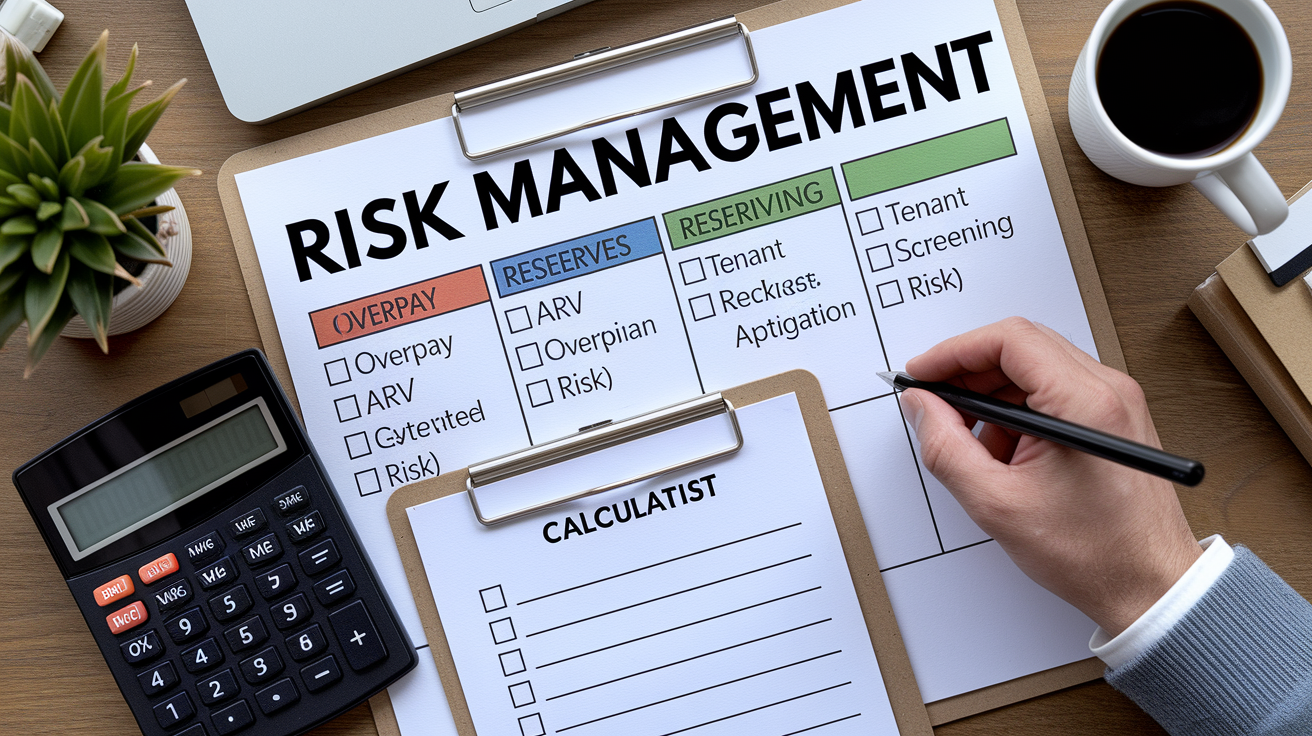
Key risks include overpaying at purchase (you can’t rehab out of a bad acquisition price), ARV overestimation when comps are stale or you over-improve for the neighborhood, insufficient reserves that force you to halt work or accept substandard repairs when unexpected costs hit, poor tenant screening that results in non-payment or property damage, and appraisal shortfalls that leave you unable to refinance out of expensive short-term debt. Each risk has a corresponding checklist control that reduces the probability and impact.
Recommended reserves sit at 6 to 12 months of total carrying costs, calculated as monthly mortgage interest, taxes, insurance, utilities, and a maintenance buffer. For a property with $1,500/month in holding costs, that’s $9,000 to $18,000 in liquid reserves on top of your rehab budget. If the water heater dies or the appraiser requires a roof repair before closing the refinance, you need cash on hand to solve the problem without derailing the entire deal.
Run conservative purchase math using the 70% rule (max offer = 70% of ARV minus repair costs) and verify ARV with recent sold comps, not asking prices or optimistic projections. Obtain 3+ contractor bids and add 15 to 20% contingency to catch scope gaps, material cost increases, and hidden structural issues. Hold 6 to 12 months of reserves in liquid savings to cover mortgage, taxes, insurance, and unexpected repairs without stopping work or missing payments. Screen tenants thoroughly with credit checks, income verification at 2.5 to 3 times rent, landlord references, background checks, and eviction history searches. Document all improvements with contractor invoices, permits, photos, and receipts to support appraisal value and prove scope completion to lenders. Prepare for appraisal risk by keeping upgrades aligned with neighborhood standards, providing the appraiser with a packet of comps and improvement details, and having a backup plan if the appraisal comes in below ARV target.
Final Words
A BRRRR renovation checklist helps you stay focused through the entire rehab phase.
It keeps you disciplined on budget, timeline, and quality standards.
When you prioritize structural repairs, then value-driving upgrades, and finally refinance-ready finishes, you protect your ARV and your cash flow.
Use the checklists and frameworks here to pressure-test each decision before you spend.
If you stick to the plan and track your numbers, you’ll be ready to rent, refinance, and repeat with confidence.
FAQ
Q: What is the core BRRRR renovation checklist essentials for investors?
A: The core BRRRR renovation checklist essentials for investors are: set a rehab budget, define scope, fix structural issues, repair mechanical/safety systems, do value-driving upgrades, finish cosmetics, coordinate contractors, and prepare refinance deliverables.
Q: How long is a typical BRRRR cycle?
A: The typical BRRRR cycle runs about 6–12 months, covering buy, rehab, rent, refinance, repeat; lighter rehabs sit near the low end, full gut rehabs push toward 12 months.
Q: How should investors prioritize BRRRR rehab work?
A: Investors should prioritize structural fixes first, then mechanical systems, safety/code work, value-driving interior upgrades (kitchen, bath, flooring), and leave cosmetics for last to protect budget and appraisal value.
Q: What numeric rules and ARV guidance should investors use?
A: Investors should use ARV-based planning, follow the 70% buy rule as a quick screen, and expect focused rehab dollars to often raise ARV by about $2–$3 for each $1 spent.
Q: What pre-purchase evaluations are required for BRRRR success?
A: Pre-purchase evaluation should include 3 sold comps, full inspections (structure, roof, HVAC/electrical/plumbing, mold/pests), rent comps, zoning and title checks, and a rehab cost pre-estimate to avoid surprises.
Q: What are the required comps for ARV?
A: The required comps for ARV are three sold comparables within six months and roughly within 0.5 miles to validate market value and support lender assumptions for refinance.
Q: How should I budget and set a contingency for rehab?
A: You should get at least three bids per trade, split labor and materials, map time versus cost, set a 15–20% contingency, and estimate holding costs to protect your budget.
Q: How do I manage contractors and payment schedules?
A: You should manage contractors with a typical 30/40/30 payment schedule, 5–10% retainage for punch lists, verify license/insurance, collect lien waivers, and document work with photos and permits.
Q: How long do renovations usually take and what are holding costs?
A: Renovation durations are about 1–3 weeks for minor work, 3–8 weeks for kitchens/baths, and 6–12+ weeks for full rehabs; holding costs include mortgage interest, taxes, insurance, utilities, and vacancy losses.
Q: What makes a property refinance-ready after renovation?
A: A property is refinance-ready when it meets ARV goals, typically supports up to ~75% LTV, hits DSCR targets (about 1.2–1.3), has 6–12 months seasoning, and provides leases, invoices, and before/after photos.
Q: Which high-ROI renovation items boost BRRRR appraisals?
A: High-ROI items boosting appraisals include fresh paint, landscaping, upgraded lighting, new cabinet hardware, deep cleaning, kitchen/bath refreshes, and new flooring—often lifting rent $50–$200 monthly.
Q: What risk management steps should BRRRR investors take during renovation?
A: Risk management steps are planning for ARV shortfalls, overpaying, and cost overruns; keep 6–12 months carrying-cost reserves, a 15–20% contingency, and strict tenant screening to limit downside.